


Abs Are Made in the Gym, Too: How to Build a Stronger Core
You’ve heard it a hundred times: abs are made in the kitchen.
That’s partly true. Nutrition affects how visible your abs are. But the saying skips one important detail. Your abs are muscles, and like any other muscle, they get stronger when you train them.
A stronger core isn’t only about how your midsection looks. It helps you lift heavier, stay stable under load, and move with more control.
You don’t need 200 crunches or a dedicated ab day. You need a few good exercises, enough resistance, and a plan that gets harder over time.
What Your Core Actually Does
Your core is more than the six-pack. It’s the group of muscles wrapped around your trunk and pelvis that stabilize your spine and move force between your upper and lower body.
It includes:
- Rectus abdominis: The front “six-pack” muscle that flexes your spine.
- Transverse abdominis: A deep muscle that stabilizes your trunk.
- Obliques: The side muscles that help you rotate, bend, and resist unwanted movement.
- Erector spinae and multifidus: Back muscles that support your spine.
- Diaphragm and pelvic floor: Muscles that help manage breathing and pressure.
During a heavy squat, your legs do most of the work. Your core keeps your torso in position so that force goes where it should. The same goes for deadlifts, presses, rows, and carrying groceries up the stairs.
Building Abs vs. Revealing Them
These are two different things.
Building ab muscle comes from resistance training, progressive overload, and recovery. How visible those muscles are depends on body fat, genetics, and overall body composition.
So you can have a strong core without a visible six-pack, and visible abs without much real strength.
Crunches also won’t burn fat off your stomach specifically. Research generally shows that targeted ab work doesn’t produce meaningful fat loss in that area.
If you want a stronger midsection, train your abs like muscles, not like a calorie burn.

5 Core Exercises Worth Your Time
Good core training covers a few jobs: bending your spine, resisting extension, resisting rotation, and staying stable under load. These five cover all of them.
1. Cable Crunches
The best pick for building ab muscle, because you can add weight in small, measurable jumps.
Kneel facing a high pulley with a rope near your head. Keep your hips still and curl your ribs toward your pelvis, then return slowly. Let your abs do the work, not your arms.
Start with: 3 sets of 10 to 15 reps.
2. Dead Bugs
A great starting point for beginners and a solid accessory for experienced lifters.
Lie on your back with arms up and knees in a tabletop position. Brace lightly, then slowly extend one arm and the opposite leg. Return and switch sides. If your lower back starts to arch, shorten the movement.
Start with: 2 to 3 sets of 8 to 12 reps per side.
3. Hanging Knee Raises
Hang from a bar with your shoulders engaged. Raise your knees toward your chest while curling your pelvis up, then lower slowly. No swinging.
Too tough? Start with a captain’s chair. Getting easy? Work toward straighter legs.
Start with: 3 sets of 8 to 12 reps.
4. Pallof Presses
Your core also has to stop movement. This one trains you to resist rotation.
Stand sideways to a cable set at chest height. Step out until there’s tension, press the handle straight forward without letting your torso twist, then bring it back.
Start with: 2 to 3 sets of 10 to 12 reps per side.
5. Farmer’s Carries
Simple and effective. Hold a weight in each hand, stand tall with your ribs stacked over your pelvis, and walk at a steady pace without leaning or swinging.
For an extra challenge, carry one weight at a time.
Start with: 3 carries of 20 to 40 seconds.

How Often Should You Train Abs?
For most people, two to three direct sessions per week is plenty. Like any muscle, your abs need time to recover.
A simple starting point: pick 2 to 3 exercises per session and do 2 to 3 sets of each. Aim for 8 to 15 reps on dynamic moves and 20 to 45 seconds on holds and carries. Give yourself about 48 hours between hard sessions.
These are guidelines, not rules. If you already squat and deadlift heavy, you may need less extra core work.
Light stability work can happen often. Hard ab sessions every day usually just pile on fatigue without much payoff.
This is where structure helps. FitnessAI builds workouts around a person’s goals, training history, and schedule, then adjusts sets, reps, and weights based on performance. Instead of guessing how much to add each week, you follow a plan that already accounts for the work you’re doing.
Are Squats and Deadlifts Enough?
Compound lifts definitely train your core, but mostly as a stabilizer. Holding your torso steady under a barbell isn’t the same as training your abs through a full range of motion.
If general strength is the goal, compound lifts may cover a lot of what you need. If you want to build your abs, add some direct work.
The best programs do both:
- Squats and deadlifts for stability under heavy loads.
- Rows and overhead presses for control while transferring force.
- Cable crunches for direct, loadable ab training.
- Pallof presses and carries for resisting rotation and unwanted movement.
No hour-long core workout required.
Progressive Overload Works for Abs, Too
Your abs adapt when you give them a reason to. That means gradually making things harder. Four ways to do it:
- Add resistance to cable crunches or carries.
- Add reps before adding weight.
- Use a harder variation, like straighter-leg raises.
- Slow down and improve your range of motion.
Progress on purpose instead of swapping exercises at random.
Here’s what that can look like with cable crunches. Say you start at 30 pounds for 3 sets of 10. The next week, you keep the same weight and work up to 12 reps. The week after, you hit 15. Then you bump the weight to 35 pounds and drop back to 10 reps.
That’s just an example, not a schedule everyone should follow. The point is small, steady steps that add up.
FitnessAI’s adaptive progressive overload applies the same idea across an entire program. It uses workout performance to adjust recommended weights, reps, and sets. Hit your targets, and the next session gets a little harder. If performance or recovery dips, the plan adjusts. The value isn’t just tracking what you lifted. It’s knowing what to do next.
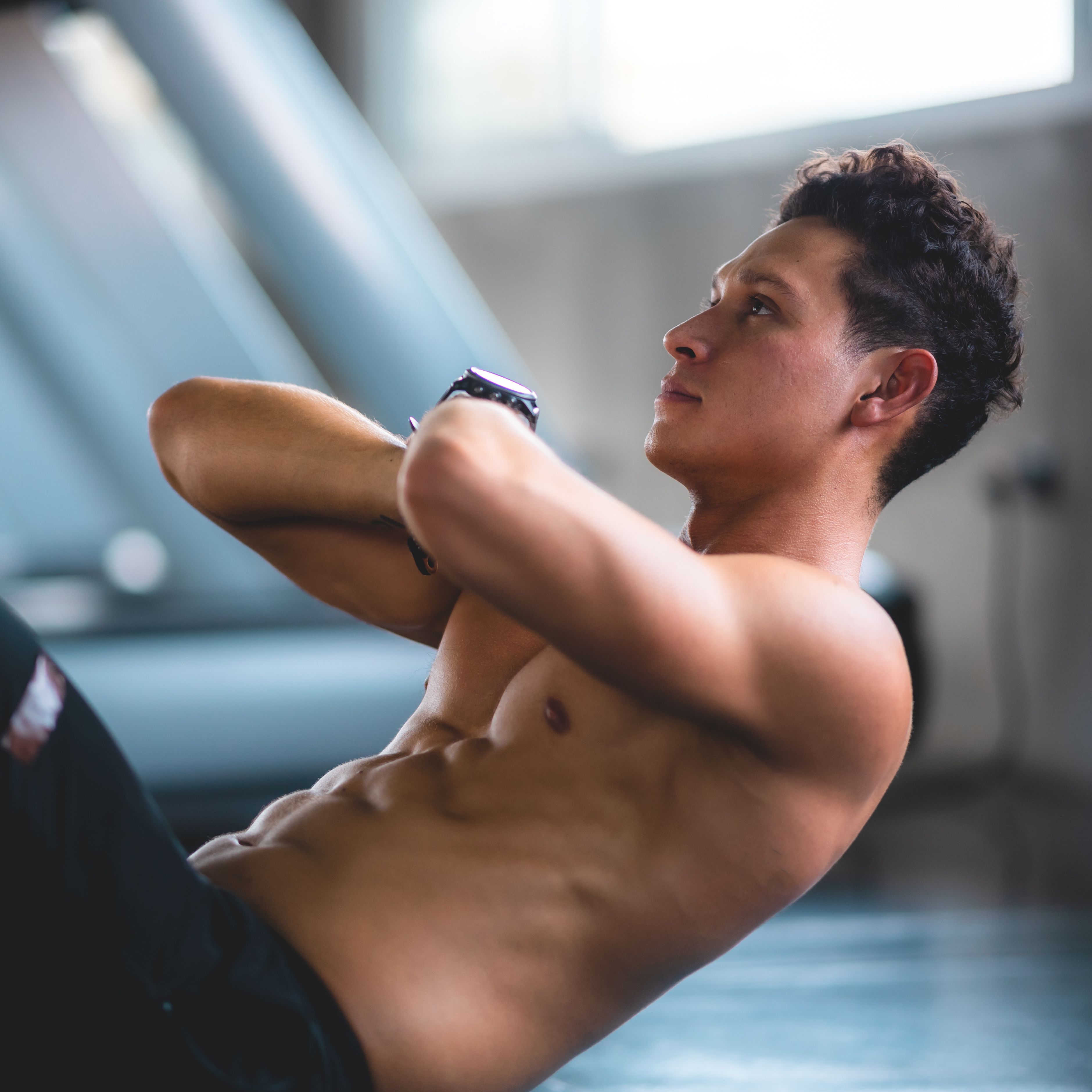
A 10-Minute Core Workout
Ten minutes is enough when you do it consistently and keep progressing. Try this after your regular strength workout, twice a week:
- Cable crunches: 2 sets of 10 to 12 reps
- Dead bugs: 2 sets of 8 reps per side
- Pallof presses: 2 sets of 10 reps per side
No cable machine? Swap in reverse crunches and a band Pallof press.
FitnessAI adapts workouts to available equipment and time, including 5 to 30 minute sessions, with exercise substitutions for training at home, traveling, or working around a crowded gym. You don’t need perfect conditions. You need a plan that fits the ones you have.
5 Reasons Your Abs Aren’t Getting Stronger
1. Endless crunches with no added challenge. Add resistance or move to harder variations.
2. Changing exercises every workout. Stick with a few for several weeks so you can actually see progress.
3. Rushing reps. Control beats momentum every time.
4. Only training one function. Pair a crunch-style move with a stability exercise.
5. Ignoring recovery. Hard core sessions stacked on hard lifting days add up fast.
FitnessAI’s recovery-aware programming factors in fatigue, muscle recovery, and performance when building workouts. Getting stronger isn’t about piling on more work. It’s about enough challenge, then enough recovery to do it again.
How Long Does It Take?
Better control and performance often show up within a few weeks. Visible changes in muscle size take longer and vary a lot from person to person.
Instead of waiting on the mirror, watch for these signs:
- More controlled reps at the same weight.
- Heavier cable crunches over time.
- Less swinging on knee raises.
- A more stable torso during big lifts.
- Harder variations with good form.
FitnessAI’s workout tracking shows how performance changes over time, and BodyScan offers a way to track visual changes in body composition. One shows strength progress. The other shows physical change. Neither depends on the scale.
Frequently Asked Questions
What’s the fastest way to build stronger abs?
Consistent resistance training that gets harder over time. Combine direct ab work like cable crunches with stability exercises and compound lifts, and support it with good recovery and nutrition.
Can you build abs without crunches?
Yes. Hanging knee raises, reverse crunches, and carries all challenge your abs. Crunches are one option, not a requirement.
Are planks or crunches better?
They train different things. Planks help you resist spinal extension, while crunches train spinal flexion. Both are useful, but loaded dynamic exercises are especially practical for building muscle.
How many times a week should I train abs?
Two to three direct sessions is a solid starting point for most adults.
Do you need a gym?
No. Dead bugs, reverse crunches, side planks, and leg raises can all build core strength at home. Equipment just makes it easier to add load over time.

The Bottom Line
Abs aren’t just made in the kitchen. They’re built the same way as every other muscle: consistent training, the right resistance, progressive overload, and recovery.
Start with a few effective exercises. Track your performance. Gradually raise the challenge.
The goal isn’t to do more ab exercises. It’s to get stronger at the ones that matter.
And if you’d rather spend your time training than figuring out what comes next, FitnessAI handles the planning. Show up, and FitnessAI adjusts the rest.
Download FitnessAI HERE!
Alyssa Gonzalez
