


Muscle Memory Explained: Why Getting Back Into Shape Is Easier Than People Think
Take a few weeks off from lifting, or a few years, and it's easy to assume the slate's been wiped clean.
It hasn't.
Muscle memory is what lets the body rebuild strength and muscle faster the second time around. Cardio and endurance might take a hit, sure, but muscles, nerves, and even individual muscle cells hang onto a lot more than most people expect. That's the real reason coming back is usually so much faster than starting fresh.
So for anyone who's been avoiding the gym because the comeback feels too daunting: the work already put in wasn't wasted. Not even close.
So What Is Muscle Memory?
At its core, muscle memory is just the leftover physiological changes from previous training, changes that stick around long after the workouts stop.
A few things make it up:
- The nervous system still remembers movement patterns
- Muscle fibers hold onto earlier adaptations
- Myonuclei, specialized cells inside muscle fibers, stay in place even as muscle shrinks
- The brain gets sharper at running familiar exercises
All of that together explains why people who've trained before tend to rebuild in weeks, not months.

Is Muscle Memory Actually Real?
Yes. And the science backing it up has only gotten stronger over the last decade.
Strength training adds myonuclei to muscle fibers, and those support future growth. Even once a muscle shrinks from time off, most of those myonuclei don't go anywhere.
They're basically blueprints left behind, ready whenever training picks back up.
That's why muscle can ramp back up protein synthesis and growth so quickly, the groundwork never fully disappeared. It's also a big reason taking time off isn't the setback people assume it is.
How Long Does It Actually Stick Around?
This comes up constantly:
"How long does muscle memory last?"
There's no single number, it depends on how much training happened before the break.
Roughly speaking:
- A few weeks off barely dents strength
- A few months off might shrink the muscle, but strength bounces back quickly
- Even years away, former lifters usually rebuild faster than someone starting from zero
The more consistent the training history, the more resilient the muscle memory tends to be.

Muscle Fades Faster Than Muscle Memory Does
Looking smaller in the mirror after time off is discouraging, but it's not the full picture.
During time off, a few things shrink:
- Glycogen stores in the muscle
- Water retained in muscle tissue
- Visible muscle "fullness"
- Strength, modestly
But a lot sticks around underneath the surface:
- Movement skill
- Technique
- Neural efficiency
- Myonuclei
- Coordination
That's why the first workout or two back feels rusty, but the rust comes off fast.
The First Month Back, Realistically
Most people badly underestimate how quickly things click back into place.
Week 1 The movements feel familiar even if the weight feels heavier than remembered. Expect some serious soreness.
Week 2 Coordination improves. Strength starts climbing. Confidence starts trickling back.
Week 3 Weights that felt brutal in week one suddenly feel doable. Technique smooths out. Recovery speeds up.
Week 4 This is usually when it becomes visible, clothes fit differently, energy is up, and the old training starts paying dividends again. Momentum takes over.
Should the Old Numbers Be the Target Right Away?
No, and trying to hit them too soon is one of the most common mistakes people make.
There's a real temptation to prove the strength never left. But muscles bounce back faster than joints, tendons, and connective tissue do, those need a bit more time to catch up.
A better approach:
- Start below the old working weights
- Focus on clean technique
- Leave a couple reps in the tank
- Build back up gradually
Counterintuitively, this route usually gets people back to their old numbers faster than trying to force it.

Progressive Overload Matters Even More Now
"Working hard" isn't a plan. Progress still comes down to progressive overload, gradually increasing the challenge, whether through:
- More weight
- More reps
- Cleaner technique
- Better consistency
The hard part after a break isn't knowing progressive overload matters, it's knowing exactly how much to add and when. That's usually where the guesswork sneaks back in.
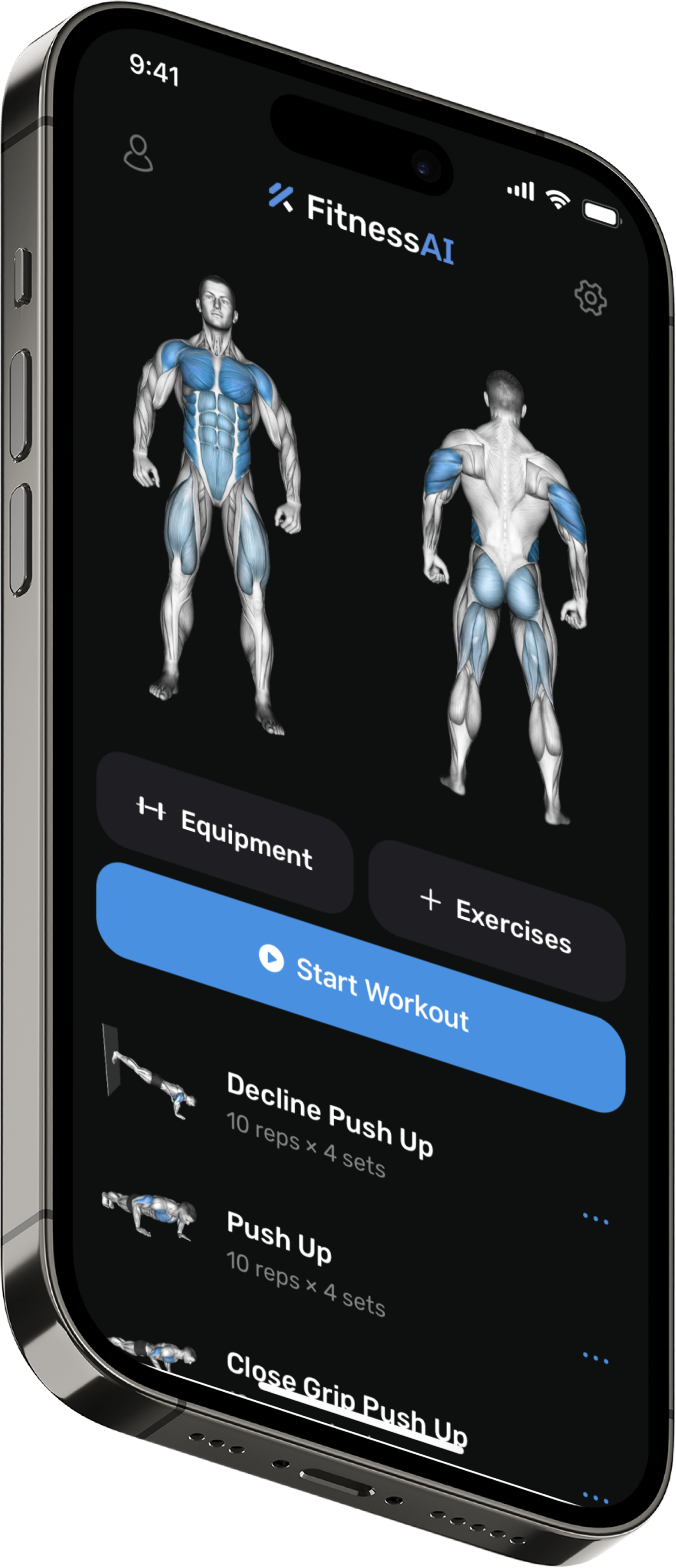
That's where FitnessAI comes in. It automatically adjusts sets, reps, and weights based on actual performance, so strength gets rebuilt without jumping ahead too fast. No more guessing between adding five pounds or repeating last week's numbers, FitnessAI makes measured adjustments that keep progress moving while still respecting recovery.
Show up. The plan takes care of the rest.
Don't Try to "Make Up" for Lost Time
Missing workouts tends to trigger overcompensation, extra sets, extra cardio, training seven days a week.
That usually backfires and slows things down instead.
Consistency wins over intensity almost every time. Three solid workouts a week will typically beat seven chaotic ones driven by guilt. Muscles don't need to be punished, they need steady, predictable progression.
Nutrition Hasn't Stopped Mattering
Muscle memory speeds up the comeback. It doesn't replace eating well.
To get the most out of it:
- Get enough protein, roughly 1.6–2.2 g/kg of body weight per day
- Eat enough overall to support recovery
- Sleep seven to nine hours when possible
- Stay hydrated
Recovery is where the actual rebuilding happens.
What If There's No Time?
Life is usually why the training stopped in the first place, work, kids, travel, stress. None of that means workouts need to take an hour to be worthwhile.
FitnessAI can build workouts anywhere from 5 to 30 minutes, adjusting exercises, sets, and reps to match whatever time's actually available. Momentum can keep building even on packed days, instead of skipping workouts because a full hour isn't in the cards.
Progress over perfection.

No Gym? No Problem.
A change in equipment shouldn't be the thing that derails a comeback, whether training happens:
- At home
- In a hotel gym
- With just dumbbells
- In a fully stocked gym
What matters is staying consistent. FitnessAI adapts workouts to whatever's actually available, so there's no need to rebuild an entire program every time the setup changes. It also suggests smart substitutions that keep the training goal intact when the usual equipment isn't there.
Less time planning. More time training.
Signs the Comeback Is Working
A few good signs to look for along the way:
- Weights are climbing week to week
- Soreness is easing up
- Movements feel more natural
- Energy is up
- Recovery is quicker
- Clothes fit differently
- Confidence is coming back
Progress won't always feel dramatic in the moment, but small wins add up faster than expected.
Common Myths, Debunked
Myth: "I lost everything. "Reality: Most people lose far less than they assume. The body holds onto more than the mirror shows.
Myth: "I have to train every day to catch up. "Reality: Recovery is part of rebuilding. Three to four solid sessions a week is enough for most people.
Myth: "I should jump straight back to my old weights. "Reality: Starting a little lighter almost always gets people back to those numbers faster.
Myth: "I took years off, it's too late. "Reality: Research keeps showing that former lifters rebuild faster than total beginners. It's never actually too late.
Frequently Asked Questions
What is muscle memory? It's the body's ability to regain lost strength and muscle faster after returning to training, thanks to adaptations that stuck around even during time off.
How long does muscle memory last? It varies, but it can last for years. Strength and size may dip during long breaks, while many underlying cellular changes stay intact.
Is getting back into shape easier than starting fresh? Yes. People with prior training experience typically rebuild muscle and strength much faster than complete beginners.
Can beginners have muscle memory? Not really, it only develops once the body has already adapted to strength training over time.
What's the fastest way to rebuild muscle? Train consistently, eat enough protein, prioritize recovery, and follow a structured progressive overload plan instead of guessing at weight increases.
Final Thoughts
For anyone still waiting for the "right time" to get back to the gym, the body remembers a lot more than it seems to.
Past workouts still count. Movement patterns stick. Experience isn't erased by a break.
Rebuilding the muscle isn't actually the hard part. Starting again is.
That's exactly why structure helps so much here. Rather than guessing what to lift or how much to add each week, FitnessAI builds workouts around real performance, available equipment, recovery, and schedule, clearing out the guesswork so the only thing left to do is show up.
Progress should feel predictable.
No guessing. Just lift.
Download FitnessAI HERE!
Alyssa Gonzalez
