


How to Stay Consistent With Your Workouts This Summer
Summer is great for a lot of things.
Longer days. Weekend trips. Backyard barbecues. More time outside.
It's also one of the easiest times of year to fall completely off track with fitness.
Schedules shift. Kids are home. Vacations pop up out of nowhere. One missed workout turns into two weeks, and suddenly the gym feels like a distant memory.
The good news? Staying consistent over the summer doesn't require perfect discipline, it requires a plan.
Consistency is rarely a motivation problem. It's a structure problem. When the right structure is in place, showing up becomes a whole lot easier, even when life gets messy.
If you're trying to figure out how to keep your workouts going this summer without letting fitness take over your life, this guide breaks it down.

Why Is It Harder to Stay Consistent With Workouts in the Summer?
Summer throws variables at people that simply don't exist the rest of the year.
Common challenges include:
- Travel and vacations
- Family obligations
- Kids being home
- Social events and parties
- Hot weather and lower energy
- Less structured schedules
For most people, routine is what keeps fitness habits alive. When that routine disappears, consistency tends to follow right behind it.
That's not a character flaw. It's just how habits work.
FitnessAI user research has found that time, work schedules, energy levels, travel, and family commitments are among the biggest barriers to workout consistency, and summer tends to pile all of them on at once.
The goal isn't to eliminate those challenges. The goal is to build a system that holds up despite them.
Stop Chasing Perfect Weeks
One of the most common summer mistakes is expecting a workout routine to look exactly the same as it does in January. It won't. And honestly, that's fine.
The problem is the all-or-nothing thinking that tends to follow:
- If the full workout isn't happening, it's not worth doing at all.
- Missing three days means falling off track entirely.
- It makes more sense to restart when life settles down.
That kind of thinking is exactly how consistency disappears.
A better approach is focusing on momentum instead of perfection. A 20-minute workout still counts. A hotel gym session still counts. A quick lift before a backyard barbecue still counts.
Progress doesn't come from perfect weeks. It comes from continuing to show up.
As FitnessAI puts it: structure beats motivation.

Build a Summer Fitness Minimum
One of the most practical strategies for staying consistent is establishing a "minimum standard," a floor, not a ceiling.
The question to ask is: "What's the smallest workout I can realistically complete even on my busiest summer day?"
For some people, that might look like:
- One strength workout per week
- Three 20-minute sessions
- A 5-minute workout when time is especially tight
The point is making success achievable. When life gets chaotic, the goal isn't maximizing results, it's protecting the habit. Once the habit stays intact, rebuilding momentum becomes a lot easier.
Make Your Workouts Fit Your Schedule
Summer schedules rarely cooperate, which is exactly why rigid workout plans tend to fail.
Instead of forcing life to revolve around a training program, the program should adapt to real life. This is where a lot of people get stuck, spending more time trying to figure out what workout to do than actually doing it.
FitnessAI was built specifically to solve that problem. Rather than starting from scratch every week, the app automatically adjusts workouts based on goals, available equipment, schedule, and previous performance.
Some days there's 30 minutes. Some days there's 10. Both can move things forward when the plan adapts accordingly. The user shows up, the app handles the rest.
Train for Consistency, Not Exhaustion
A lot of people equate a good workout with feeling completely wiped out. But the best workout is usually the one that's repeatable next week.
During the summer, recovery takes on extra importance because:
- Travel disrupts sleep
- Heat increases fatigue
- Social calendars affect recovery time
- Stress levels can spike unpredictably
Constantly pushing maximum intensity often backfires. A smarter approach is sustainable strength training that matches actual recovery capacity, not some idealized version of it.
FitnessAI's recovery-aware adjustments account for fatigue and performance trends, making it easier to keep making progress without constantly running on empty. Consistency improves when workouts feel manageable.
Have a Travel Plan Before You Need One
Summer travel is predictable. The disruption doesn't have to be.
Before the next trip, it's worth thinking through:
- Will there be access to a full gym?
- A hotel gym?
- Just a few dumbbells?
- Only bodyweight?
Most people wait until they've already arrived to figure this out, which is exactly when workouts get skipped.
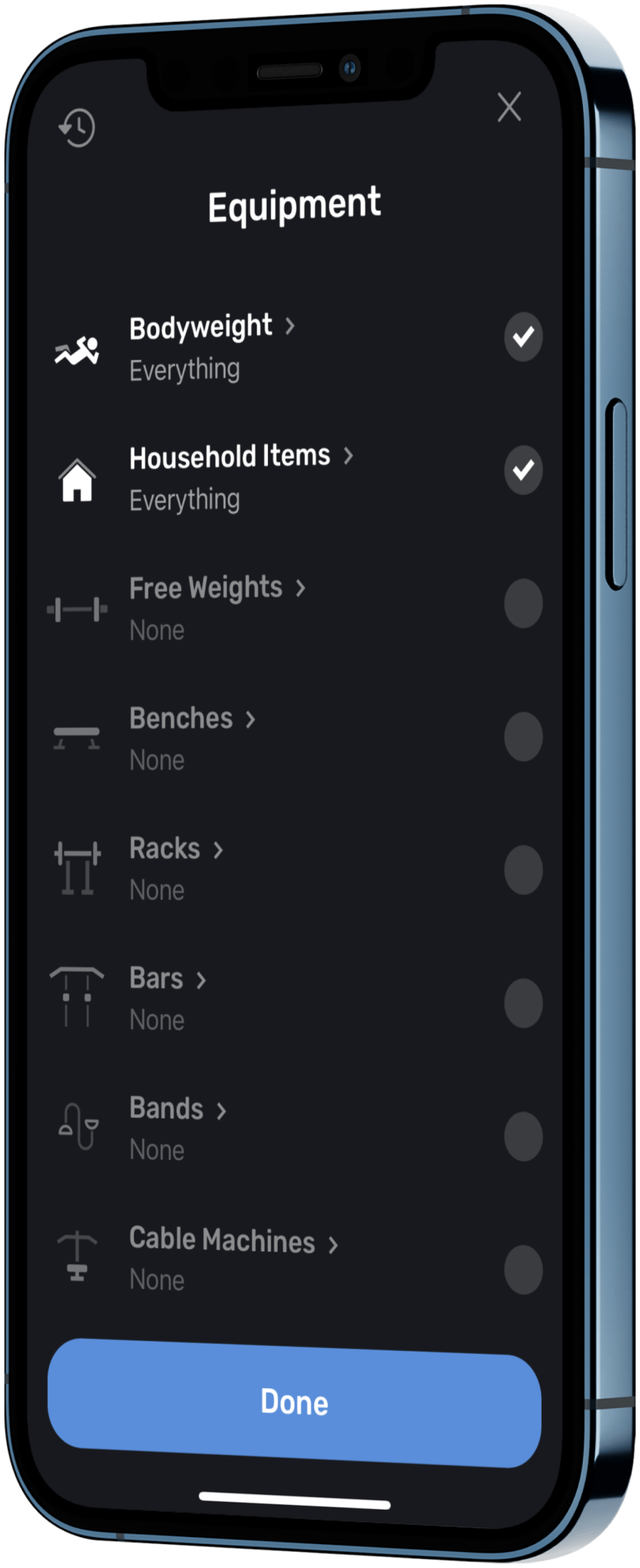
FitnessAI automatically adapts workouts based on whatever equipment is available, whether that's a commercial gym, a hotel fitness center, a home setup, or a single pair of dumbbells. When the environment changes, the plan changes with it. The habit stays intact.

Track More Than Just the Scale
Summer can get frustrating fast if body weight is the only measure of progress. Travel, hydration, changing food routines, and irregular schedules can all cause temporary fluctuations that have nothing to do with actual fitness progress.
A more complete picture includes:
- Strength increases
- Workout consistency
- Monthly progress photos
- Energy levels
- Workout completion rates
This is one reason many FitnessAI users rely on BodyScan to track physical changes over time rather than fixating on daily weigh-ins. Progress is easier to maintain, and easier to stay motivated by, when it's actually visible.
How Many Workouts Per Week Are Enough During the Summer?
It depends on the goal, but for most adults:
- 2 workouts per week can maintain strength
- 3 workouts per week can build strength and muscle
- 4+ workouts per week can accelerate progress when recovery is managed well
The most important factor is sustainability. Three consistent workouts every single week will always beat six workouts one week and zero the next.
Predictable progress comes from consistency, not occasional bursts of motivation.
Summer Consistency Checklist
For anyone trying to stay on track this summer, these are the fundamentals that actually move the needle:
✓ Lower expectations, not standards
✓ Create a realistic workout minimum
✓ Prioritize consistency over perfection
✓ Plan for travel before it happens
✓ Keep workouts flexible
✓ Track progress beyond the scale
✓ Focus on strength and momentum
✓ Remove as much decision-making as possible
The simpler the process, the easier consistency gets.
Frequently Asked Questions
How do I stay motivated to work out during the summer?
Focus less on motivation and more on structure. Scheduling workouts in advance, reducing decision-making, and setting a realistic minimum goal all make it much easier to keep showing up, even during the busiest weeks.
Is it okay to work out less during the summer?
Yes. Temporarily reducing training volume during travel or schedule changes is completely normal. Maintaining consistency is almost always more important than maximizing volume.
What's the best workout schedule for busy adults?
For most people, three strength workouts per week is enough to build muscle, gain strength, and stay consistent while juggling work, family, and everything else life throws at them.
Can short workouts still build muscle?
Absolutely. Consistent, progressive strength training sessions of 15 to 30 minutes can produce real results, especially when those workouts are well-structured.
What's the best app for staying consistent with workouts?
The best workout app is one that removes friction and makes it easy to follow a clear plan. Many FitnessAI users choose the app specifically because it tells them exactly what to lift, adapts to changing schedules, and takes the guesswork out of every session.
Final Thoughts
Summer doesn't have to derail progress.
A perfect routine isn't required. Endless motivation isn't required. And starting over every Monday is definitely not required.
What is required is enough structure to keep showing up.
The people who stay in shape year after year aren't necessarily the most disciplined. They're the ones who keep training when life gets messy, the ones who do the 20-minute workout instead of skipping it, who find the hotel gym, who protect the habit even when the plan falls apart.
FitnessAI helps make that easier, removing the planning, adapting to real schedules, and giving a clear path forward every time someone opens the app.
Open the app. Lift what it says.
Momentum builds from there.
Download FitnessAI TODAY!
Alyssa Gonzalez
