


How Heavy Should You Actually Be Lifting?
If you have ever stood in front of a dumbbell rack wondering whether to grab the 20s or the 30s, you are not alone. It is one of the most common questions in strength training, and honestly, one of the most poorly answered. Most people either guess, copy whatever the person next to them is lifting, or stick with the same weight for months because it feels safe.
None of those approaches get you the results you are training for.
How heavy you should lift depends on your goal, your experience level, and how your body is recovering on any given day. This guide breaks down exactly how to figure out the right weight for you, why "heavy enough" is a moving target, and how to stop guessing every time you walk into the gym.
Why Lifting the Right Weight Matters More Than You Think
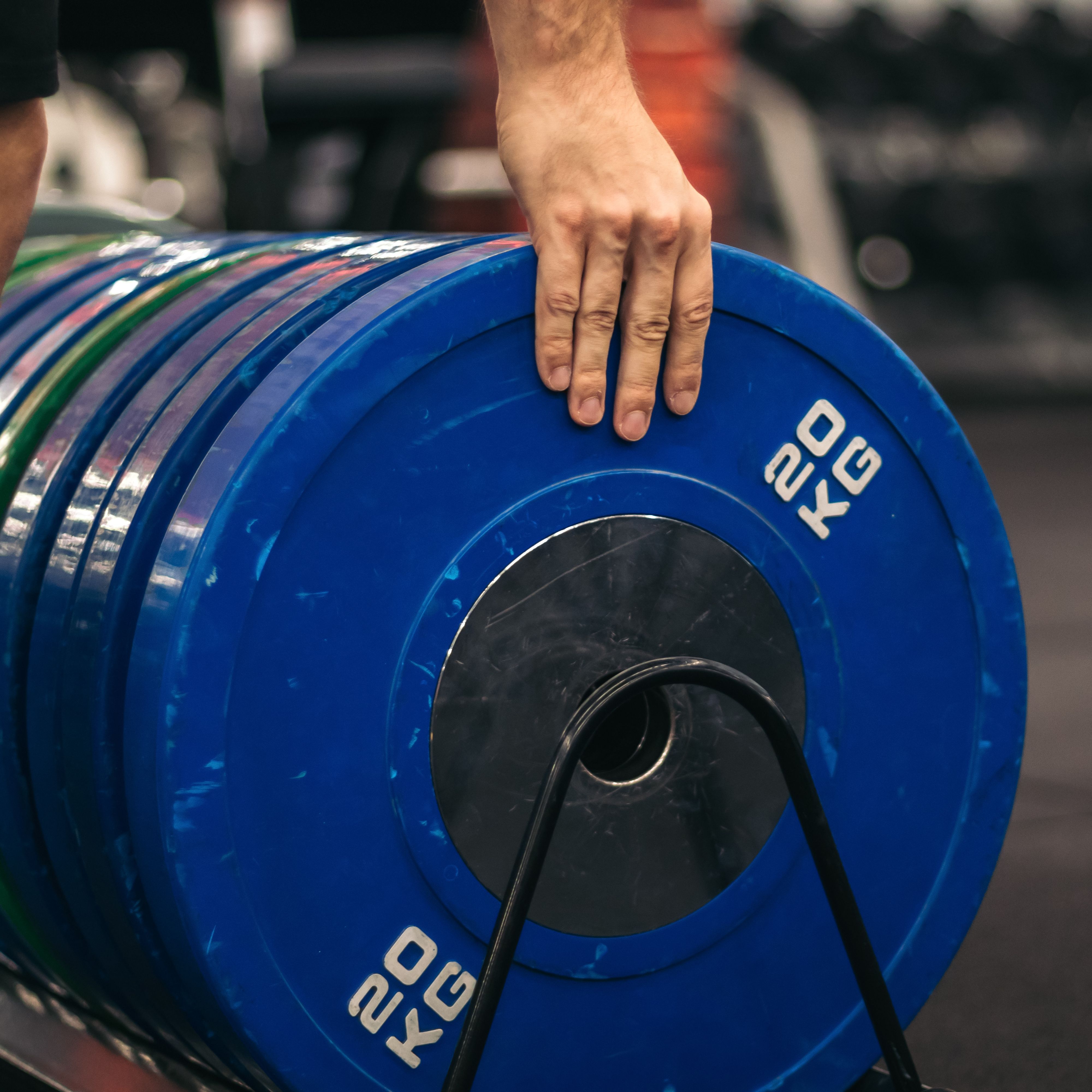
Lifting too light stalls your progress. Lifting too heavy wrecks your form and raises your injury risk. Both mistakes are common, and both are fixable once you understand what your body actually needs from a given set.
The right training load is not a fixed number. It shifts based on:
- Your training goal (strength, hypertrophy, endurance)
- Your experience level
- How recovered you are that day
- The equipment available to you
This is why the same workout can feel completely different two weeks apart, even if the weight on the bar has not changed. Your body is not static, so your training load should not be either.
The Core Concept: Training Load and Intensity
In strength training, "load" refers to how much weight you are lifting, and "intensity" refers to how close that weight is to your maximum effort. Together, they determine the stimulus your muscles receive.
Percentage of One-Rep Max (1RM)
A common way coaches assign load is as a percentage of your one-rep max, the most weight you can lift for a single rep with good form.
- Strength focus: 80 to 90 percent of your 1RM, for 1 to 6 reps
- Muscle growth (hypertrophy): 65 to 80 percent of your 1RM, for 6 to 12 reps
- Muscular endurance: Under 65 percent of your 1RM, for 12 or more reps
This works well if you actually know your 1RM. Most people do not, and testing it safely takes experience most beginners have not built yet.
Rate of Perceived Exertion (RPE)
RPE is a simpler, more practical alternative. It is a 1 to 10 scale for how hard a set felt, with 10 meaning you could not have done another rep.
Most working sets for general strength and muscle building should land between RPE 6 and 8. That means you are working hard, but you have one to four reps left in the tank when you finish the set.
RPE is useful because it adjusts automatically for bad sleep, high stress, or a rough week. A weight that felt like an RPE 6 last Tuesday might feel like an RPE 8 today, and that is normal, not a failure.
This is also where a lot of people get stuck. Tracking RPE accurately, adjusting for a rough night of sleep, and remembering what last week's set actually felt like is a lot of mental math for a single workout, let alone every session. This is one of the areas where FitnessAI earns its keep. Instead of you estimating RPE from memory, it factors in your logged sleep, recent training load, and how previous sessions went, then adjusts your suggested weight before you even pick up the bar.
How to Know If You Are Lifting Too Light
A few signs point to a weight that is not challenging you enough:
- You can easily do more reps than your target rep range
- Your last 2 to 3 reps do not feel any harder than your first
- You have used the same weight for a month with no adjustment
- You finish sets feeling like you barely broke a sweat
If most of these sound familiar, it is time to add weight. A good rule of thumb is a 5 to 10 percent increase for upper body lifts and a 10 to 15 percent increase for lower body lifts, then reassess from there.
How to Know If You Are Lifting Too Heavy
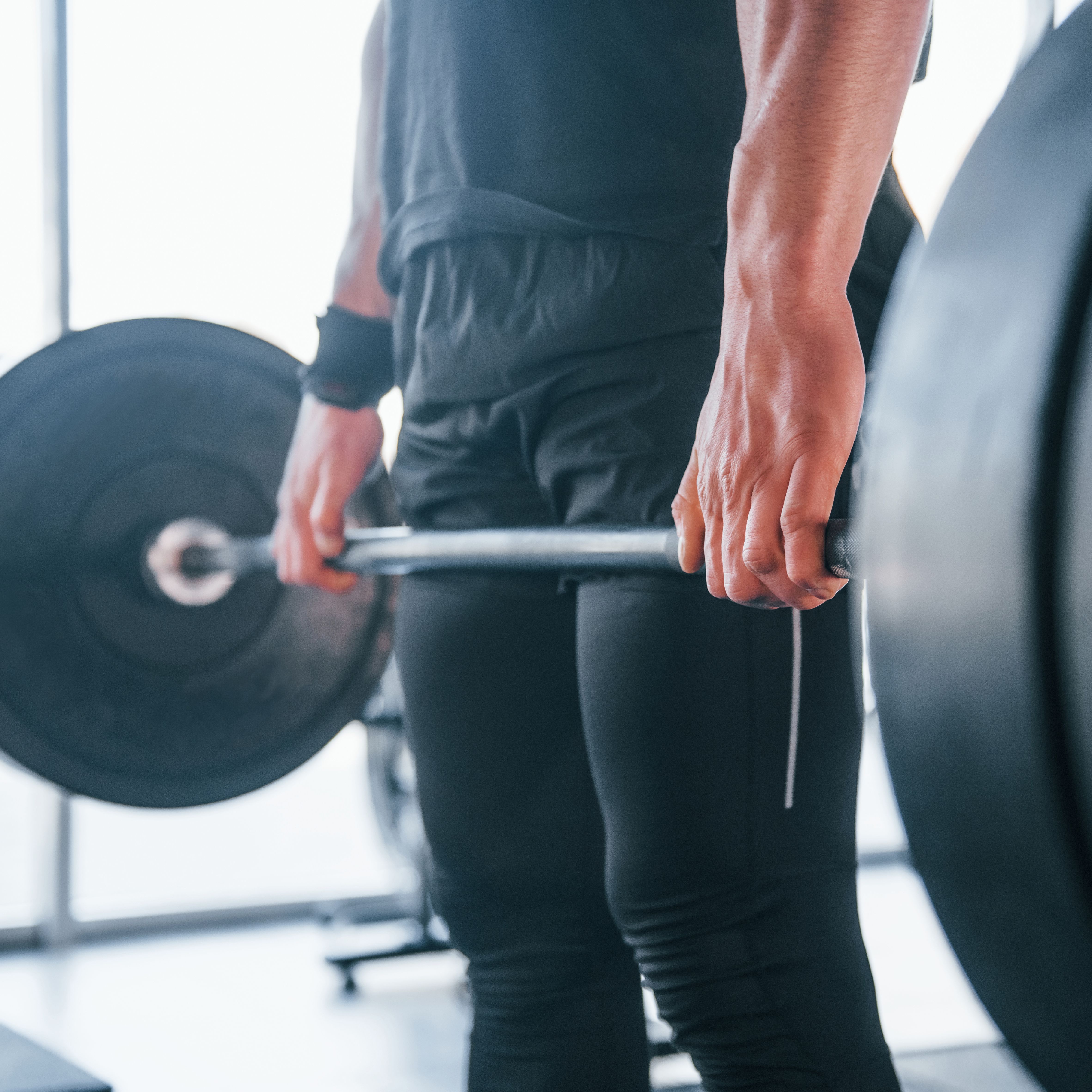
The opposite problem shows up just as often, especially with lifters who confuse soreness with progress.
- Your form breaks down before you hit your target reps
- You are relying on momentum or swinging weight instead of controlled movement
- You feel joint pain rather than muscle fatigue
- You dread the exercise because it feels like a fight every time
If any of these apply, drop the weight by 10 to 20 percent and rebuild from a position of control. Strength built on bad form does not transfer well, and it is a fast track to injury.
Progressive Overload: The Real Key to Getting Stronger
Progressive overload is the principle that your muscles adapt to a stimulus and then need a slightly bigger stimulus to keep improving. Without it, you plateau, no matter how hard each individual workout feels.
You can apply progressive overload in a few ways:
- Add weight to the bar or dumbbells
- Add reps at the same weight
- Add sets to increase total volume
- Slow down the tempo of each rep
- Reduce rest time between sets
The mistake most people make is trying to increase everything at once. That is how you end up injured or burned out within a few weeks. The better approach is picking one variable, pushing it gradually, and letting the others hold steady until your body adapts.
This is also where a lot of home progress tracking falls apart. Spreadsheets and memory are unreliable, and "I think I did 25s last time" is not a system. FitnessAI tracks every session automatically, so when you show up for your next chest day, it already knows what you lifted, how many reps you got, and how the set felt, and it suggests your next load based on that real history instead of a guess.
Adjusting Load Based on Experience Level
Beginners (0 to 6 months of consistent training)
Focus on form first, load second. Your central nervous system is still learning the movement patterns, so lighter weight with clean technique builds a foundation that pays off later. Expect to add weight almost every week during this phase, which is often called "newbie gains."
Intermediate Lifters (6 months to 2 years)
Progress slows down, and this is usually where plateaus start. You need more structured progression, whether that is a percentage-based program or consistent RPE tracking, because your body no longer adapts to just showing up.
Advanced Lifters (2+ years)
Small, precise adjustments matter most here. You are often working within a narrow range of RPE 7 to 9, and recovery becomes just as important as the lifting itself.
Wherever you fall on that spectrum, the honest answer to "how heavy should I lift" changes as you go. A weight that challenged you as a beginner will feel light a year later, and a program that worked at month three might not fit at month eighteen. This is exactly why adaptive programming matters more than a fixed plan. FitnessAI adjusts your recommended loads as your training history grows, so the program actually evolves with you instead of asking you to guess when it is time to change things up.
What If You Do Not Have the "Right" Equipment?
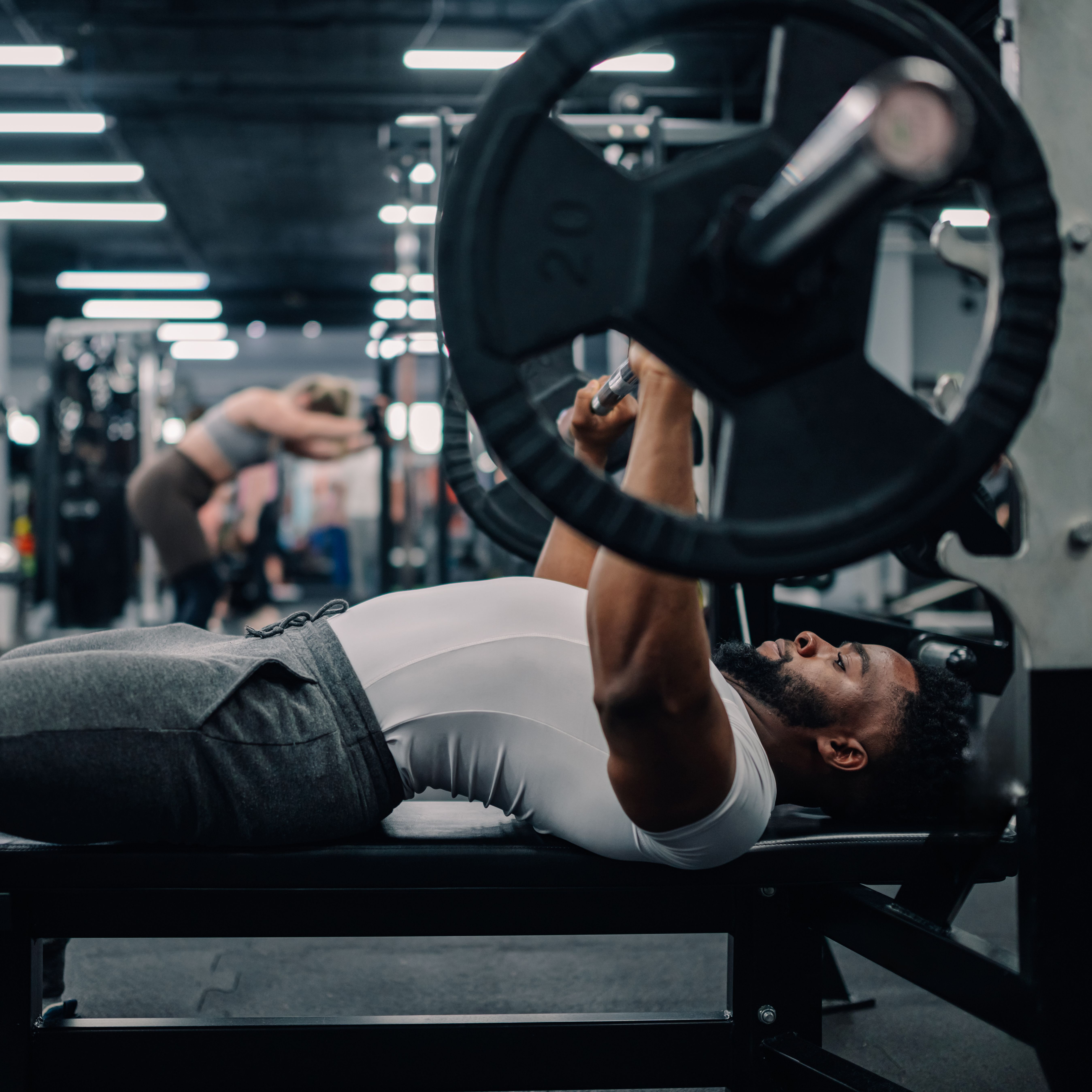
One of the most common reasons people lift the wrong weight has nothing to do with knowledge. It is equipment access. A home gym with dumbbells that jump from 20 to 25 pounds does not always match what a program calls for.
A few practical fixes:
- Adjust reps instead of weight when the exact load is not available
- Use tempo (slower lowering phase) to increase difficulty without adding weight
- Substitute resistance bands to fine-tune load between fixed dumbbell increments
- Change the exercise angle or leverage to make it harder or easier
This kind of on-the-fly adjustment is exactly the moment where a lot of workouts fall apart. You are standing there mid-session, unsure whether to round up or down, and it eats into your time and motivation. FitnessAI handles this by adjusting your workout in real time based on the equipment you actually have, so you are not stuck doing mental math between sets or skipping an exercise altogether.
Recovery: The Missing Piece Most People Ignore
Load is not just about the weight on the bar. It is about what your body can handle that day. Two nights of bad sleep, a stressful week at work, or an unusually hard leg day can all lower how much weight you should lift on your next session, even if your program says otherwise.
Signs you might need to scale back your load temporarily:
- Persistent muscle soreness beyond 72 hours
- Declining performance across multiple sessions
- Elevated resting heart rate or poor sleep quality
- General fatigue that does not improve with a rest day
Training through these signs with the same heavy load you used last week is one of the fastest ways to stall progress or get hurt. This is where recovery-aware training makes a real difference. FitnessAI factors your recovery signals into its load suggestions, so on a week when your body needs a lighter touch, your program actually reflects that instead of pushing you to hit the same numbers regardless of how you are doing.
How to Track Progress Without Overthinking It
The lifters who improve fastest are not the ones who train the hardest every single session. They are the ones who track consistently and adjust based on real data instead of feelings alone.
At minimum, track:
- Weight lifted per exercise
- Reps completed per set
- RPE or how the set felt
- Any pain or discomfort during the movement
Doing this by hand in a notes app works for a while, but it gets tedious fast, and tedious systems get abandoned. Visual progress tracking solves this by turning your training history into something you can actually see and understand at a glance, whether that is strength gains over time or changes in your body composition. FitnessAI's visual tracking tools pull this together automatically, so you can look at a month or three months of training and immediately see what is working instead of trying to reconstruct it from memory.

The Bottom Line
The right amount of weight to lift is not a fixed number you find once and use forever. It changes with your goal, your experience, your recovery, and even the equipment in front of you on a given day.
The most useful thing you can do is stop guessing and start tracking. Pay attention to how sets actually feel, apply progressive overload deliberately, and adjust based on real signals from your body instead of what worked last month.
If you would rather not manage all of that manually, that is exactly the kind of decision fatigue FitnessAI is built to remove. It looks at your training history, your recovery, and your available equipment, then tells you what to lift next, so you can spend your gym time actually training instead of second-guessing the weight rack.
Download FitnessAI TODAY!
Alyssa Gonzalez
