


How Fast Should You Increase the Weight? A Beginner's Guide to Progressive Overload
Build muscle. Burn fat. No guessing.
Meta description: New to lifting and not sure when to add more weight? Here's how progressive overload actually works, the signs you're ready to progress, and the mistakes that trip up most beginners.
If there's one question almost every new lifter asks, it's this: how much weight should I add, and how often?
The honest answer is less exciting than people want it to be: only when your body has earned it.
Progressive overload isn't about tacking on five pounds every session or grinding to failure every time you touch a barbell. It's about making small, deliberate increases so your muscles keep adapting, without stalling progress or getting hurt along the way.
For beginners, this is where a lot of confusion creeps in. How do you know you're actually ready? What happens if you jump the gun? And what if you've been stuck at the same weight for way too long without realizing it?
This guide walks through what progressive overload really means, how to tell when it's time to push harder, and how to make steady progress without turning every workout into a guessing game.
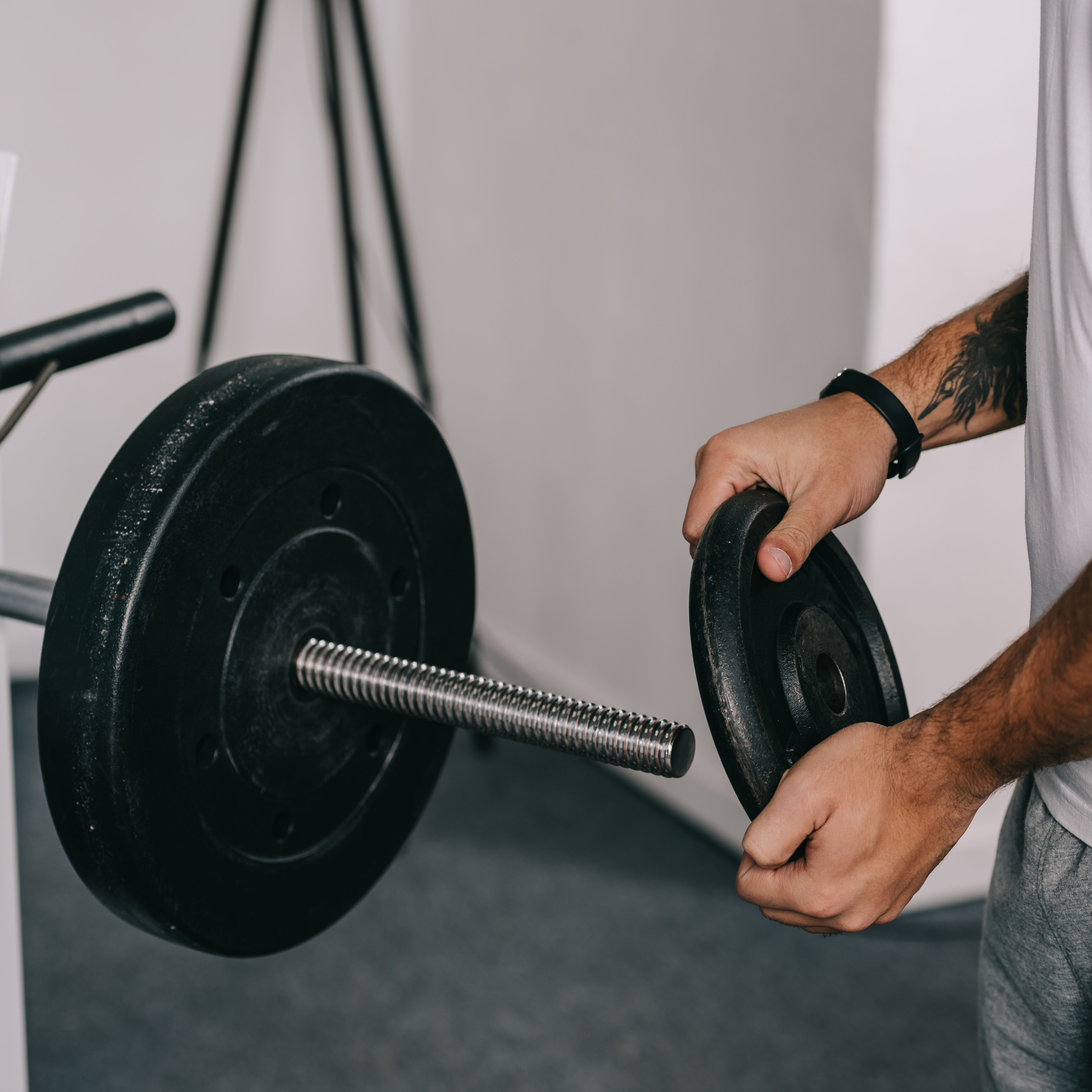
What Is Progressive Overload, Really?
At its core, progressive overload just means gradually increasing the demands placed on your muscles over time. It's the underlying principle behind getting stronger, building muscle, and improving athletic performance, full stop.
The body is remarkably good at adapting. Once a weight stops feeling hard, it's a sign your muscles need a new reason to grow.
That new challenge doesn't have to come from the barbell alone. It can come from:
- Increasing the weight
- Adding more reps
- Adding another set
- Cleaning up technique
- Cutting rest time (in the right programs)
- Training more frequently
A lot of people assume progressive overload only means "lift heavier." That's actually just one piece of it.
Why You Can't Just Lift the Same Weight Forever
Picture curling a pair of 20-pound dumbbells for 10 reps.
The first time, it's tough. A few weeks in, those same reps start to feel almost easy.
That's adaptation at work, and it's also the problem. Once the body stops being challenged, it has no real incentive to keep building muscle or strength.
The goal was never to make every single workout brutal. It's to make each month a little more demanding than the last. Small gains, stacked over time, add up to something much bigger.

How Fast Should Beginners Actually Increase the Weight?
This is the question almost everyone gets stuck on, and the honest answer is: it depends on performance, not the calendar.
A solid rule of thumb: increase the weight once you can complete every prescribed set and rep with good form, while still feeling like you had a rep or two left in the tank.
Here's what that looks like in practice.
Workout prescription: 3 sets of 10 reps, 50 lb bench press
- Week 1: 10, 9, 8 reps, stay at 50 lbs next time
- Week 2: 10, 10, 10 reps, still felt tough, stay again
- Week 3: 10, 10, 10 reps, form solid, probably had another rep in each set, time to increase
From there:
- Upper-body exercises: add 2.5 to 5 pounds
- Lower-body exercises: add 5 to 10 pounds
Small jumps like these are what actually hold up over months of training.
Signs It's Time to Increase the Weight
Instead of guessing, watch for these signals.
You completed every prescribed rep. If the workout called for 3×10 and all 30 reps got done comfortably, that's a green light.
Technique held up the whole time. Never chase heavier weight at the expense of form. If a squat suddenly gets shallow or the shoulders start doing all the work on bench press, the weight is too much.
The last few reps still felt hard. The sweet spot is finishing a set with roughly one to three reps left in reserve, not cruising through, but not gasping for air either.
Recovery feels normal. Still feeling wrecked days after a session usually means the body needs more time before adding load.
Signs the Weight Went Up Too Soon
Enthusiasm is great, until the body pushes back.
- Form starts to break down. If technique shifts noticeably, it's worth dropping back down.
- Reps start getting missed regularly. A slight dip is normal; missing half the workout is not.
- Every session feels like a max-effort test. Training should be challenging, not a weekly grind to the edge.
- Recovery keeps getting worse. Constant soreness, poor sleep, and dropping energy are all signs of progressing faster than the body can keep up with.
Progressive Overload Isn't Just About Adding Weight
One of the most common myths in fitness is that heavier automatically means better. In reality, some of the smartest progress comes from:
- Better technique: a clean, full-depth squat often stimulates more muscle than a heavier squat with poor form.
- More reps: going from 8 to 10 reps at the same weight is real progress.
- More control: slowing down the lowering phase of a lift builds more tension without adding a single pound.
- Better consistency: three solid workouts a week for six months will beat sporadic, all-out sessions every time.
So How Often Should the Weight Actually Go Up?
There's no single schedule that works for everyone, different lifts progress at different speeds.
As a rough guide, beginners might see:
- Squats and deadlifts progress every 1–2 weeks
- Bench press and shoulder press progress every 2–4 weeks
- Isolation exercises progress every few weeks
As experience builds, progress naturally slows down. That's expected, not a red flag. Building muscle is a long game.
Common Mistakes Beginners Make
- Increasing every single workout. The body needs time to adapt, progress isn't a race.
- Never increasing at all. Getting too comfortable at the same weight for months stalls results just as much.
- Comparing numbers to other people. Progressive overload is personal, someone else's numbers say nothing about your own progress.
- Training to failure every session. Leaving a little in the tank often produces better results long-term than collapsing on every set.

How FitnessAI Takes the Guesswork Out of Progressive Overload
Knowing the theory behind progressive overload is one thing. Actually remembering last week's numbers, tracking every session, and deciding what to do next, that's where most people stall out.
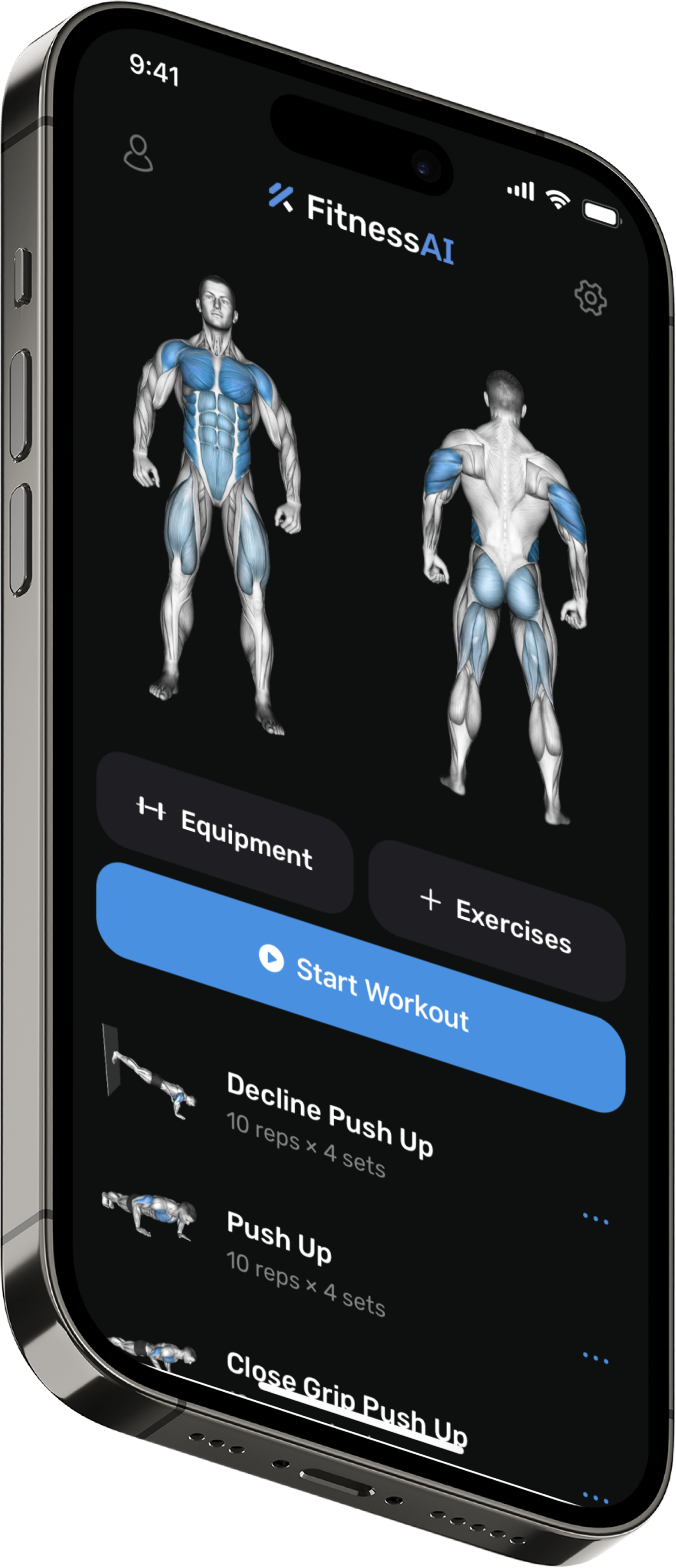
FitnessAI was built to solve exactly that problem: you show up, the app handles the plan.
Instead of manually calculating whether to add weight, FitnessAI's progressive overload engine analyzes performance from each workout and adjusts future sessions automatically, drawing on adaptive programming built from millions of real training data points. Sets, reps, and weights shift based on how a session actually went, not on guesswork.
FitnessAI also explains why a workout changed. If the weight goes up because every prescribed rep was completed with strong form, that reasoning is visible rather than feeling arbitrary. That transparency is intentional, it's what makes people trust the progression instead of second-guessing it.
And for anyone training while traveling or working with limited equipment, FitnessAI's equipment substitution adjusts workouts to what's actually available, so a different gym setup doesn't turn into a missed session.
Why Consistency Matters More Than Perfect Progression
According to FitnessAI's 2026 user survey, the biggest barriers to consistency are time, work, energy, and shifting schedules, not confusion about what to do. Only 8.9% of respondents pointed to "not knowing what to do" as their main obstacle, yet 44.3% downloaded FitnessAI specifically because they were tired of guessing or building their own plan.
That gap says a lot.
Most people don't stop training because they hit a wall on how much weight to lift. They stop because constant decision-making gets exhausting. When the next workout is already planned, showing up gets a lot easier, and showing up consistently is what actually lets progressive overload do its job.
Frequently Asked Questions
Should beginners increase weight every week? Not necessarily. Increase only after consistently completing all prescribed sets and reps with good form. Some exercises progress weekly; others take longer.
Is adding reps as good as adding weight? Yes. More reps at the same weight is a legitimate form of progressive overload, and often the better move before loading up the bar.
How much weight should I add? Generally, 2.5 to 5 pounds for upper-body exercises and 5 to 10 pounds for lower-body exercises. Smaller jumps tend to hold up better over time.
What if I fail after increasing the weight? That's normal. Stay at the new weight until all prescribed reps are completed consistently, rather than bouncing back and forth between loads.
What's the best app for tracking progressive overload? The best option is one that remembers past workouts, adjusts future training based on performance, and takes the math off the user's plate. FitnessAI does exactly that, automatically adjusting sets, reps, and weights while explaining the reasoning behind every change.
Final Thoughts
Progressive overload doesn't demand perfect timing or a spreadsheet full of formulas. It demands patience, small increases, solid technique, and enough consistency for those small gains to compound.
The hard part was never adding another five pounds. It's knowing when.
For anyone who'd rather spend their energy lifting than planning, FitnessAI can handle the progression. Open the app, follow the workout, and let the training evolve one session at a time, because progress should be predictable, not something to guess at.
Download FitnessAI HERE!
Alyssa Gonzalez
