


Free Weights, Machines, or Cables: Which Should You Be Using?
Walk into any gym and you’ll see three camps. The barbell crowd. The machine regulars. The people who seem to live at the cable station.
Everyone has an opinion about which one builds the most muscle. Here’s the honest answer: all three work.
The best choice depends on your goals, your experience, the equipment you have, and how consistently you can progress. You don’t have to pick a side. Knowing when to use each one can make your workouts more effective and a lot easier to stick with.
The Quick Difference
All three give your muscles resistance to work against. What changes is how that resistance is delivered and how much your body has to stabilize along the way.
Free weights (dumbbells, barbells, kettlebells) move freely through space, so your body controls the path. Machines guide you along a set track. Cables use pulleys you can adjust to pull from almost any angle.
None of them is automatically better. They’re just different tools.
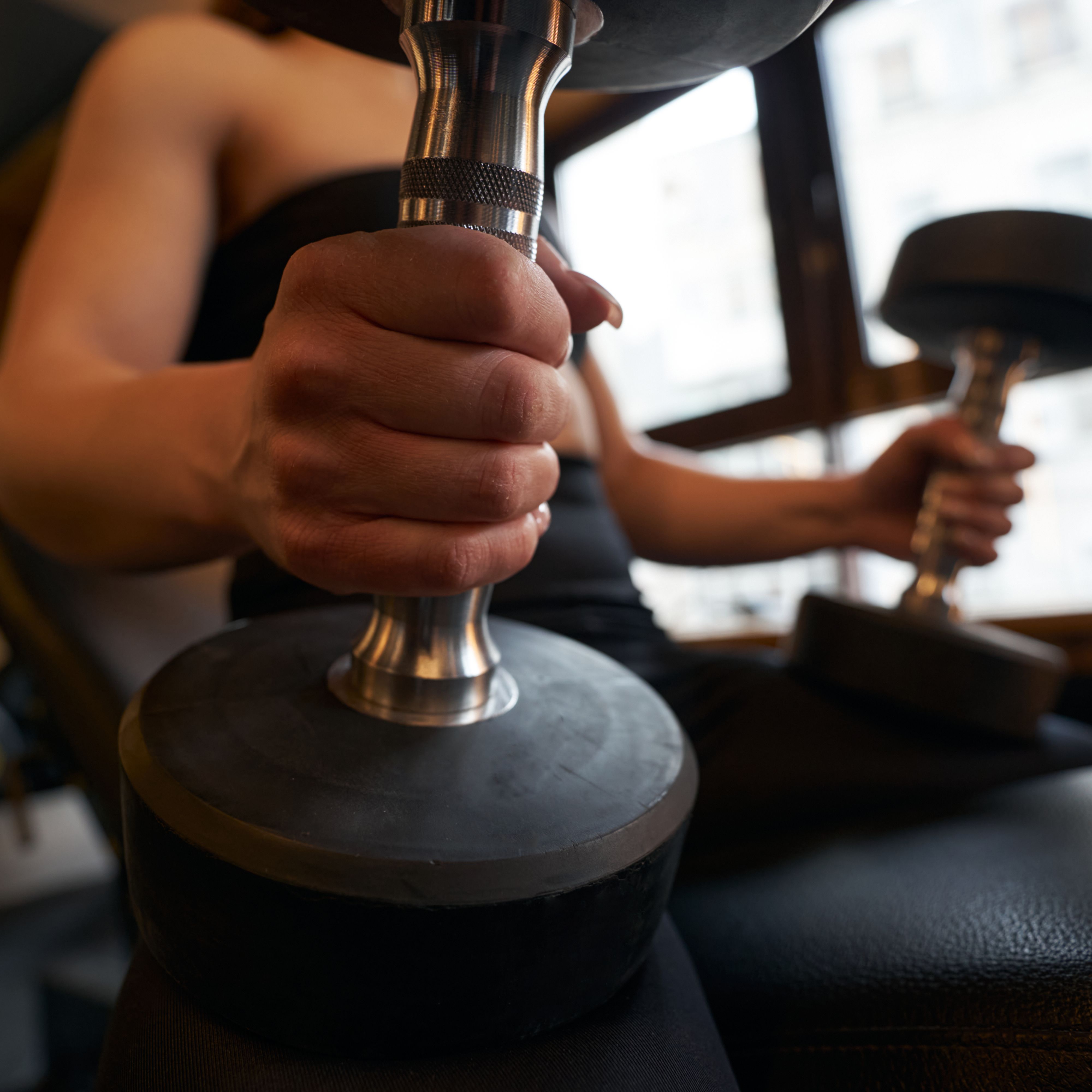
Free Weights: Strength, Coordination, and Versatility
Think squats, deadlifts, dumbbell presses, and rows. Because nothing guides the weight, your body has to control it the whole way through.
That makes free weights great for:
- Training several muscles at once. A dumbbell bench press works your chest, shoulders, and triceps together.
- Building strength in specific movements. Practicing a lift makes you better at that lift.
- Training anywhere. A pair of dumbbells covers dozens of exercises, at home or in a packed gym.
The tradeoff? Balance and coordination can become the limiting factor. If your grip or lower back gives out before your back muscles during a bent-over row, a chest-supported machine might serve you better.
And free weights aren’t magic for muscle growth. If bigger quads are the goal, a well-performed leg press can do the job just as well as a squat.
Not sure how much weight to use? That’s where structure helps. FitnessAI uses your workout history and performance to adjust your weights, reps, and sets over time, so you’re not guessing whether this is the week your dumbbell press should go up.
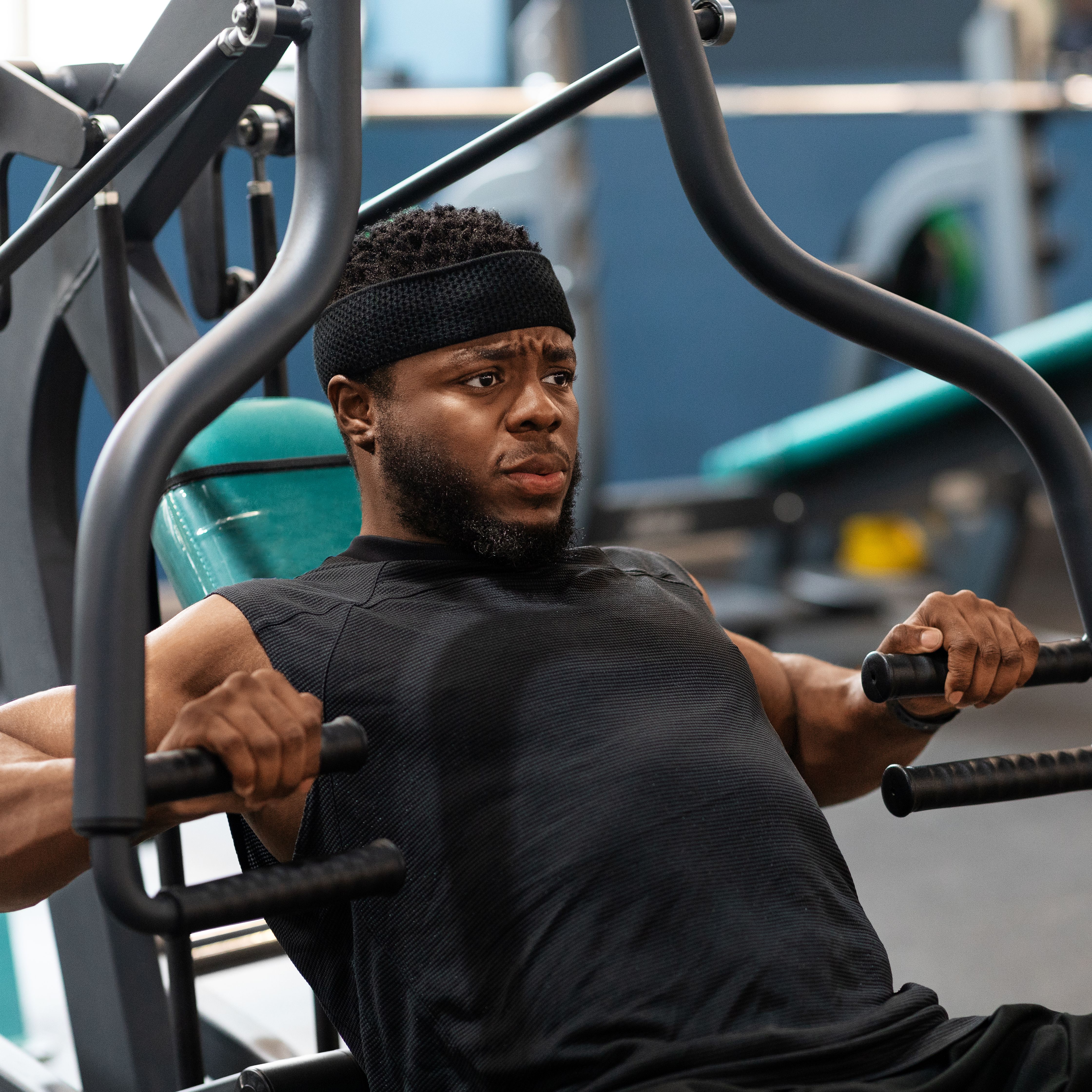
Machines: Not Just for Beginners
Let’s retire the myth that machines are training wheels. Plenty of experienced lifters use them, and for good reasons.
Because machines handle the balancing for you, they make it easier to:
- Focus on one muscle. On a leg extension, it’s just you and your quads.
- Push hard safely. Taking a set close to failure on a chest press is much more practical than doing it with heavy dumbbells and no spotter.
- Learn the basics. A guided path makes strength training less intimidating, though you still need to adjust the seat and handles for your body.
- Manage fatigue. If your lower back is fried from deadlifts, a chest-supported row lets you keep training your back without loading your spine again.
Are machines worse for “functional” strength? Not really. Strength is specific. If you want a better barbell squat, you have to squat. But if you just want stronger legs and more muscle, machines absolutely pull their weight.
FitnessAI mixes exercise types based on your goals, experience, and equipment, so you can focus on progressing instead of wondering whether a machine exercise “counts.”
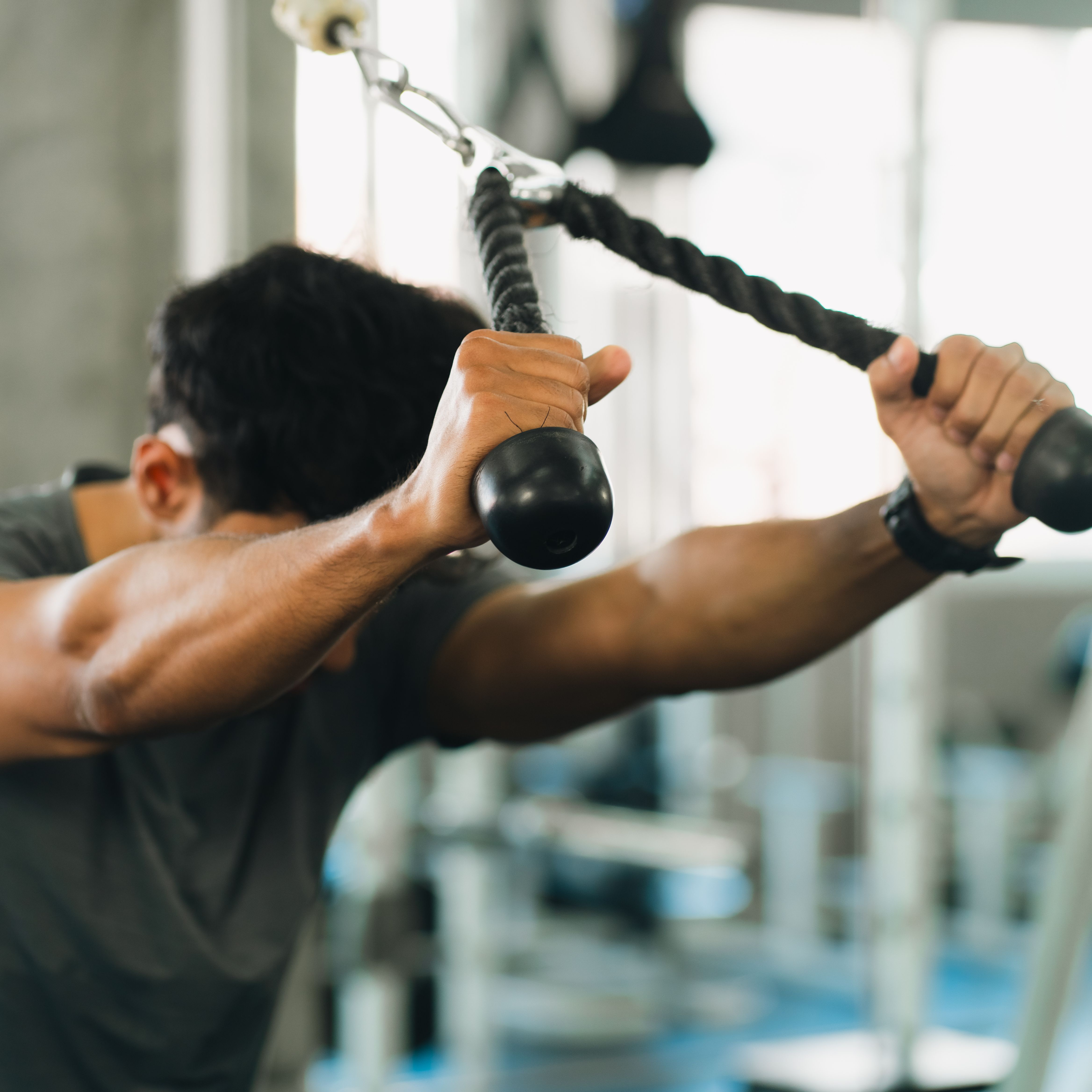
Cables: The Flexible Middle Ground
Cables sit somewhere between free weights and machines. They provide guided resistance, but you can change the angle of pull just by moving the pulley.
That makes them ideal for rows, pushdowns, lateral raises, and chest flyes.
You’ve probably heard cables provide “constant tension.” That’s partly true. The cable stays taut, but how hard your muscle works still changes with your joint position and the direction of the pull. What cables really give you is control over resistance angles, which is useful in its own right.
Cables shine for isolation work and adding targeted volume after your big lifts. Many people also find certain cable exercises more comfortable than the free-weight version, and exercises you can do consistently and pain-free matter.
Still, a cable curl isn’t automatically better than a dumbbell curl. Both build muscle with good effort and progression.
Cable stations also tend to be busy. FitnessAI’s Smart Exercise Substitutions can swap in a similar movement, so your workout doesn’t stall while someone finishes their fifth set of pushdowns.
What the Research Says
A 2023 systematic review and meta-analysis in The Journal of Sports Medicine and Physical Fitness compared free weights and machines. Researchers found no significant overall difference in muscle growth between them.
Strength gains, though, were specific to the equipment people trained with. Practice barbell squats and you’ll get better at barbell squats. That doesn’t mean you’ll build more quad muscle than someone on the leg press.
So what actually drives growth? Four things, regardless of equipment:
- Progressive overload. More weight, more reps, better range of motion, or more productive volume over time.
- Effort. Ending most working sets with about one to three reps left in the tank works well for many people.
- Enough volume. Enough challenging sets across the week, adjusted for your experience and recovery.
- Consistency. The best plan does nothing if you don’t repeat it.
FitnessAI’s progressive overload engine is built on exactly this idea. It uses your logged performance to update your sets, reps, and weights, so every session builds on the last.
Which Equipment Fits Your Goal?
Building muscle: Use all three. Free weights and machines for your main lifts, cables and isolation machines for extra targeted work. A chest day could be dumbbell bench press, then machine chest press, then cable flyes.
Getting stronger: Prioritize the lifts you want to improve. Want a bigger squat? Squat. Machines and cables can strengthen the supporting muscles.
New to lifting: Start with movements you can do confidently. Goblet squats, machine chest presses, seated cable rows, dumbbell Romanian deadlifts, and lat pulldowns make a solid starting lineup. FitnessAI’s Guided Video Workout Library shows you how each exercise is done, while personalized programming tells you what to train next.
Short on time: Pick exercises that hit your priorities without a lot of setup or waiting. FitnessAI offers workouts from 5 to 30 minutes and adjusts exercises, sets, and reps to fit your window. A shorter session means less volume, but it still counts when it’s part of a consistent routine.
Training at home: Free weights are usually the most practical choice. Adjustable dumbbells, a bench, and some bands go a long way. FitnessAI’s Equipment-Based Adaptation builds workouts around whatever you have, because your plan should fit your space, not the other way around.
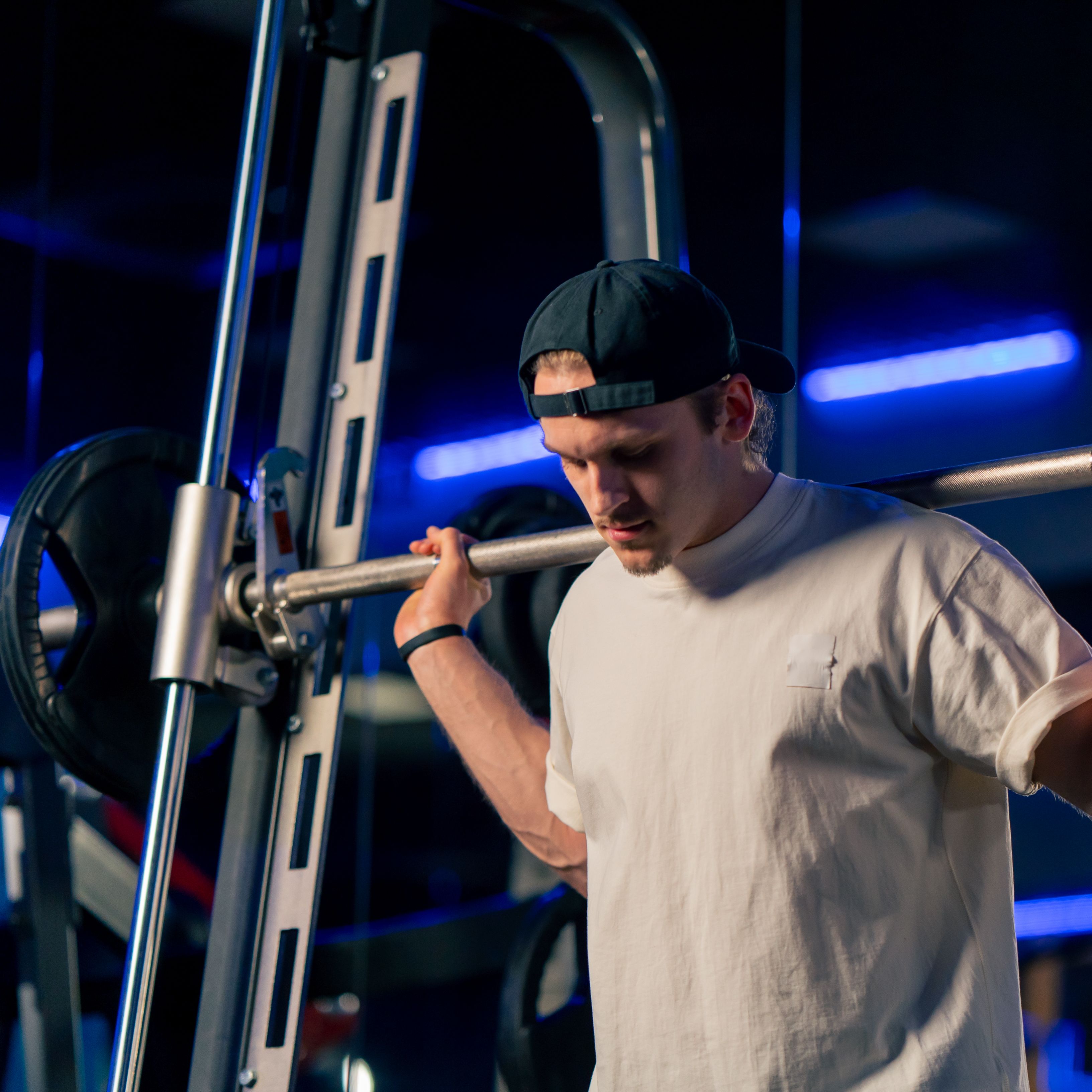
How to Combine All Three in One Workout
Keep it simple:
- Start with your priority lift while you’re fresh. If your squat matters most, don’t save it for last.
- Add stable machine work for more volume without the coordination demands.
- Finish with isolation work on cables or machines, like lateral raises, pushdowns, or leg curls.
A balanced full-body session might be goblet squats, machine chest press, seated cable rows, dumbbell Romanian deadlifts, cable lateral raises, and machine leg curls. Short on time? Do the first three or four and save the rest for another day. What matters most is having a structure you can repeat.
Knowing When to Add Weight
Say you’re doing three sets of 8 to 12 on dumbbell bench press with 25-pound dumbbells. One week you hit 10, 9, and 8 reps. The next, a rep more on each set. A couple of weeks later, you’re hitting 12 on every set with solid form. That’s your cue to move up to 30s, even if your reps drop back down to 8 or 9.
Notice that progress isn’t always more weight. Sometimes it’s more reps with the same weight. This works the same way on dumbbells, machines, or cables.
The hard part is keeping track. You might remember last week’s numbers, but six weeks ago? FitnessAI handles that by using your history to guide each session. Hit your reps consistently, and your next workout may call for more weight. If your performance suggests you need more recovery, it adjusts the other way. Its Real-Time Progression and Transparency features show you why each recommendation changes, so every adjustment has a purpose.
When the Equipment You Need Is Taken
Squat racks full. Hotel gym with three machines. Cable attachment missing again. It happens.
The fix is knowing which movements serve a similar purpose. A leg press or goblet squat can stand in for a barbell squat. A machine chest press can replace dumbbell bench press. A pec deck covers cable flyes, a chest-supported dumbbell row covers seated cable rows, and dumbbells work for cable curls or the machine shoulder press.
These swaps aren’t identical, so focus on keeping the purpose of the exercise. A leg press builds quads well but won’t improve your squat technique.
FitnessAI’s Smart Exercise Substitutions and Equipment-Based Adaptation are designed for exactly these moments, so you can switch and keep moving instead of scrapping the workout.
Common Mistakes to Avoid
- Assuming free weights always win. The quality of your sets matters more than whether the weight moves freely.
- Skipping machine adjustments. Seat height and handle position affect comfort and results. If a machine always feels off, choose another exercise.
- Changing exercises every session. Constant variety makes it hard to see if you’re progressing. Keep your core lifts steady for a while.
- Chasing heavier weight at the expense of form. More reps and better execution are progress too.
- Ignoring recovery. Your muscles don’t care whether fatigue came from a dumbbell or a cable stack. If performance keeps dropping, look at volume, sleep, and nutrition. FitnessAI’s Recovery-Aware Adjustments factor in fatigue and past performance when setting your training demands.

Quick Answers
Are free weights better than machines for muscle growth? Not necessarily. Research suggests they produce similar growth when training is matched.
Can you build muscle with only machines? Yes, with enough volume, effort, progressive overload, and recovery.
Are cables better than dumbbells? Neither wins outright. Cables let you change the angle of resistance, while dumbbells are more accessible. Both work.
Should beginners start with machines or free weights? Either. Machines reduce balance demands, and free weights build coordination. Start with what you can do confidently.
Do you need all three in one workout? No. Variety helps when it serves your goals, not just for its own sake.
The Bottom Line
Free weights, machines, and cables aren’t competing for a trophy. Free weights build strength and coordination. Machines make targeted training easier. Cables give you flexibility and adjustable angles.
What actually makes a program work is choosing effective exercises, showing up consistently, and gradually raising the challenge.
That’s what a structured plan is for. FitnessAI builds workouts around your goals, equipment, and training history, then adjusts your sets, reps, and weights as you get stronger.
You show up. FitnessAI handles the plan.
Explore FitnessAI and spend less time figuring out what to lift.
Alyssa Gonzalez
