


Does Exercise Order Matter? The Science of What to Do First
Short answer: yes, order matters. But not because there's one magic sequence every workout has to follow.
The real rule is simpler. Whatever matters most to your goal should come earlier in the workout, while you're still fresh. That's when strength, focus, and rep quality are all at their best. Research backs this up too: exercises placed earlier in a session tend to see bigger strength gains over time. For muscle growth, though, order barely moves the needle.
So no, cable flyes don't have to come after bench press. What actually matters is figuring out your priority, and building the workout around it.
Why Order Matters for Strength
Picture the first exercise of a workout next to the last one.
Early on, everything feels easier. Grip strength is intact, legs haven't absorbed five exercises' worth of fatigue, and it's usually possible to lift more or squeeze out better reps. By exercise six, that's gone.
Studies on resistance training consistently show the same pattern: exercises done earlier in a session allow for more reps and more total volume. Over the long run, the exercises placed first also tend to see the biggest strength improvements.
In other words, exercise order is really a question of where to spend limited energy. Whatever matters most should get first pick.
Does Going First Actually Build More Strength?
It can. A meta-analysis found that strength gains were consistently larger for whatever exercise came first in a workout, whether that was a multi-joint or single-joint movement. A newer ACSM review of over 130 studies backed this up, linking early placement (along with heavier loads and full range of motion) to better strength outcomes.
The takeaway isn't "compound lifts always go first." It's closer to: priority exercises go first. Those aren't always the same thing.

Should Compound Lifts Always Come First?
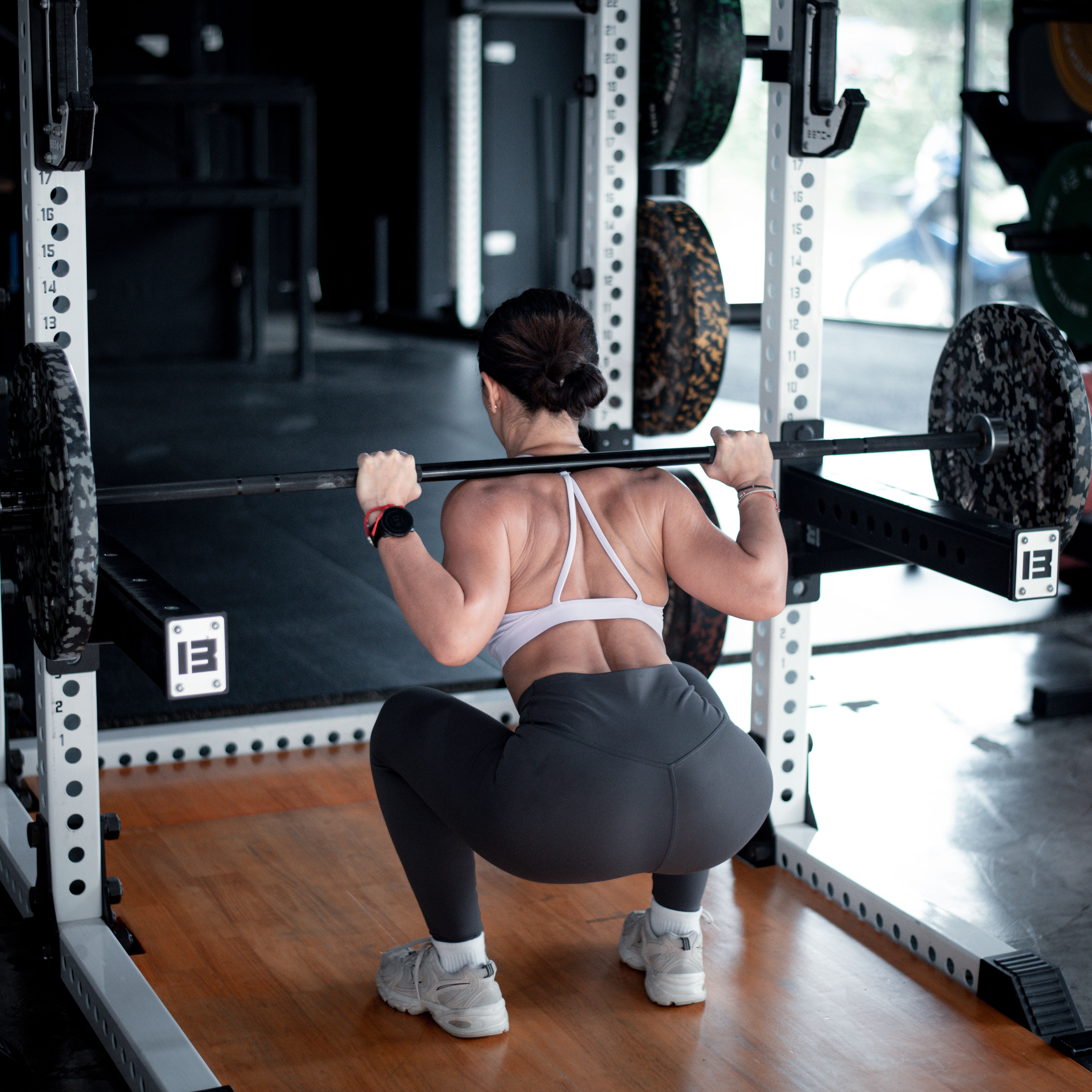
For most people, yes, that's a solid default. Squats, deadlifts, bench presses, rows, and overhead presses hit multiple muscle groups, demand more coordination, and typically move the most weight. That's why traditional programming puts them early.
A typical lower-body day might look like:
- Squat
- Romanian deadlift
- Leg press
- Leg curl
- Leg extension
- Calf raise
Nothing wrong with that structure. It's just a default, not a rule carved in stone.
When an Isolation Move Should Go First Instead
Say the real goal is bigger biceps. Rows, pull-ups, pulldowns, and rear-delt work would all happen first, leaving curls for whatever energy is left over.
Or curls could just go earlier.
Research shows that placing a specific exercise earlier tends to favor strength gains in that exact movement, and there's no strong evidence that compound-before-isolation actually builds more muscle overall. So if one muscle or lift has been lagging, giving it the early slot makes sense.
The workout should follow the goal, not old gym habits.
Does Order Even Matter for Muscle Growth?
Less than people think. A meta-analysis found no real difference in hypertrophy between doing compound lifts first versus isolation lifts first. A broader review reached the same conclusion: there just isn't strong evidence that order drives muscle growth.
What does drive it is training volume.
For anyone chasing hypertrophy, the better questions are:
- Are the target muscles getting trained consistently?
- Is weekly volume actually enough?
- Are sets genuinely challenging?
- Is weight or reps progressing over time?
- Is recovery keeping up with the training?
The 2026 ACSM position stand backs this up directly: hypertrophy responded most to higher weekly volume, while most other programming details, including order, had far less impact.
What to Do First, Based on the Goal
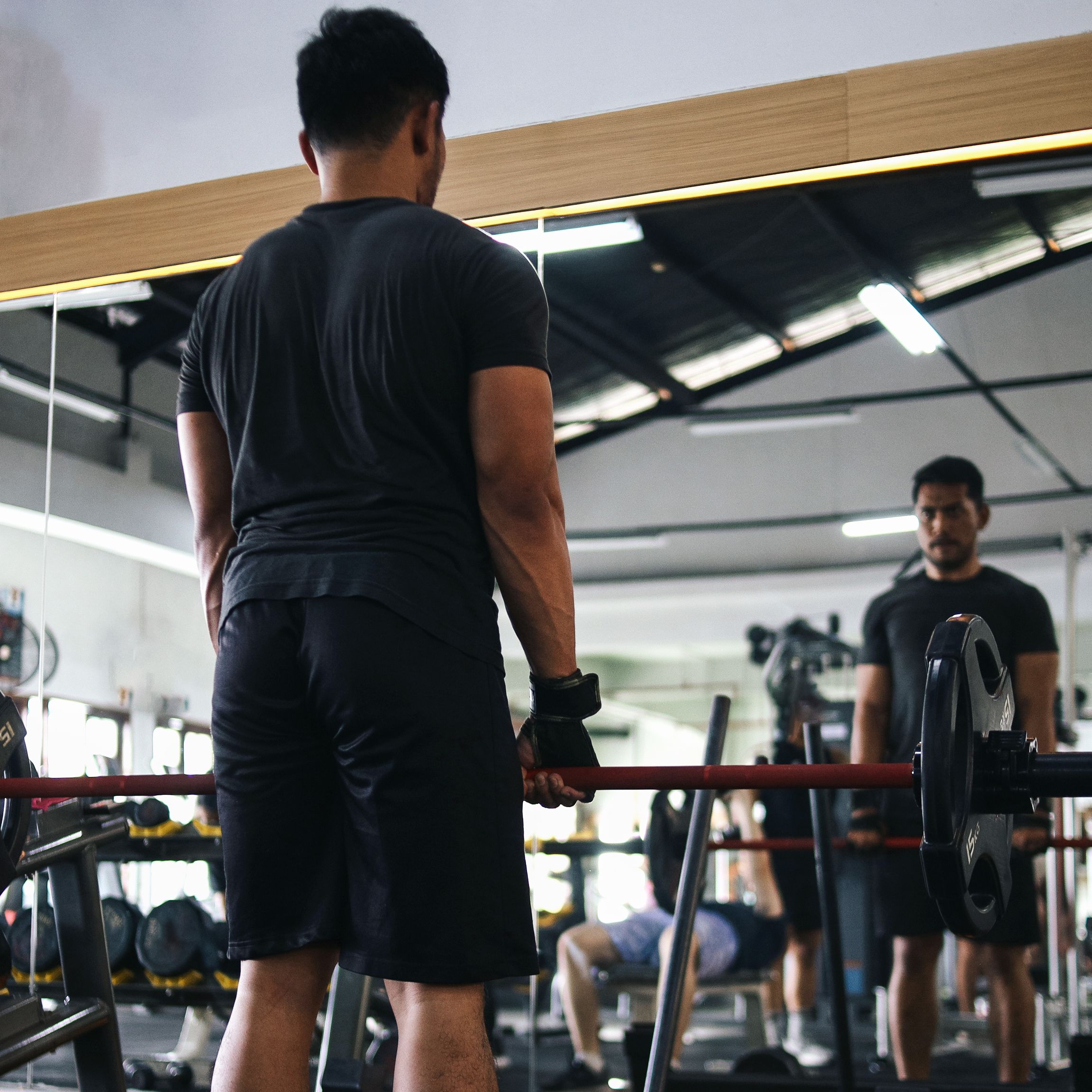
Instead of memorizing "the" correct order, it helps to just ask: what's this workout actually for? Then protect that priority from fatigue.
Training for strength? Put the lift that matters most first; secondary compound work, accessories, and isolation work follow behind it.
Training for muscle? Start with the muscle group getting the most attention that day, then build the rest of the session around getting in enough quality volume. A chest-focused push day might start with incline dumbbell press, then move to flat machine press, cable fly, lateral raise, and triceps extension.
Working on a weak point? Move it earlier, at least for a few weeks. If hamstrings always get whatever's left after squats and lunges, that's a sign they need to move up the list, not that they need it forever. Priorities shift as training shifts, which is exactly why FitnessAI adjusts programming instead of locking a plan in place. It responds to performance and progression instead of expecting a full manual rewrite every time something changes.
Cardio or Weights First?
Same logic applies. If strength is the priority, lift first. Studies comparing the two orders found an advantage for lifting before cardio when it comes to lower-body strength, while aerobic gains barely change either way. If training for an endurance event, that priority can flip.
The real question is never "what goes first by default." It's "what actually needs to improve most."
What About Power and Explosive Work?
Anything relying on speed and coordination, like Olympic lift variations, jumps, throws, or explosive kettlebell work, belongs near the top of the session. Power depends on moving fast, and fatigue kills that fast.
A practical structure for someone chasing both power and strength:
- Power or explosive movement
- Primary strength lift
- Secondary compound lift
- Accessories
- Isolation work
Not necessary for general fitness or pure hypertrophy goals, but useful for anyone training speed and explosiveness specifically.
Does Pre-Exhaustion Actually Work?
Pre-exhaustion means fatiguing a muscle with an isolation move before hitting it with a compound lift, like leg extensions before squats. The theory sounds reasonable. The evidence isn't very convincing.
It hasn't been shown to boost muscle recruitment or long-term growth, and it often just means less weight or fewer reps on the compound lift that follows. Not useless, just not necessary. If it's a favorite technique, fine. It just isn't required for progress.

When the Exercise You Need Is Taken
Here's the part research papers never deal with: someone's been on the squat rack for fourteen minutes and isn't moving.
Real gyms don't run like spreadsheets. If swapping the order once means actually finishing a workout instead of standing around, swap it. The research warns against always placing something important last, not against the occasional shuffle because equipment is busy.
This is where FitnessAI's equipment-based adjustments help most. When something's unavailable, the workout adapts around it instead of leaving anyone to improvise an entirely different session on the spot.
Only Have 20 Minutes?
This is exactly when order matters most. When there's a real chance the whole workout won't get finished, the highest-value work needs to happen first.
A simple short-session structure:
- Priority movement
- Secondary compound lift
- One or two accessories, if time allows
Time is a common obstacle. In FitnessAI's February 2026 survey of over 1,000 users, time was the most cited barrier to consistency, at 33.4%. Interestingly, 44.3% said they originally downloaded FitnessAI because they were tired of guessing or building their own plan.
Those two numbers are connected. When time is tight, deciding what deserves the first ten minutes matters more, not less. FitnessAI builds sessions around the time actually available, rather than trying to cram a 60-minute plan into 25 minutes.
Exercise Order for Beginners
Beginners don't need complicated sequencing. A solid starting framework:
- Most demanding movement
- Secondary compound exercise
- Additional compound or machine work
- Isolation work
- Optional accessories
A sample full-body beginner session might look like: goblet squat, dumbbell bench press, seated cable row, leg curl, lateral raise, biceps curl.
Exercise selection should still match experience level, equipment, and comfort. There's no prize for opening with a barbell squat before feeling confident in the movement. This is where a personalized plan makes a real difference. FitnessAI builds around goal, experience, equipment, and schedule, then adjusts sets, reps, and weight as performance changes. Fewer decisions to make before the first rep.

Exercise Order for Experienced Lifters
Once training experience builds up, order becomes a useful way to shift emphasis without rebuilding an entire program. Rotating priority across training blocks is a common approach:
- Block 1: Bench press first, emphasizing pressing strength
- Block 2: Incline press first, emphasizing upper chest
- Block 3: Overhead press first, bringing up the shoulders
Same exercises. Different priority.
It's also worth watching for stalled lifts. If an exercise has been stuck for weeks and always shows up fifth in the workout, the issue might not be effort. It might just be fatigue getting there first. FitnessAI handles this by adjusting weights, reps, and sets based on actual performance, rather than leaving anyone to guess whether a bad session means pushing harder or starting over.
How FitnessAI Handles This Without the Guesswork
Exercise order is one piece of a much bigger puzzle that includes exercise selection, sets, reps, load, weekly volume, recovery, equipment, and progression. Chasing one variable while ignoring the rest misses the point.
FitnessAI uses training history and real performance data to build workouts, then adjusts sets, reps, weights, and exercise selection as progress happens. If performance says someone's ready for more, the plan moves forward. If recovery says otherwise, it adjusts. If equipment changes, the workout changes with it.
That's the whole idea: fewer decisions between walking into the gym and doing something productive.
The Bottom Line
Exercise order matters most when there's a clear priority behind it.
Training for strength? Do the priority lift early. Training for muscle? Order matters less, so focus on hitting enough quality volume for the muscles that matter most. Training power? Explosive work goes first. Combining cardio and strength? Lift first if strength is the goal. And if the gym gets crowded or the schedule shrinks from 45 minutes to 20, adapt without overthinking it.
Progress was never about running one perfect sequence every single Tuesday. It's about doing the right work consistently, progressing it over time, and knowing what deserves the best effort on a given day.
FitnessAI can handle building that structure, and adjusting it as things change.
FAQ
Does it matter what order I do exercises in? Yes, mostly for strength and performance. Exercises done earlier tend to see better performance and greater long-term strength gains. For muscle growth, order matters far less.
Should compound or isolation exercises come first? Compound lifts are a solid default since they're more demanding and allow heavier loads. But if a specific muscle or lift is the real priority, moving it earlier makes sense too.
Should the weakest muscle be trained first? If it's a real priority, yes, at least for a while. It doesn't have to stay first forever. Priorities shift across training blocks.
Does exercise order matter for hypertrophy ? Not much. Evidence shows little difference between compound-first and isolation-first routines. Consistency and enough weekly volume matter more.
Cardio before or after weights? If strength is the priority, lift first. Lifting before cardio tends to favor lower-body strength, while aerobic gains aren't affected much either way.
Download Fitness NOW!
Alyssa Gonzalez
