


Burn More Fat with Smart Training: What Actually Works (and What Doesn't)
Scroll through fitness social media for five minutes and you'll see endless "fat-burning hacks": fasted cardio melts belly fat, HIIT torches calories all day, lifting heavy makes you bulky, Zone 2 is the secret weapon, fat burners accelerate results, and on and on.
The noise is deafening. And most of it? Complete nonsense.
Here's the reality: fat loss isn't complicated. But the fitness industry profits from making it seem like you need the latest hack, supplement, or workout trend to see results. You don't.
What you need is clarity. What actually works? What's overhyped? And how do you structure training to maximize fat loss without sacrificing muscle, energy, or sanity?
Let's cut through the myths and get to the truth about burning fat with smart training.
The Fat Loss Foundation: What Actually Matters
Before we dive into trending hacks and training methods, let's establish the non-negotiables. These are the factors that drive 95% of your fat loss results:
1. Calorie Deficit
You cannot out-train a bad diet. Fat loss requires consuming fewer calories than you burn. Period. No amount of cardio, HIIT, or "fat-burning" supplements will overcome a calorie surplus.
2. Protein Intake
High protein (0.7-1g per pound of bodyweight) preserves muscle mass during fat loss, increases satiety, and has a higher thermic effect than carbs or fats. It's your most important macronutrient when cutting.
3. Strength Training
Lifting weights signals your body to preserve muscle while losing fat. Without this signal, you'll lose muscle along with fat. Leaving you "skinny fat" instead of lean and strong.
4. Consistency
Fat loss takes weeks and months, not days. The best program is the one you can stick to. Extreme approaches that require perfection always fail.
Everything else, cardio methods, training splits, meal timing, supplements, is optimization. They can help, but they're secondary to these four pillars.
Got it? Good. Now let's talk about what's trending and what actually works.
.png)
Trending "Fat Burn Hack" #1: Fasted Cardio
The claim: Doing cardio before eating burns more fat because your body has no glucose to use for fuel, forcing it to tap into fat stores.
The truth: Fasted cardio does increase fat oxidation during the workout, but it doesn't lead to greater fat loss over 24 hours or long-term. Total daily calorie deficit is what matters, not whether you ate before your morning run.
What the science says: Multiple studies show no significant difference in fat loss between fasted and fed cardio when total calories and macros are matched. Some research even suggests fed cardio allows for higher intensity and better performance, leading to more calories burned overall.
The practical reality: If you prefer training fasted and it helps you stay consistent, go for it. If you feel weak and miserable without food pre-workout, eat something. Your preference matters more than the negligible metabolic difference.
FitnessAI user insight: "I tried fasted workouts for a month. I felt terrible and my lifts suffered. Once I added a pre-workout snack, my strength came back and I still lost fat just fine. The deficit matters, not the timing."
Verdict: Overhyped. Do what fits your schedule and energy levels.
.png)
Trending "Fat Burn Hack" #2: HIIT Burns Fat All Day (The "Afterburn Effect")
The claim: High-intensity interval training creates EPOC (excess post-exercise oxygen consumption), meaning you burn extra calories for hours after your workout, way more than steady-state cardio.
The truth: EPOC is real, but massively overstated. The actual afterburn from a 20-minute HIIT session adds maybe 50-100 extra calories burned over the next few hours. That's one tablespoon of peanut butter. Not nothing, but not game-changing.
What the science says: HIIT does burn calories efficiently during the workout and creates a small afterburn effect. But total calorie expenditure from moderate-intensity steady-state cardio can equal or exceed HIIT when duration is factored in. A 45-minute Zone 2 walk might burn more total calories than a 15-minute HIIT session.
The practical reality: HIIT is time-efficient and great for conditioning, but it's also taxing on your nervous system and recovery. Doing HIIT 5-6 days/week on top of strength training is a recipe for overtraining and burnout.
Strategic use of HIIT:
- 1-2 sessions per week as conditioning finishers
- Keep sessions short (10-20 minutes)
- Don't sacrifice strength training recovery for extra HIIT
FitnessAI user insight: "I was doing HIIT every day thinking it was the key to fat loss. I was exhausted, my lifts stalled, and I looked flat. When I cut back to 2 HIIT sessions per week and prioritized lifting, I actually leaned out faster."
Verdict: Useful tool, but not magic. Don't let it interfere with strength training.
.jpg)
Trending "Fat Burn Hack" #3: Zone 2 Cardio Is the Secret
The claim: Training at 60-70% max heart rate (conversational pace) maximizes fat oxidation and improves metabolic health, making it superior for fat loss.
The truth: Zone 2 does use fat as the primary fuel source during exercise, but, like fasted cardio, what matters is total calorie deficit over time, not fuel source during the workout.
What the science says: Zone 2 cardio is excellent for cardiovascular health, recovery, and building aerobic capacity. It's low-stress, easy to recover from, and sustainable long-term. But it's not inherently better for fat loss than higher-intensity work when calories are matched.
The practical reality: Zone 2 is one of the best tools for fat loss! Not because of magic fat-burning properties, but because it's easy to do consistently without interfering with strength training. You can walk for 40 minutes and still crush your squat session the next day.
Strategic use of Zone 2:
- 2-4 sessions per week (30-60 minutes each)
- On rest days from lifting or as separate sessions
- Increases daily calorie expenditure without taxing recovery
- Improves cardiovascular health (longevity benefit)
FitnessAI user insight: "Adding 3 Zone 2 walks per week made fat loss way easier. I was burning extra calories without feeling beaten up, and my lifts kept improving. Best decision I made."
Verdict: Legitimately useful. Not because it's magic, but because it's sustainable.
.png)
Trending "Fat Burn Hack" #4: Lifting Heavy Makes You Bulky (So Do High Reps for Fat Loss)
The claim: Heavy lifting builds mass, so if you want to lose fat and "tone," you should use light weights and high reps.
The truth: This is one of the most damaging myths in fitness. Heavy lifting does NOT make you bulky unless you're in a calorie surplus. And high-rep "toning" workouts are suboptimal for preserving muscle during fat loss.
What the science says: Muscle growth requires a calorie surplus. In a deficit, heavy lifting signals your body to preserve existing muscle mass. Without this signal, you'll lose muscle along with fat, resulting in a smaller but still soft physique. High-rep training has its place, but it's not superior for fat loss.
The practical reality: If you want to look lean and defined, you need to maintain (or build) muscle while losing fat. Heavy compound lifts are the most effective way to do that.
What to do instead:
- Lift heavy (4-8 rep range on main lifts)
- Use progressive overload (add weight, reps, or volume over time)
- Prioritize compound movements (squats, deadlifts, presses, rows)
- Maintain or increase strength during your cut
FitnessAI user insight: "I was terrified of getting bulky, so I did light weights and cardio for months. I lost weight but looked worse, just a smaller version of myself. When I started lifting heavy with FitnessAI, I finally got the lean, defined look I wanted."
Verdict: Total myth. Heavy lifting is essential for quality fat loss.
.png)
Trending "Fat Burn Hack" #5: Fat Burner Supplements Accelerate Results
The claim: Thermogenic supplements, fat burners, and metabolism boosters help you burn more calories and lose fat faster.
The truth: Most fat burners are overpriced caffeine pills with minimal additional benefit. The few ingredients with modest evidence (caffeine, green tea extract) might increase metabolism by 50-100 calories per day, negligible in the big picture.
What the science says: Caffeine can slightly increase metabolic rate and improve workout performance, which may indirectly support fat loss. But no supplement creates fat loss without a calorie deficit. And many fat burners contain proprietary blends of unproven (or even dangerous) ingredients.
The practical reality: Save your money. Black coffee before workouts provides the same benefit as most fat burners for pennies. Focus on training, nutrition, and sleep instead.
FitnessAI user insight: "I wasted $200 on fat burners before realizing they did nothing. Once I dialed in my training and diet, I lost 15 pounds in 12 weeks without any supplements."
Verdict: Waste of money. Don't fall for it.
.png)
Trending "Fat Burn Hack" #6: You Need to Do Cardio to Lose Fat
The claim: Strength training builds muscle, but you need cardio to burn fat.
The truth: You can lose fat with zero cardio if your calorie deficit is in place. Cardio is a tool to increase calorie expenditure, but it's not required.
What the science says: Fat loss is driven by energy balance. Resistance training increases muscle mass (which raises metabolic rate), improves insulin sensitivity, and creates a favorable hormonal environment for fat loss. Cardio adds calorie burn, but it's optional, not mandatory.
The practical reality: Cardio makes fat loss easier because it increases your daily calorie expenditure, allowing you to eat more while still maintaining a deficit. But if you hate cardio, you can achieve the same results by eating slightly less.
Strategic approach:
- Prioritize strength training (3-5 days/week)
- Add cardio for calorie expenditure and cardiovascular health (not as a fat loss requirement)
- Choose sustainable forms: Zone 2 walks, bike rides, swimming, hiking
FitnessAI user insight: "I lost 20 pounds doing zero cardio, just lifting 4 days/week and eating in a deficit. Eventually I added walks because I felt better, but I proved to myself that cardio isn't necessary."
Verdict: Optional, not required. Use it if it helps you create a sustainable deficit.
What Actually Works: The Smart Training Approach to Fat Loss
Now that we've cleared out the nonsense, here's what a smart, effective fat loss training plan looks like:
Foundation: Strength Training 3-5 Days/Week
This is non-negotiable. Lifting heavy preserves muscle, increases metabolic rate, and creates the lean, defined physique you're after.
Sample 4-day split:
- Monday: Upper Body (Bench, Rows, Overhead Press, Pull-ups)
- Tuesday: Lower Body (Squats, Romanian Deadlifts, Lunges)
- Thursday: Upper Body (Incline Press, Barbell Rows, Dips, Curls)
- Friday: Lower Body (Deadlifts, Bulgarian Split Squats, Leg Curls)
Key principles:
- Focus on compound movements
- Use heavy weights (4-8 rep range on main lifts)
- Progressive overload: add weight, reps, or volume over time
- Don't drastically drop volume during a cut, maintain training intensity
FitnessAI handles this automatically: The app programs your workouts, adjusts weights based on performance, and tracks progressive overload so you're always training optimally.
Add: Zone 2 Cardio 2-4 Days/Week
Low-intensity cardio increases calorie expenditure without taxing recovery. It's sustainable, low-stress, and supports cardiovascular health.
Options:
- 30-60 minute walks (incline or flat)
- Easy bike rides
- Light swimming or rowing
- Keep heart rate at 60-70% max (conversational pace)
Timing:
- On rest days from lifting
- Morning of lifting days (separate from your strength session)
- Post-workout if time allows
Optional: 1-2 HIIT or Conditioning Sessions/Week
If you enjoy high-intensity work and it doesn't interfere with recovery, add 1-2 short sessions per week.
Examples:
- 15-20 minute circuit: sled pushes, battle ropes, box jumps
- Sprint intervals: 30 seconds hard, 90 seconds easy x 10 rounds
- Metabolic finishers: burpees, kettlebell swings, rowing
Rules:
- Keep it short (10-20 minutes max)
- Don't do HIIT the day before heavy leg day
- If you're exhausted or your lifts are suffering, drop the HIIT
Always: Maintain a Moderate Calorie Deficit
Training optimizes fat loss, but nutrition drives it. Aim for a 300-500 calorie deficit, aggressive enough to lose 0.5-1% of bodyweight per week, but sustainable enough to maintain energy and strength.
Macros:
- Protein: 0.7-1g per lb bodyweight (preserve muscle)
- Fats: 0.3-0.4g per lb bodyweight (hormonal health)
- Carbs: Fill remaining calories (fuel workouts)
.png)
The Real Fat Loss Timeline (Set Realistic Expectations)
Here's what actual fat loss looks like when you do things right:
Weeks 1-2:
- Drop 2-5 lbs (mostly water weight)
- Energy adjusts to deficit
- Strength may dip slightly
Weeks 3-6:
- Lose 1-2 lbs per week
- Strength stabilizes or continues improving
- Visual changes start appearing (leaner face, less bloating)
Weeks 7-12:
- Lose 0.5-1.5 lbs per week (rate slows as you lean out)
- Strength maintained or still progressing
- Noticeable physique changes: abs emerging, veins showing, clothes fitting differently
Weeks 13-16:
- Final pounds of fat come off (slowest phase)
- Strength maintained
- Lean, defined physique fully visible
Total fat loss over 12-16 weeks: 12-25 pounds, depending on starting point and consistency.
The key: Patience. Fat loss isn't linear. Some weeks you'll drop 2 pounds, some weeks zero. Trust the process.
Why Strength Training Is the Ultimate Fat Loss Tool
Let's be clear: cardio can help. But if you only have time for one type of training, strength is the answer. Here's why:
1. Preserves (or builds) muscle massMuscle is metabolically active tissue. The more you have, the more calories you burn at rest. Cardio doesn't build muscle. Lifting does.
2. Increases resting metabolic rateMore muscle = higher metabolism. Strength training creates a long-term metabolic advantage that cardio doesn't.
3. Creates the "toned" look people actually wantAbs, defined shoulders, lean legs, that's muscle. You can't cardio your way to visible definition. You lift your way there.
4. Improves body composition, not just scale weightLosing 20 pounds of fat while maintaining muscle looks completely different than losing 20 pounds of fat AND muscle. Strength training ensures quality fat loss.
5. Sustainable and enjoyableProgressive overload is motivating. Hitting PRs keeps you engaged. Cardio for hours every week? Most people burn out.
FitnessAI user transformation: "I did cardio-only fat loss diets three times before. I'd lose weight, look terrible, and gain it all back. This time I lifted 4 days/week with FitnessAI and added walks. I lost the same amount of weight but look completely different, lean, strong, and defined. I'm never going back."
The Biggest Mistake People Make During Fat Loss
Here it is: Doing too much, too soon, and burning out.
The typical approach:
- Cut calories aggressively (1200 calories, crash diet)
- Add cardio 6 days/week (hours of treadmill)
- Drop strength training or lift super light (fear of bulking)
- Lose weight fast for 4-6 weeks
- Hit a wall: exhausted, hungry, miserable
- Quit and regain everything
The smarter approach:
- Moderate calorie deficit (300-500 below maintenance)
- Strength train 3-5 days/week (heavy, progressive)
- Add 2-4 Zone 2 cardio sessions (low-stress, sustainable)
- Lose 0.5-1% bodyweight per week
- Results take 12-16 weeks, but they last
Slow and sustainable beats fast and miserable every single time.
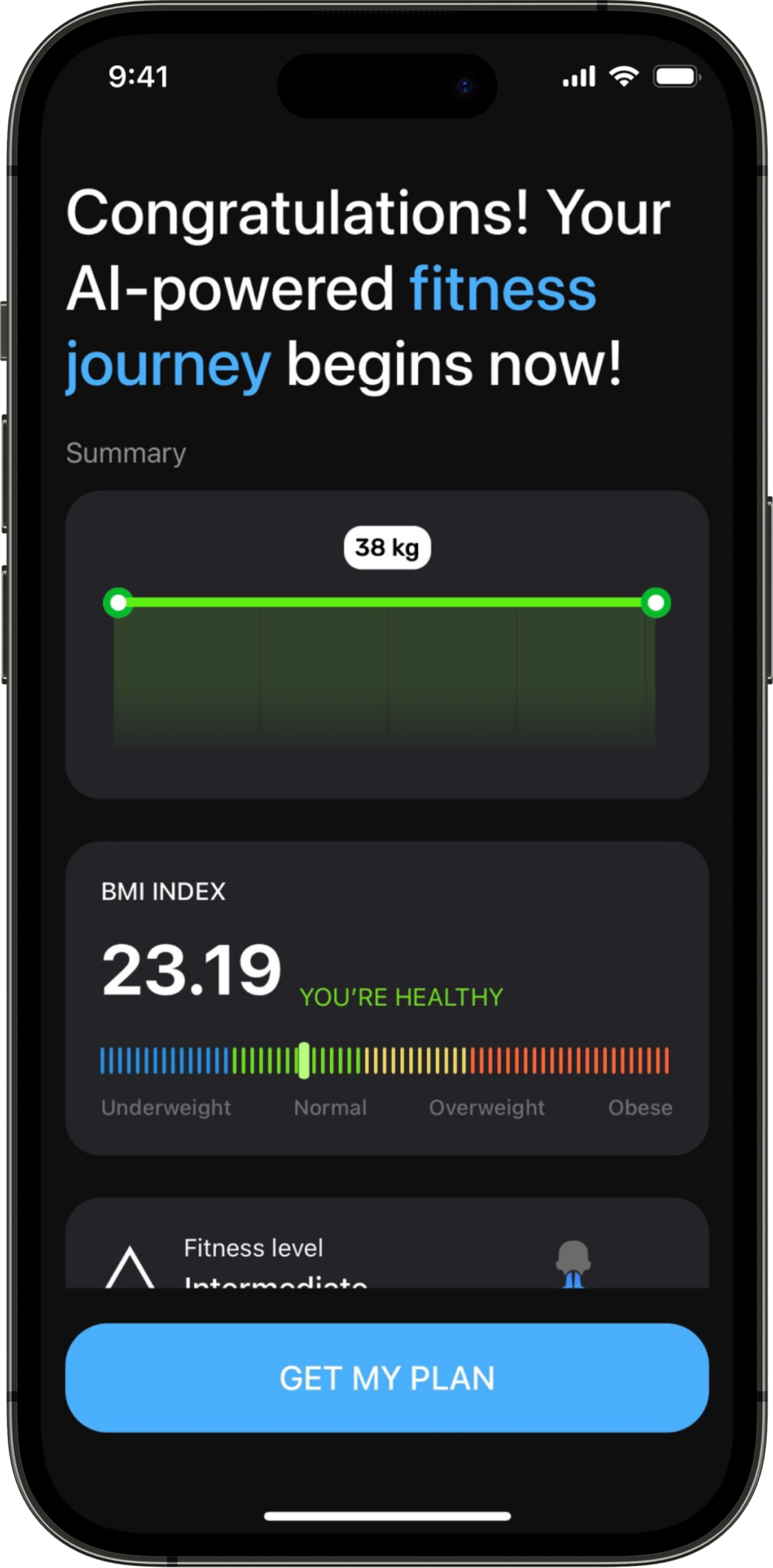
The FitnessAI Approach to Smart Fat Loss
FitnessAI is built around the principles that actually work:
1. Progressive strength training: The app programs your lifts, adjusts weights based on performance, and ensures you're training optimally to preserve muscle during a cut.
2. No guesswork: You don't have to figure out sets, reps, or weights. The AI handles it using data from millions of workouts. You just show up and lift.
3. Sustainable consistency: Training 3-5 days/week with intelligent programming is sustainable long-term. No burnout. No extreme volume. Just smart, effective work.
4. Tracking and accountability: Every workout is logged automatically. You can see your strength progress even while losing fat, proof that you're doing it right.
Real example: "I've been using FitnessAI during a 16-week cut. I've lost 18 pounds and my lifts are still going up. My bench increased 15 pounds while eating in a deficit. That wouldn't happen if I was just doing cardio and light weights."
Your 12-Week Smart Fat Loss Plan
Here's a plug-and-play template combining everything that actually works:
Training:
- Strength: 4 days/week, 45-60 minutes (FitnessAI programming)
- Monday: Upper Push/Pull
- Tuesday: Lower Body
- Thursday: Upper Push/Pull
- Friday: Lower Body
- Zone 2 Cardio: 3 days/week, 30-45 minutes (walking, biking)
- Wednesday, Saturday, Sunday
- Optional HIIT: 1 session/week, 15 minutes (Friday post-lift or Saturday)
Nutrition:
- Calorie deficit: 300-500 below maintenance
- Protein: 0.8-1g per lb bodyweight
- Track consistently (MyFitnessPal, MacroFactor, or similar)
- One refeed/week (eat at maintenance) to support hormones and performance
Recovery:
- Sleep 7-9 hours/night
- Take 2 full rest days (light activity only)
- Manage stress (meditation, walks, hobbies)
Tracking:
- Weigh daily, use weekly averages
- Progress photos every 2 weeks
- Track strength on main lifts
- Measure waist, chest, arms monthly
Expected Results:
- Week 1-2: Lose 2-4 lbs (water weight)
- Week 3-8: Lose 1-1.5 lbs/week (steady fat loss)
- Week 9-12: Lose 0.5-1 lb/week (final lean phase)
- Total: 12-18 lbs lost, strength maintained or improved
.png)
The Bottom Line: Train Smart, Not Trendy
Fat loss doesn't require hacks, supplements, or trendy workouts. It requires:
- A moderate calorie deficit
- Heavy strength training 3-5 days/week
- Optional cardio for calorie expenditure and health
- Consistency over 12-16 weeks
That's it. Everything else is noise.
Stop chasing the latest fat-burning trend. Build muscle, maintain strength, stay in a deficit, and let the results compound.
The leanest, strongest version of you isn't built with cardio marathons and crash diets. It's built with smart training, patience, and systems that last.
Ready to Burn Fat the Smart Way?
Download FitnessAI and let the app handle your strength programming while you focus on staying consistent. No more guessing. No more spinning your wheels. Just intelligent training that gets results.
Alyssa Gonzalez
