


Why Your Muscles Actually Grow: The Science of Hypertrophy Explained
Most people who ask how muscles actually grow are expecting a simple answer. Lift heavy, eat protein, repeat. And while that's not entirely wrong, the real story runs a little deeper, and understanding it can make a significant difference in how someone trains.
When the science clicks, the guesswork goes away. For anyone juggling a full life outside the gym, that kind of clarity is worth a lot.
What Is Muscle Hypertrophy?
Muscle hypertrophy is simply the process by which muscle fibers increase in size.
Every time someone strength trains, they're placing stress on their muscles, creating small amounts of micro-damage in the fibers. The body responds by repairing that damage and rebuilding the muscle slightly bigger and stronger than it was before. It's adaptation in its most literal form.
There are two main types of hypertrophy worth knowing about:
Myofibrillar Hypertrophy increases the density and strength of the muscle fibers themselves. It tends to respond best to heavier loads and lower rep ranges.
Sarcoplasmic Hypertrophy increases the fluid and energy stored within the muscle. Moderate weights and higher reps tend to drive this type more effectively.
In practice, any well-designed strength training program will stimulate both. For someone whose primary goal is muscle growth, that program should generally include moderate to heavy weights, somewhere between 6 and 15 reps per set, multiple sets per muscle group, and, most critically, progressive overload applied consistently over time.
The 3 Key Drivers of Muscle Growth
For anyone wondering why their muscles aren't growing despite showing up consistently, three factors are almost always at the root of it.
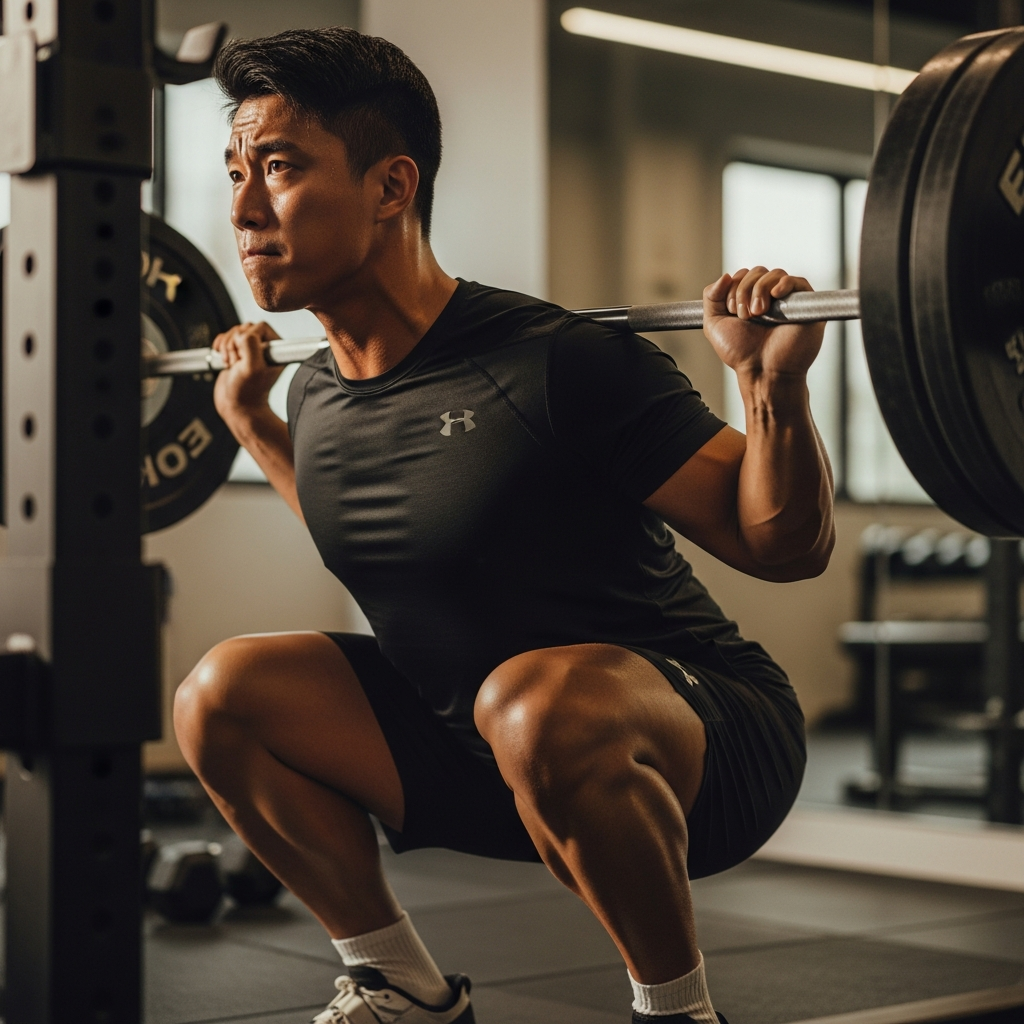
Mechanical Tension is the force placed on muscles during a lift. The greater the tension, especially through a full range of motion, the stronger the signal sent to the body to grow. Controlled reps and honest form produce more meaningful tension than throwing weight around with sloppy technique ever will.

Metabolic Stress is that familiar burning sensation during higher-rep sets. It contributes to hypertrophy by increasing cellular swelling and triggering growth-related signaling pathways inside the muscle. It's uncomfortable for a reason.

Muscle Damage small amounts of fiber disruption from training, kickstarts the repair and adaptation process. That said, more damage isn't automatically better. Recovery is where actual growth takes place, and without adequate recovery, training damage just becomes injury waiting to happen.
This is where a lot of busy people get caught. They train hard but fail to progressively increase the stimulus, or they don't allow enough time to recover. Some repeat the same weights for months and can't figure out why nothing is changing.
Progressive Overload: The Real Engine of Hypertrophy
If there's one concept worth truly internalizing, it's progressive overload.
Muscles grow because the body is forced to adapt to demands that keep increasing. Without a growing stimulus, the body has no reason to keep building. Progressive overload can take several forms, adding weight to the bar, increasing reps, adding sets, improving the quality of movement, or strategically reducing rest time. All of it counts.
The problem is that applying progressive overload consistently is harder than it sounds. Questions like "how much weight should I add?" or "should I increase reps or sets this week?" create real friction. Guessing the answers is one of the most common reasons people plateau.
This is precisely where AI-driven training has started to change things. FitnessAI, for example, analyzes millions of workout data points to determine the optimal weight and rep count for each exercise based on an individual's past performance. Rather than adding weight arbitrarily, the app calculates the right progression for that specific person on that specific day. The result isn't just hard work, it's precise work.
Volume, Frequency, and Recovery: The Muscle Growth Equation
For those asking how many sets it takes to build muscle, or how often a muscle group needs to be trained, research points toward a fairly clear framework.
When it comes to training volume, more weekly sets, within a sensible range, tend to produce more hypertrophy. For most people, 10 to 20 sets per muscle group per week spread across two or three sessions is an effective target. Too little volume slows progress; too much without adequate recovery leads to burnout or injury.
On training frequency, hitting each muscle group at least twice per week consistently outperforms a once-a-week approach. The more frequent stimulus improves both skill acquisition and recovery distribution, which adds up to better overall growth over time.

Recovery is where the growth actually happens. Muscles don't grow during workouts, they grow afterward, during sleep, during rest, and when nutrition supports the repair process. Sleep quality, stress management, and smart programming are all part of the equation, not afterthoughts.
FitnessAI factors recovery into its programming as well. When performance drops or sessions are missed, the app adjusts future workouts automatically rather than forcing someone into a rigid plan that ignores real life. For a busy professional, that kind of adaptability isn't a luxury, it's what makes the difference between a sustainable training habit and one that eventually falls apart.
Why Muscle Growth Stalls
For anyone who has trained consistently and still feels stuck, the reason usually falls into one of a few categories: progressive overload isn't being applied, training volume is inconsistent, programs are being changed too frequently, recovery is being undervalued, or progress simply isn't being tracked objectively.
Relying on memory or scattered notes makes it nearly impossible to see whether genuine progress is happening. Visual progress tracking changes that. When someone can see that their incline dumbbell press went from 50 pounds for 8 reps to 65 pounds for 10 reps over 12 weeks, they know hypertrophy is working. FitnessAI's data-driven tracking makes that kind of trend visible across months of training, which reduces the second-guessing and keeps motivation grounded in something real.
The Role of Nutrition in Hypertrophy
Muscle growth doesn't happen in the gym alone. Nutrition matters enormously.
For optimal hypertrophy, the general targets are around 0.7 to 1 gram of protein per pound of body weight, a slight calorie surplus when muscle gain is the primary goal, consistent hydration, and a foundation of whole foods. For those training in a calorie deficit, muscle growth is slower but still possible, particularly for beginners. Regardless of goal, adequate training stimulus combined with sufficient protein is the non-negotiable foundation.
How AI Is Changing Strength Training
.png)
The most honest answer to "what's the best workout plan for building muscle?" is that the best plan is one that adapts to the individual.
Traditional static programs assume perfect recovery, consistent performance, and zero missed sessions. Real life doesn't cooperate with those assumptions. AI-powered strength training responds to actual conditions, performance on each set, available equipment, training history, and whether sessions were completed or skipped.
If someone is traveling with only dumbbells available, FitnessAI adjusts the workout accordingly. If performance dips, it recalculates weights to keep things in an optimal hypertrophy range. Progressive overload continues without requiring the person to figure it all out themselves.
For anyone who doesn't want to research periodization models or manually calculate training percentages, that kind of system removes a lot of friction. The app handles the variables. The person shows up and trains.
What Muscle Growth Really Comes Down To
Hypertrophy isn't mysterious. It's a predictable biological process that responds to sufficient mechanical tension, consistent weekly volume, progressive overload, proper recovery, and time. Months and years of time.
The science isn't the hard part. Applying it consistently in the middle of a busy life, that's where most people struggle.
When training adjusts automatically, tracks performance objectively, and applies the right amount of progressive overload each session, muscle growth stops feeling like a guessing game. It becomes something someone can actually count on.
FitnessAI was built around exactly that idea. Not trendy programming or random workouts, just adaptive, science-based strength training that evolves alongside the person doing it.
Download FitnessAI NOW!
Alyssa Gonzalez
