


Volume vs Intensity: Which One Actually Builds Muscle Faster?
Spend five minutes in fitness content online and you'll run into two completely contradictory schools of thought on building muscle:
"More volume is the key to hypertrophy."
Or:
"Train harder, not longer."
So which one is actually right?
The honest answer: both matter. But most people misunderstand how they interact, and that misunderstanding is exactly what keeps progress stalled for months at a time.
Volume provides the stimulus for muscle growth. Intensity determines whether that stimulus is actually worth anything. The tricky part is balancing the two without burning out or grinding to a halt, which is where most lifters eventually get stuck. They're either drowning in junk volume or going so heavy they can't recover consistently enough to make real progress.
This tension is actually one of the main reasons people turn to FitnessAI in the first place. According to FitnessAI's 2026 user survey, the top reason people started using the app was being "tired of guessing / making my own plan." Because getting the balance right is genuinely harder than it sounds.
What Is Training Volume?
Training volume is simply the total amount of work you perform. Most commonly, it's measured as:
- Sets × reps × weight
- Total hard sets per muscle group per week
- Overall workload across a training cycle
For muscle growth specifically, volume usually refers to how many challenging sets you're doing for a given muscle each week.
Example:
- 3 sets of bench press
- 3 sets of incline dumbbell press
- 3 sets of chest flyes
That's 9 working sets for chest in a single session.
Research consistently shows that moderate-to-high training volume is strongly associated with hypertrophy, especially for intermediate lifters. But more is not always better. At some point, piling on more volume stops producing results and starts digging a recovery hole you can't climb out of.
That's where intensity comes in.
What Is Training Intensity?
Intensity refers to how hard your sets actually are. That can mean:
- How heavy the weight is relative to your max
- How close you push to failure
- The overall effort you're bringing to each set
Five heavy squats at 85% of your max is high intensity. Fifteen curls that barely challenge you is low intensity, even if your arms are on fire.
A lot of people confuse exhaustion with effectiveness here. Sweating through a workout doesn't automatically mean you're stimulating muscle growth. The goal is productive tension, not just random suffering.
.png)
So What Actually Builds Muscle Faster?
For most people, volume is the bigger long-term driver of muscle growth. But only if the intensity is high enough to make that volume mean something.
The way to think about it:
- Too little volume: Not enough stimulus to trigger growth.
- Too little intensity: The sets don't really "count."
- Too much of both: Recovery breaks down entirely.
That balance is exactly why good programming matters so much, and why random workouts tend to produce random results.
The Sweet Spot for Most Lifters
Most evidence-based hypertrophy programs settle into a similar range:
- 10–20 hard sets per muscle group per week
- Moderate rep ranges (6–15 reps)
- Training within 1–3 reps of failure
For most adults juggling work, stress, and actual life, that's where results happen consistently.
The problem is that a lot of people end up training in what could be called the "gray zone," doing lots of sets with moderate weights, stopping well short of failure, never really pushing progressive overload. Workouts feel tiring, but progress stays flat.
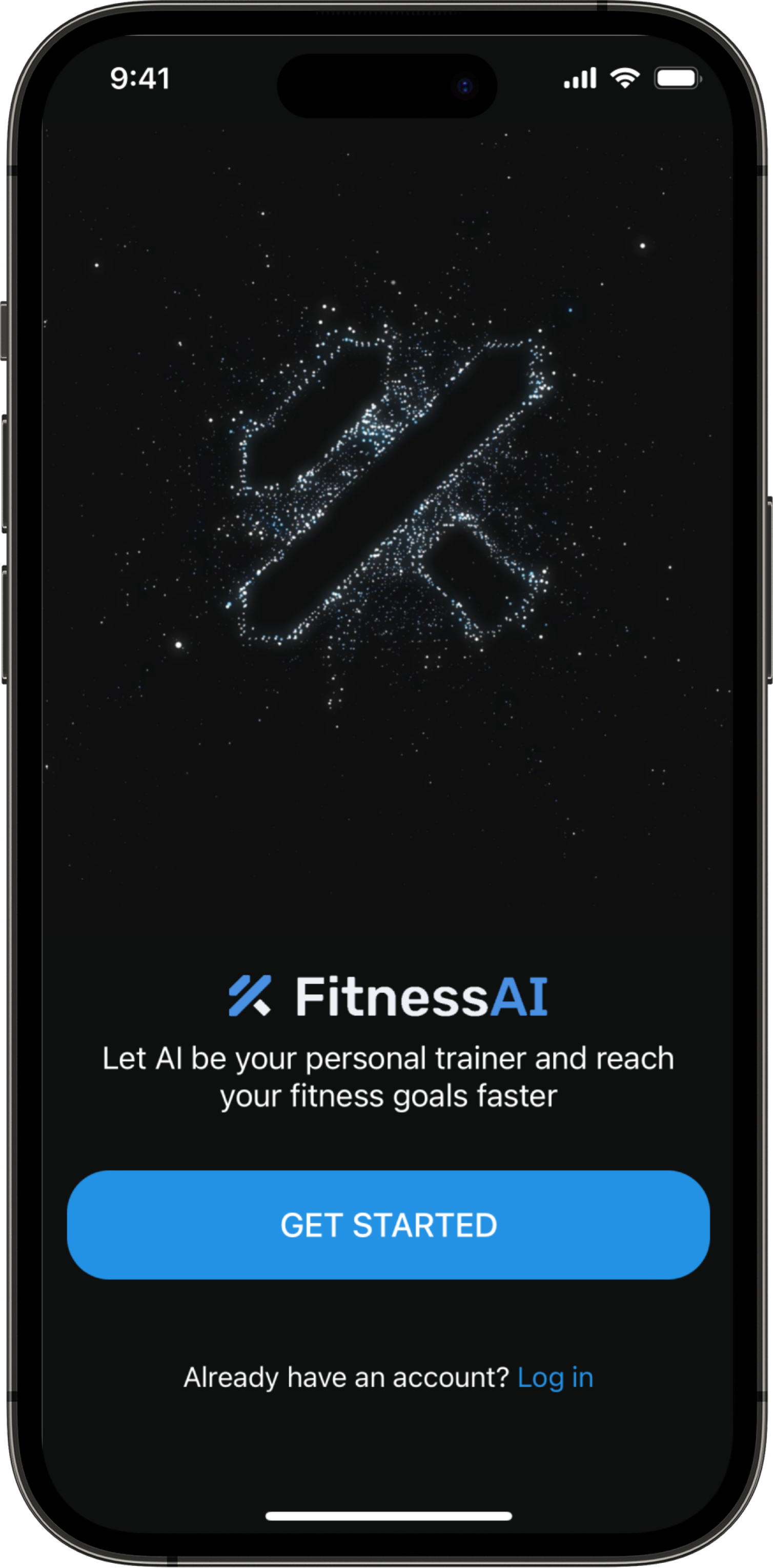
FitnessAI was built to address this directly. The app automatically adjusts sets, reps, and weights using progressive overload logic built on millions of real training data points. Instead of guessing whether to add weight, add reps, or pull back and recover, the system adapts based on actual performance. You show up. The plan adjusts.

Why Beginners Often Need Less Volume Than They Think
One of the most common beginner mistakes is assuming more workouts mean faster results. Usually, that's not how it works.
Beginners tend to grow well from:
- Lower overall volume
- Consistent effort
- Better technique and execution
- Gradual, steady progression
Nobody needs 25 chest sets on a Monday. What they need is repeatable training they can actually recover from.
FitnessAI's survey data showed that time is the biggest barrier to consistency for users, and that matters because consistency beats "perfect programming" almost every time. A structured 30-minute workout you actually complete is far more effective than a 90-minute program you abandon after two weeks.
Why Advanced Lifters Usually Need More Volume
As strength and experience build, the body adapts. That means:
- More stimulus is needed to keep progressing
- Recovery becomes even more critical
- Exercise variation starts to matter more
- Managing fatigue becomes part of the job
Advanced lifters often need to increase training volume over time, but only when recovery is properly managed alongside it.
This is where recovery-aware programming earns its value. FitnessAI adjusts intensity and volume based on fatigue, performance, and recovery trends rather than just adding weight indefinitely. Because at some point, "just push harder" stops being useful advice.
Volume vs Intensity for Fat Loss
When the goal is building muscle while losing fat, the equation shifts a little. Recovery capacity is typically lower during a calorie deficit, which means:
- Recovery becomes more important, not less
- Junk volume becomes a bigger problem
- Training quality matters more than training duration
- Smart exercise selection counts for more
This is why short, structured workouts can actually work really well for people in a deficit. FitnessAI lets users choose workouts from 5–30 minutes while still maintaining the progression logic and exercise selection that drives results. Real progress is built on repeatability, not fantasy training schedules.

Signs You Might Need More Volume
Consider adding volume if:
- Workouts feel too easy and recovery is fast
- Strength has stalled for weeks despite consistent effort
- There's little to no pump or fatigue from training sessions
- Several years of consistent training are already in the bank
When increasing, gradual beats dramatic. Adding 1–2 sets per muscle group, one extra exercise, or a bit more weekly frequency is usually enough. Small increases compound over time.
Signs Your Volume Is Too High
Pull back if:
- Strength is actually dropping
- Motivation has tanked
- Constant soreness that never fully clears
- Sleep quality is getting worse
- Joints are aching consistently
- Performance is all over the place session to session
More volume only helps if recovery can keep up. Without that, all that extra work just turns into accumulated fatigue.
The Problem With "Train Harder" Advice
"Train harder" sounds motivating. It's also almost completely useless without context.
Harder than what, exactly?
Most people don't have a motivation problem. They have a clarity problem, not knowing what to lift, when to progress, or how to structure things from week to week. That's one area where structured training apps consistently outperform self-programming from a Notes app.
FitnessAI users regularly cite the removal of decision fatigue as one of the app's biggest practical advantages, knowing exactly what to lift each session, especially on the days when mental energy is already maxed out.
Progressive Overload Is Still the Real Answer
The volume vs intensity debate often circles around the more important point: muscle growth comes from progressive overload sustained over time.
That means gradually improving through:
- More weight
- More reps
- Better movement quality
- More quality volume as capacity increases
- Better recovery over time
The best program isn't the most extreme one. It's the one that keeps progress moving consistently.
How to Balance Volume and Intensity
For most adults trying to build muscle efficiently, a few principles hold up well:
Prioritize quality sets. Train close enough to failure for the work to actually matter.
Keep weekly volume moderate. Chasing more isn't the same as chasing better.
Progress gradually. Tiny improvements compound faster than most people expect.
Recover aggressively. Sleep, nutrition, and stress management aren't optional add-ons.
Stop switching programs. Consistency builds momentum. Give things time to work.
Use structure instead of guesswork. A Notes app is not a training program.
Final Thoughts
Volume drives muscle growth. Intensity makes that volume count. Neither works well without recovery, progression, and consistency backing them up.
The people who make the best long-term progress usually aren't doing the most brutal workouts, they're following a structured plan long enough for results to actually compound.
That's the real value of FitnessAI. Not hype. Not secret methods. Just clear progression, adaptive programming, and a lot less guessing.
Open the app. Lift what it says. Keep moving forward.
Progress should be predictable.
Download FitnessAI NOW!
FAQ
Is volume or intensity more important for muscle growth?
Both matter, but training volume is usually the bigger long-term driver of hypertrophy. Intensity determines whether those sets are challenging enough to stimulate growth.
How many sets per week build muscle best?
Most people see strong muscle growth around 10–20 hard sets per muscle group per week, depending on experience and recovery.
Can you build muscle with short workouts?
Yes. Short, focused workouts with enough effort and progressive overload can absolutely build muscle, especially when performed consistently.
Does lifting heavier always build more muscle?
Not necessarily. Moderate rep ranges with challenging effort often work just as well for hypertrophy as very heavy lifting.
What’s the best app for progressive overload training?
Many lifters use structured workout apps to remove guesswork from progression. FitnessAI focuses specifically on adaptive strength programming, progressive overload, and recovery-aware adjustments.
Alyssa Gonzalez
