


Strength vs Endurance: Why More Weight Isn't Always Better
Most people walk into the gym with the same idea: lift heavier, get stronger, look better.
And honestly? That works, for a while.
Then progress stalls. Your knees start complaining. Workouts feel brutal, but results barely move. And you're left wondering if you should keep grinding through heavier sets or if you've been missing something all along.
Here's the thing, strength and endurance are actually different adaptations. And chasing heavier weights every single session can quietly hold you back from the results you're after.
Let's dig into what's really happening, and how to get smarter about your training.
Strength vs Endurance: What's the Difference?
At a basic level:
Strength training
- Focus: Maximum force output
- Rep range: 1–6 reps
- Rest: Longer (2–5 minutes)
- Goal: Lift heavier weight over time
Endurance training (muscular endurance)
- Focus: Sustained effort over time
- Rep range: 10–20+ reps
- Rest: Shorter (30–90 seconds)
- Goal: Resist fatigue and maintain performance
Both matter. But they create very different results in your body, and treating them the same is where most people go wrong.
Why "More Weight" Eventually Stops Working
Adding weight is a form of progressive overload, and it's genuinely important. But it's not the only tool you have, and for a lot of people, it becomes the only tool they use.
Here's where things start to unravel.

1. You outgrow linear progression
Beginners can add weight almost every week. It feels great. After a few months, that window closes.
If you keep forcing heavier lifts past that point:
- Form starts breaking down
- Recovery gets worse
- The injury risk creeps up
This is when smarter progression starts to matter more than more plates.

2. Strength alone doesn't build balanced fitness
You can get strong, genuinely strong, and still:
- Fatigue quickly during workouts
- Have low overall work capacity
- Struggle when rep counts climb or sessions run long
It's why someone can squat seriously heavy but feel completely gassed after a circuit. Those are different systems, and one doesn't automatically train the other.
.png)
3. Your body adapts to repetition
Same lifts, same reps, same weights every week, eventually your body stops responding. It's not laziness. It's just efficient biology.
What your body needs is variation in:
- Volume
- Intensity
- Tempo
- Rest periods
Most people hit a wall here not because they stopped trying, but because they don't know what variable to pull next.
The Smarter Approach: Train Across Rep Ranges
Rather than chasing heavier weight every session, a well-rounded program builds across multiple ranges:
Heavy work (Strength)
- 3–6 reps
- Builds raw power
Moderate work (Hypertrophy)
- 6–12 reps
- Builds muscle size
Lighter work (Endurance)
- 12–20 reps
- Builds fatigue resistance and control
Each range does something the others don't. Skip one consistently and you'll feel the gap.
What Most People Actually Struggle With
If you've ever found yourself thinking:
"Should I add weight or just do more reps?" "Why haven't I moved past this same weight in months?" "Am I doing too much? Not enough?"
You're not alone. And the problem usually isn't effort.
It's decision fatigue.
You're constantly guessing:
- When to increase weight
- When to back off
- When to push volume instead
And when you're guessing, you're going to be inconsistent. That inconsistency is usually what kills results, not a lack of hard work.
.png)
Where FitnessAI Fits In
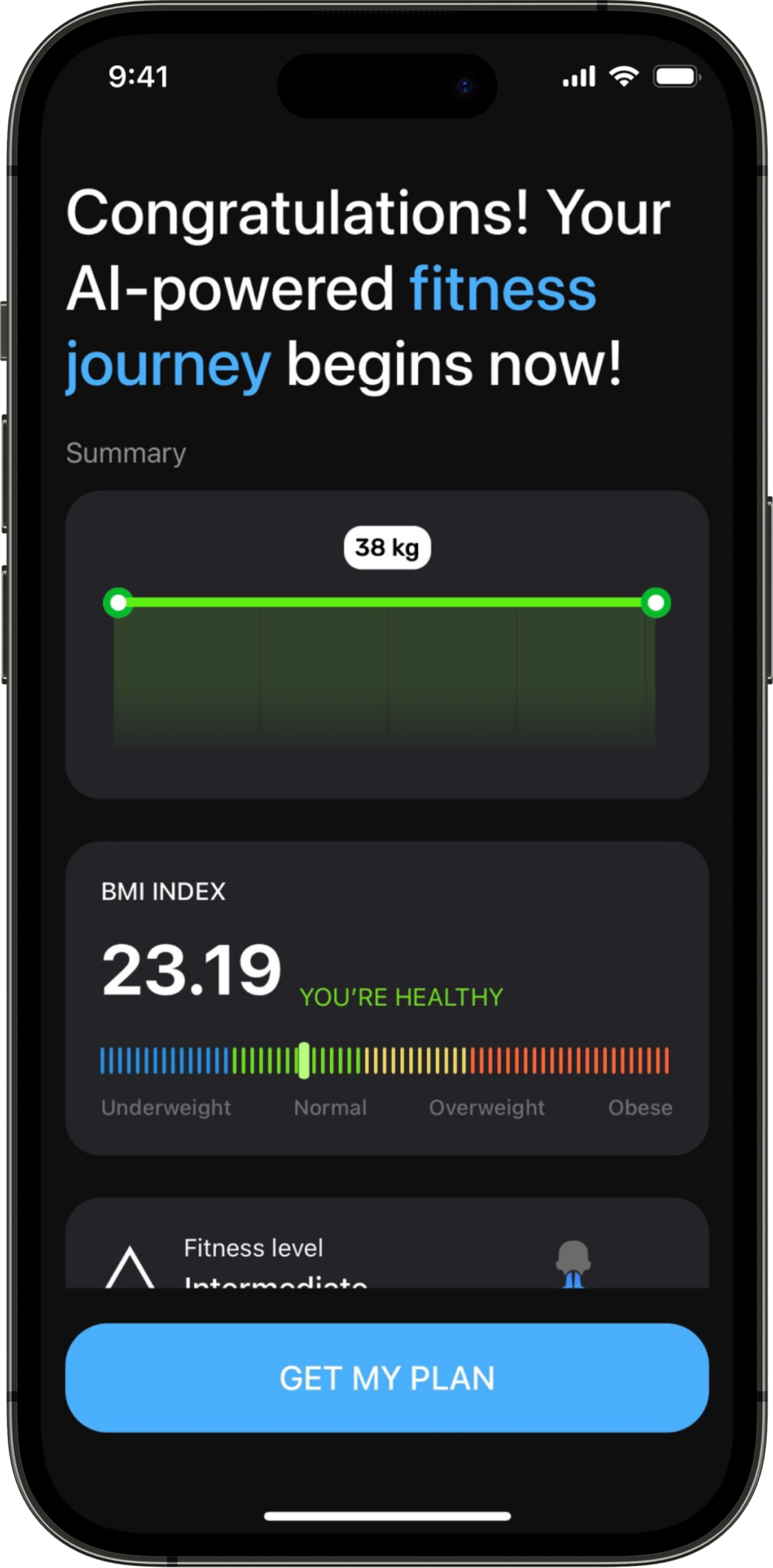
This is exactly the kind of problem FitnessAI was built to solve.
Instead of manually trying to balance strength and endurance work yourself, the app handles it in the background, so you can actually focus on training.
It adjusts your weights automatically
Rather than blindly adding weight each session, FitnessAI looks at your past performance and recovery to figure out:
- When to push heavier
- When to hold steady
- When to scale back and let volume do the work
You're not forcing progress. You're letting it build.
It balances intensity and volume for you
Some days should be heavy. Others should build endurance. FitnessAI rotates your structure so you're not getting stuck in:
- Only low-rep strength work
- Only high-rep burnout sets
- The same routine week after week
That variety is what keeps progress moving without you having to redesign everything yourself.
It adapts to your recovery
Training heavier when you're exhausted or under-recovered isn't productive, it's just hard. FitnessAI accounts for this by adjusting load, volume, and exercise selection based on where you actually are, not where you wish you were.
It works with your real life
Busy week? Limited equipment? FitnessAI modifies around what you actually have, machines, weights, time constraints, and training history, so you're not spending 20 minutes figuring out substitutions before you even warm up.

Strength vs Endurance for Real Life
If your goal is to look better, feel stronger, have more energy, and actually stay consistent, you need both.
Not just heavier lifts.
Training both sides helps you:
- Push harder during workouts
- Recover faster between sets
- Maintain performance through your entire session instead of fading halfway through
That's what sustainable progress actually looks like.
How to Know What You Should Focus On
Here's a simple guide:
Focus more on strength if:
- You're newer to lifting
- You want to increase your max lifts
- You genuinely struggle with heavier loads
Focus more on endurance if:
- You fatigue quickly in workouts
- You want better overall conditioning
- You lift heavy already but feel stuck
Focus on both if:
- You want results that last
- You want to stop hitting plateaus
- You'd rather not overthink your training every week
For most people? That last one is the answer.
The Bottom Line
More weight isn't always better. Better training is better.
Real progress comes from smart progression, balanced intensity, and consistent effort over time. If you're spending mental energy every session just figuring out what to do next, you're making it harder than it needs to be.
A system that adapts with you, one that handles the decision-making so you don't have to, can genuinely change how you train.
A Simple Next Step
If you want to stop second-guessing your workouts and start building progress with some actual intention behind it, try a system that takes the guesswork off your plate.
FitnessAI handles the planning quietly in the background. You just show up and train.
Download FitnessAI NOW!
Alyssa Gonzalez
