


Glute Growth 101: The Best Exercises for Building Stronger, Bigger Glutes
Building bigger, stronger glutes comes down to three things: picking effective exercises, training them consistently, and making them a little harder over time.
The best glute exercises include hip thrusts, squats, Romanian deadlifts, Bulgarian split squats, step-ups, and hip abductions. Together, they hit the glutes from different angles, building muscle, lower-body strength, and a more balanced physique.
And no, nobody needs a separate glute workout every day of the week.
What actually works is a solid plan, enough recovery to make progress, and a clear way to know when it’s time to go heavier. Here’s what that looks like.
Glute Anatomy in Plain English
The glutes aren’t one muscle. They’re a team of three, and each has a slightly different job.
Gluteus maximus. The biggest and most powerful of the three. It handles hip extension: standing up from a squat, driving the hips forward in a hip thrust, rising from a bent-over position. For anyone chasing bigger glutes, this muscle deserves most of the attention.
Gluteus medius. It sits on the upper, outer part of the hip, moves the leg out to the side, and keeps the pelvis steady on one leg. Training it improves single-leg control and adds fullness to the upper glutes.
Gluteus minimus. Tucked under the medius, it helps with abduction, rotation, and pelvic stability. It doesn’t need its own workout, since exercises that train the medius pick it up too.
The takeaway: a complete glute program covers hip extension, a squat or lunge pattern, and hip abduction. Fifteen exercises aren’t necessary. A few good ones are.
The 6 Best Exercises for Glute Growth
The best glute builders let lifters train hard through a controlled range of motion and add challenge over time. No single exercise hits every part of the glutes equally, so combining a few complementary movements beats relying on one.
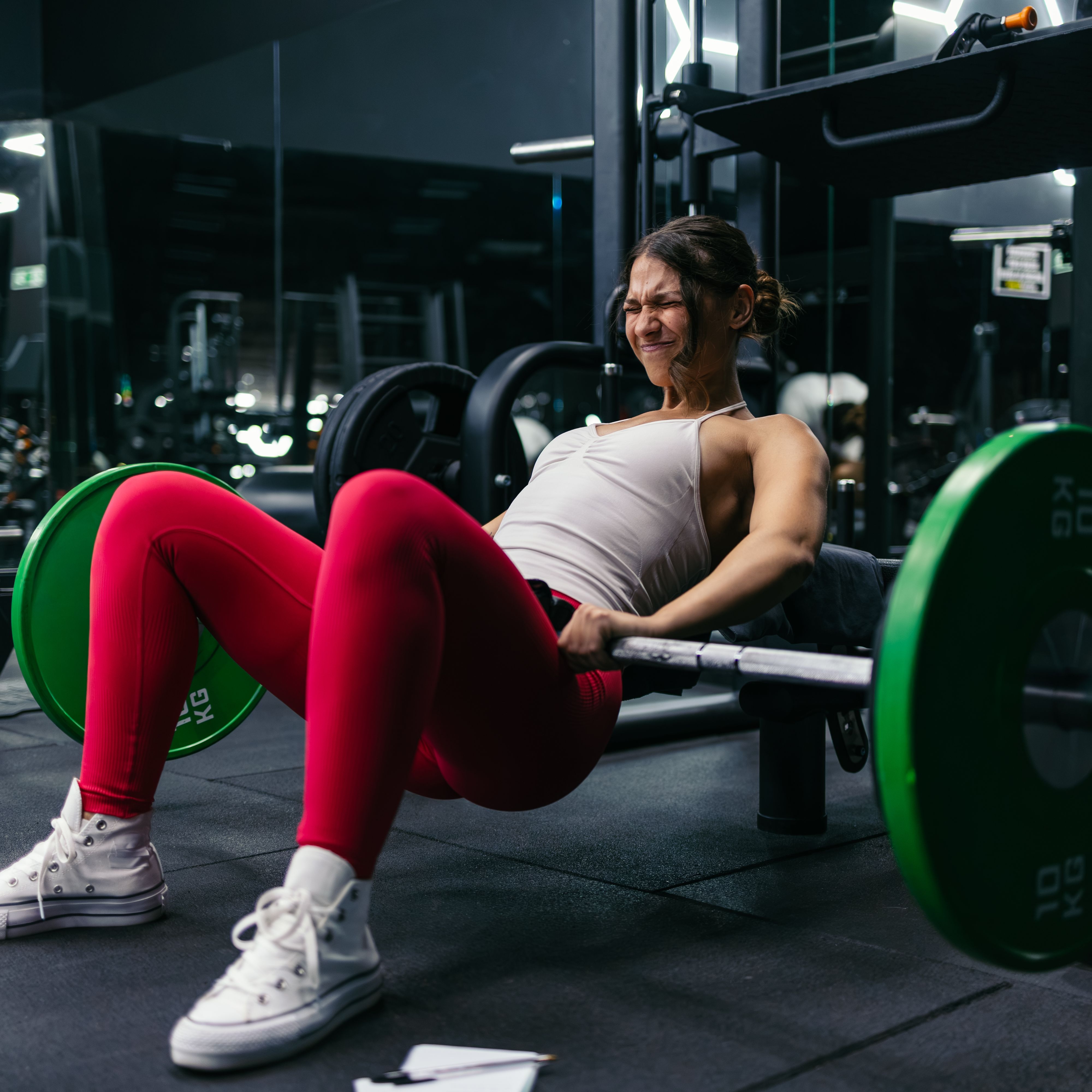
1. Barbell Hip Thrusts
Hip thrusts are popular for good reason. They load the gluteus maximus hard as the hips approach full extension, and they’re easier on grip and the lower back than many squat and hinge variations.
How to do it:
- Sit with the upper back against a sturdy bench and a padded barbell across the hips.
- Plant the feet about shoulder-width apart.
- Drive through the feet until the torso and thighs form a straight line.
- Squeeze the glutes at the top without arching the lower back.
- Lower with control.
Start with: 3 sets of 8–12 reps.
Watch out for: Overarching the lower back to get the bar higher. The goal is hip extension, not seeing how far the spine can bend.
Are hip thrusts better than squats? Not necessarily. Research suggests both grow the gluteus maximus effectively. Squats also build the quads and train the hips in a deeper position, while hip thrusts offer more focused hip extension. They work best as teammates, not rivals.

2. Romanian Deadlifts
RDLs train the glutes and hamstrings through a hip hinge, loading the glutes in a stretched position. Research on muscle growth at longer muscle lengths makes that worth paying attention to, though the exact advantage depends on the muscle and exercise.
How to do it:
- Stand hip-width apart holding a barbell or dumbbells, knees slightly bent.
- Push the hips back while keeping the weight close to the legs.
- Lower until there’s a strong hamstring stretch, without losing spinal position.
- Drive the hips forward to stand.
Start with: 3 sets of 8–10 reps.
Watch out for: Turning it into a squat by bending the knees too much. Think “hips back,” not “weight down.”
Hip thrusts and RDLs make a great pair. One loads the glutes near the top of hip extension, the other in a lengthened position.
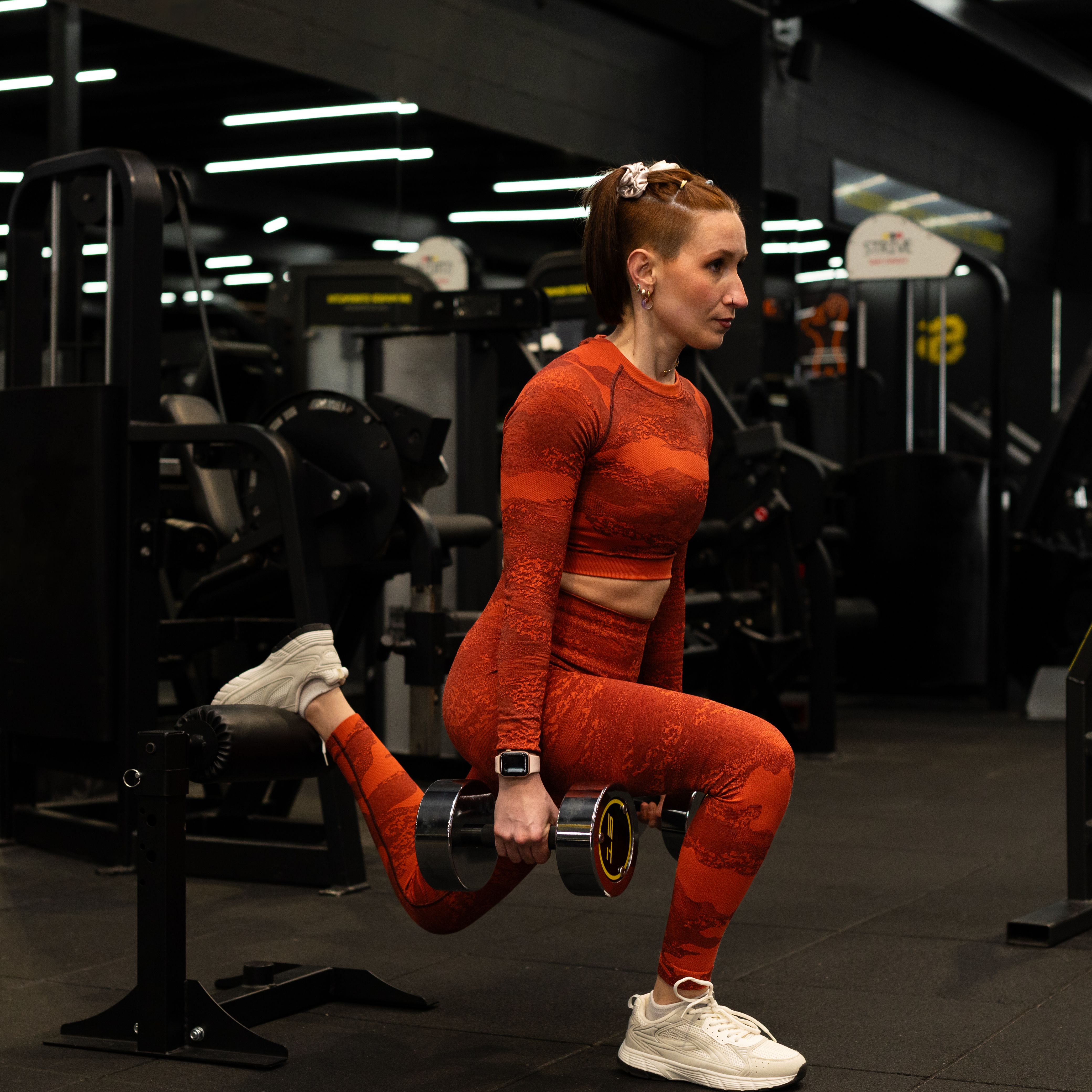
3. Bulgarian Split Squats
Split squats train the glutes, quads, and supporting hip muscles while challenging balance. Because each leg works on its own, they also make strength differences between sides easy to spot.
How to do it:
- Stand a comfortable distance in front of a bench and rest the top of the rear foot on it.
- Keep most of the weight on the front leg.
- Lower by bending the front knee and hip, with a slight forward lean for more glute emphasis.
- Push through the front foot to stand.
Start with: 3 sets of 8–12 reps per leg.
Watch out for: Standing too close to the bench or pushing through the back leg.
And yes, they’re tough even when done right. That’s normal.
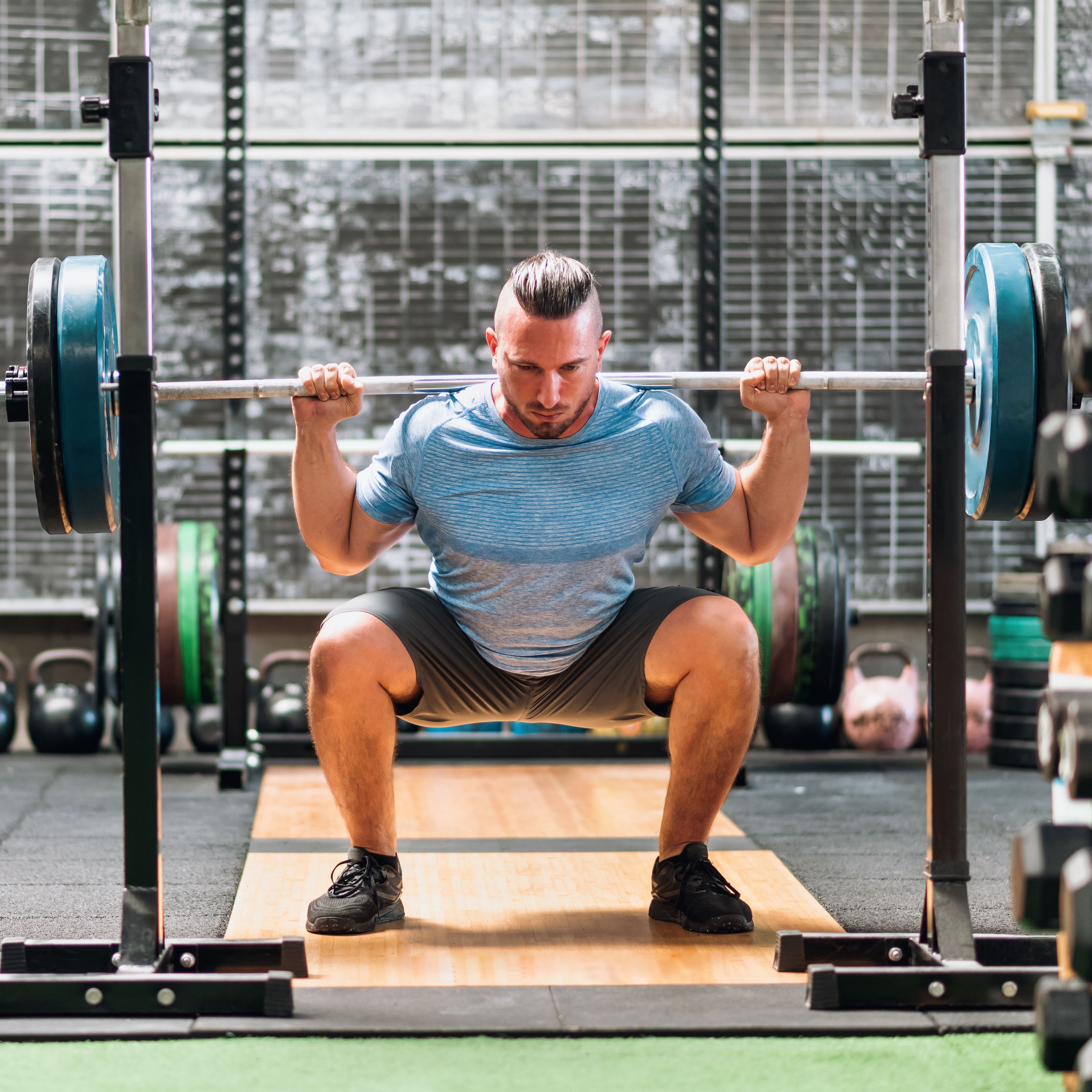
4. Squats
Squats get called a quad exercise by some and the ultimate glute exercise by others. They’re both. The quads do a lot of the work, but the gluteus maximus contributes heavily too, especially coming out of the bottom.
How to do it:
- Stand with the feet around shoulder-width apart.
- Brace the core and keep the feet planted.
- Bend at the knees and hips, lowering as deep as is comfortable and controlled.
- Push through the feet to stand.
Start with: 3 sets of 6–10 reps.
Watch out for: Sacrificing control or depth just to add weight.
How deep is deep enough? Deeper squats generally give the glutes more range of motion, but there’s no universal depth. Hip anatomy, ankle mobility, and comfort all play a role. The right depth is one that can be controlled and progressed.
If barbell squats don’t feel right, goblet squats or Smith machine squats still deliver a useful stimulus. This is where FitnessAI’s equipment-based adaptation helps. Training doesn’t have to depend on one specific squat rack being free, because the app adjusts exercises to the available equipment and offers substitutions when needed.

5. Hip Abductions
Abductions target the gluteus medius and minimus, the muscles that move the leg away from the body. They’re a strong accessory for the side glutes and hip control.
How to do it (seated machine):
- Sit with the back supported and the legs against the pads.
- Push the knees outward through a comfortable range.
- Pause briefly, then return slowly without letting the weight stack slam.
Start with: 2–3 sets of 12–20 reps.
Watch out for: Using momentum or rocking the whole torso.
No machine? Standing cable abductions, side-lying leg raises, and banded abductions all work. Just add resistance over time as strength improves.

6. Step-Ups
Step-ups combine hip extension, knee extension, and single-leg stability, building the glutes and lower-body coordination at the same time.
How to do it:
- Place one foot firmly on a stable box or bench.
- Push through that leg to lift the body.
- Bring the other leg up without bouncing.
- Lower slowly and repeat.
Start with: 2–3 sets of 8–12 reps per leg.
Watch out for: Pushing off hard with the foot on the floor. Choose a box height that allows every rep without twisting or losing control.
How Often Should Glutes Be Trained?
Two to three sessions per week is a practical starting point for most people. Training glutes daily doesn’t automatically mean more growth.
What drives results is total weekly volume, effort, and recovery. Frequency simply spreads that work across the week.
As a rough guide, beginners can start around 6–10 hard glute-focused sets per week, intermediate lifters around 10–16, and advanced lifters 12–20 if they’re recovering well. These are starting points, not rules. Squats, RDLs, and split squats train other muscles too, so not every set hits the glutes equally.
If performance is slipping or soreness keeps lingering, more sets probably aren’t the answer. FitnessAI’s recovery-aware adjustments account for training fatigue and recent performance, keeping sessions productive without just piling on volume.
A Simple Two-Day Glute Plan
A complicated six-day split isn’t required. Two focused lower-body sessions per week, with at least one recovery day in between, is plenty to start.
Day 1: Glute Strength
- Barbell hip thrust: 3 sets of 8–10
- Squat: 3 sets of 6–10
- Hip abduction: 2 sets of 12–15
Day 2: Glute Hypertrophy
- Romanian deadlift: 3 sets of 8–10
- Bulgarian split squat: 3 sets of 8–12 per leg
- Cable or machine hip abduction: 2 sets of 12–20
That’s 16 working sets per week, plus warm-ups. Beginners may do better with two sets per exercise at first, and loads should always match current strength and technique.
Only have 20 minutes? Hip thrusts (3 sets of 8–12), RDLs (3 sets of 8–10), and hip abductions (2 sets of 12–15) cover the essentials. When time is tight, cut accessory work rather than rushing reps.
FitnessAI offers 5–30 minute workouts built around the time available, so a packed calendar doesn’t mean redesigning the plan from scratch. A shorter session delivers less total volume, but it still counts when it fits into a consistent weekly routine.
Progressive Overload: Where Most Glute Routines Fall Short
It’s a familiar story. Someone finds a workout they like, repeats the same exercises with the same dumbbells, and wonders why progress stalls.
Muscles grow when they’re given a reason to. As they adapt, that reason has to get a little bigger. That’s progressive overload.
It doesn’t mean adding weight every session. Picture someone hip thrusting 95 pounds for 3 sets of 10. Over a few weeks, that might become 11 reps on the first set, then 12 on every set, then a jump to 100 pounds for 10. Progress can also mean better control or a larger range of motion. Once the top of the rep range comes consistently with good technique, it’s time to add load.
How FitnessAI Makes Progression Easier
Tracking all of this by hand is possible. So is keeping a spreadsheet of every hip thrust, squat, and RDL. But most people would rather spend their gym time lifting than updating cells.
FitnessAI’s AI-powered progressive overload engine uses training history and performance to adjust recommended weights, reps, and sets over time. If someone has consistently hit their prescribed hip thrust reps, the app can recommend a heavier load for an upcoming session. If performance or recovery points toward a lighter day, it adjusts accordingly.
Users can also see why their recommendations change, so there’s no wondering whether the app picked a number at random.
The goal isn’t to add weight as fast as possible. It’s to keep giving the muscles an appropriate reason to adapt.
How Heavy Should Lifters Go?
Not as heavy as possible. Research suggests muscle grows across a broad range of loads and reps when sets are performed with enough effort.
In general, squats and heavier compound lifts fit well in the 6–10 rep range, hip thrusts and RDLs in 8–12, split squats and step-ups in 8–15, and abductions and isolation work in 12–20.
Most working sets should end with about 1–3 good reps left in the tank. Beginners can leave a little more while learning technique. Training to failure on every set isn’t necessary, and adding weight while form falls apart isn’t progress.
How Long Does Glute Growth Take?
It depends on starting point, genetics, nutrition, training experience, and consistency.
Strength and control often improve within the first few weeks. Visible growth takes longer. About 8–12 weeks of consistent training is a reasonable window to assess early changes, and noticeable visual differences can take several months or more.
Early strength gains come partly from the nervous system getting better at coordinating the movement. Muscle growth builds more slowly. So going from a 95-pound hip thrust to 115 pounds is real progress, even if the mirror hasn’t caught up yet.
That’s why tracking more than appearance matters. FitnessAI’s BodyScan technology offers visual progress tracking, helping users compare changes over time without relying entirely on the scale. Paired with strength gains and workout history, it paints a more complete picture. Lighting and posture can affect visual comparisons, so no single measurement tells the whole story.
Do Protein and Calories Matter?
Training provides the stimulus. Nutrition supplies the building materials.
For most healthy adults who strength train, about 1.4–2.0 grams of protein per kilogram of body weight per day is a useful evidence-based range. For someone weighing 150 pounds (about 68 kilograms), that’s roughly 95–136 grams per day. Consistency across weeks matters more than hitting an exact number at every meal.
A modest calorie surplus can support growth, especially for experienced lifters. Beginners and people returning to training can often build muscle at maintenance or even while losing some body fat. And no specific food makes the glutes grow. Training decides which muscles get the growth signal.
Five Reasons Glutes Aren’t Growing
1. Exercises change too often. Variety keeps things fun, but constant switching makes progress hard to measure. A few reliable movements, kept long enough to improve, work better than a brand-new routine every Monday.
2. Sets aren’t hard enough. If every set ends with 10 easy reps left, the weight is probably too light to drive growth.
3. There’s too much volume. Five glute exercises, four days a week, and constant soreness usually means more fatigue than the body can recover from. Start manageable and add only when needed.
4. Progress isn’t being tracked. Without a record of weights, reps, and sets, there’s no way to know what’s improving. FitnessAI records performance and uses it to guide future workouts, so the decision to lift heavier comes from a recommendation based on what’s already been done, not a guess.
5. Expectations are too fast. A few good workouts are a starting point, not a transformation. The real signs show up as trends over several weeks: more strength, more controlled reps, better recovery, and gradual changes in measurements or appearance.
Can Glutes Be Built at Home?
Yes, especially for beginners or anyone with adjustable dumbbells, bands, or other basic equipment. The principles stay the same: train through useful ranges of motion, challenge the muscles, and increase the difficulty over time.
Solid home options include dumbbell RDLs, weighted glute bridges, Bulgarian split squats, step-ups, and banded hip abductions.
The main limitation is resistance. As strength builds, bodyweight work may stop being challenging enough, so adding load, harder variations, or more reps becomes important.
FitnessAI’s equipment-based adaptation builds workouts around whatever is available, whether that’s a full gym or a few dumbbells at home. A program shouldn’t become useless just because there’s no cable machine nearby.
Frequently Asked Questions
What is the single best exercise for growing glutes?
There isn’t one. Hip thrusts, squats, Romanian deadlifts, and split squats are all effective, and combining exercises that challenge the glutes in different positions is the practical approach.
Can squatting every day grow the glutes?
Squats can build the glutes, but daily squatting isn’t necessary. Two to three sessions per week with real effort, progressive overload, and recovery is more manageable for most people.
Are hip thrusts or Romanian deadlifts better?
Both are useful. Hip thrusts emphasize loading near full hip extension, while RDLs challenge the glutes at longer muscle lengths. Together, they complement each other.
How many glute exercises belong in one workout?
Two to four well-chosen exercises is enough for most people. Weekly volume and effort matter more than the length of the list.
Can glutes grow while losing body fat?
Yes, especially for people new to strength training or returning after a break. Adequate protein, progressive resistance training, and a moderate calorie deficit support recomposition, though growth may be slower than in a surplus.

The Bottom Line
Bigger glutes don’t come from a secret exercise or a new routine every leg day. They come from doing the basics consistently.
Train through different movement patterns. Use challenging weights. Recover between sessions. Eat enough protein. Track performance to know when it’s time to progress.
The best glute workout isn’t the longest or the most complicated. It’s the one that can be repeated, recovered from, and gradually improved.
That’s where FitnessAI fits in. Instead of building a program from scratch, calculating every weight increase, or wondering whether it’s enough, users get strength workouts built around their goals, schedule, equipment, and previous performance. Weights, reps, and sets adjust with training, so there’s less time spent planning and more time spent getting stronger.
You show up. We handle the plan.
Build your strength training plan with FitnessAI
Alyssa Gonzalez
