


Stretch-Mediated Hypertrophy: Is Training at Longer Muscle Lengths the Secret to More Growth?
Lately, more lifters are paying attention to the bottom of their squats and the stretch in their Romanian deadlifts.
There’s a reason for that. It’s called stretch-mediated hypertrophy, and it’s one of the more interesting ideas in muscle-building research right now.
The basic idea is simple: training a muscle while it’s lengthened may build more muscle than training it mostly in a shortened position.
So should you chase deeper reps and overhaul your routine? Not quite. The science is promising, but it’s more nuanced than social media makes it sound.
What Is Stretch-Mediated Hypertrophy?
Stretch-mediated hypertrophy is muscle growth linked to loading a muscle while it’s in a stretched position.
You already know plenty of exercises that do this:
- Romanian deadlifts load your hamstrings as you hinge and lower the weight.
- Incline dumbbell curls start your biceps in a longer position because your arms sit behind your torso.
- Deep squats take your quads and glutes through a big range of motion.
- Overhead triceps extensions stretch the long head of your triceps.
None of these are new. What’s new is a better understanding of why the stretched part of the rep might matter so much.
Stretching vs. Loading a Stretched Muscle
Muscles grow in response to mechanical tension, which is the force your muscle fibers experience during training.
When a muscle produces force while lengthened, the demands are different than at shorter lengths. Researchers are still figuring out exactly why. One possible piece of the puzzle is passive tension from structures like the protein titin.
Here’s the key point: stretching a muscle and loading a stretched muscle are not the same thing.
Holding a hamstring stretch after your workout is a flexibility exercise. A controlled Romanian deadlift asks your hamstrings to produce force while they lengthen.
That difference matters.

Does Training at Longer Muscle Lengths Build More Muscle?
Often, yes. But not always.
Studies comparing longer and shorter muscle lengths have frequently favored the lengthened side. One standout example compared seated and lying leg curls over 12 weeks. Seated curls, which put several hamstring muscles in a longer position because of the hip angle, produced about 14% hamstring growth versus about 9% for lying curls.
A 2026 meta-analysis of eight studies also found an overall advantage for partial reps at longer muscle lengths compared with partials at shorter lengths. And a 2025 review suggested lengthened training may encourage more growth and changes in muscle structure.
The catch? The number of studies is still small, and the results are mixed. A 2025 study of trained lifters found similar growth between lengthened partials and full reps on the lat pulldown.
So the research is worth paying attention to. It just doesn’t prove lengthened training is always better.
Lengthened Partials vs. Full Reps
Lengthened partials are reps done only in the stretched portion of an exercise, like working through the bottom half of a calf raise instead of the full movement.
Some studies show they can match or beat full reps for certain muscles. Others show no real difference.
For most people, full-range reps should stay the foundation. They train your muscles across multiple positions and build strength and good movement habits along the way.
Think of lengthened partials as an optional tool, mainly for experienced lifters who already have solid technique and consistent training.
If you’re still building consistency or learning to progress your weights, those fundamentals will do far more for you than specialized rep techniques.
Best Exercises for Training at Longer Muscle Lengths
You don’t need a new program. Many proven exercises already emphasize the stretch:
- Hamstrings: Romanian deadlifts and seated leg curls
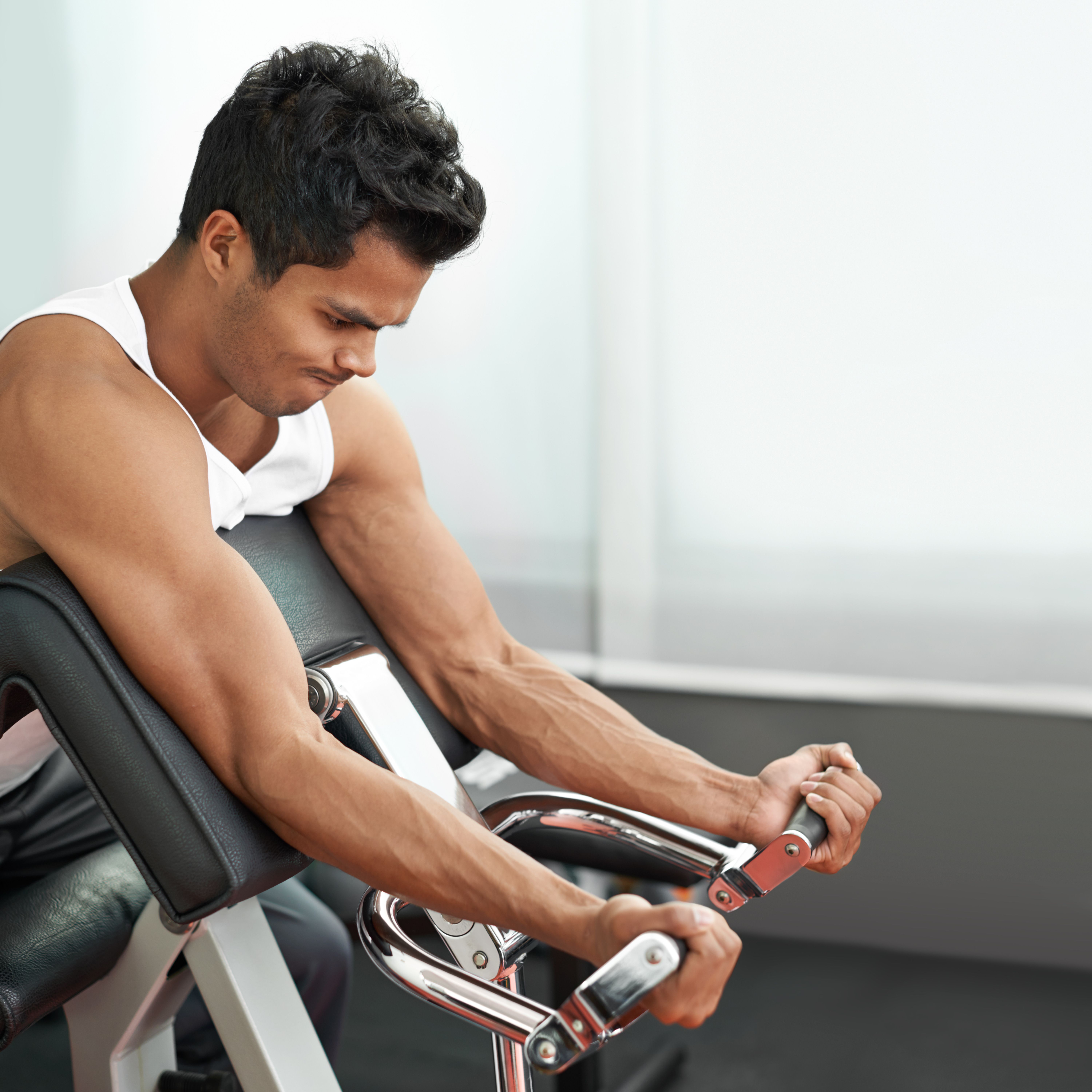
- Biceps: Incline dumbbell curls
- Triceps: Overhead triceps extensions
- Quads and glutes: Deep squats
- Calves: Standing calf raises with a controlled stretch at the bottom
The best choice still depends on your anatomy, mobility, equipment, and how comfortably you can perform the movement.
Are Romanian Deadlifts Good for Hamstring Growth?
Yes. They load your hamstrings under real tension while they lengthen.
To do them well:
- Stand with the weight close to your thighs.
- Keep a slight bend in your knees.
- Push your hips back, keeping the weight close to your legs.
- Lower until you reach a comfortable range without losing control of your spine.
- Drive through your feet and extend your hips to stand back up.
You don’t need to force the weight toward the floor. Your hamstrings don’t care whether the dumbbells reach your ankles. They care about tension.
Are Incline Curls Better Than Regular Curls?
Incline curls put your biceps in a longer position, which makes them a smart option. But research doesn’t consistently show they build more muscle across the whole biceps.
Regular curls still work. Incline curls are simply a useful variation.
Do Deep Squats Build More Muscle?
Some research suggests deeper squats may be especially good for the glutes and certain thigh muscles.
But depth alone isn’t the goal. A squat that puts you in an unstable or painful position isn’t better just because you went lower.
Use the deepest range you can control. Progressive overload matters more than winning an imaginary squat-depth contest.
How to Apply Stretch-Mediated Hypertrophy to Your Workouts
1. Start With Controlled, Full-Range Reps
Before trying partials, make sure your regular reps are solid. Lower the weight with control, skip the momentum, and pick a load that lets you keep good form.
You don’t need an exaggerated stretch on every rep. You need control and enough resistance to challenge the muscle.
If you’re not sure how an exercise should look, FitnessAI’s guided video workout library can walk you through the movement before you add weight.
2. Add Exercises That Challenge the Stretch
Take a look at your current routine. Are all your triceps exercises done with your arms at your sides? Is one leg curl variation doing all the work for your hamstrings?
A few easy swaps:
- Pair Romanian deadlifts with leg curls.
- Add overhead extensions alongside pushdowns.
- Try incline curls in place of standard curls.
- Let your calves stretch fully at the bottom of each raise.
The goal is a well-rounded mix, not the longest exercise list possible.
When the equipment you need isn’t available, FitnessAI’s equipment-based adaptation and smart exercise substitutions let you adjust your workout without starting your plan from scratch. Just keep in mind that two exercises for the same muscle won’t always challenge it at the same length.

3. Keep Progressive Overload at the Center
Training at longer lengths doesn’t replace progressive overload. Your muscles still need a challenge that grows over time.
Say you’re doing Romanian deadlifts with 50-pound dumbbells for three sets of eight. Over a few sessions, you work up to three sets of ten with clean technique. Then you bump up the weight a little.
That’s real, measurable progress.
FitnessAI’s progressive overload engine uses your workout performance to adjust your recommended weights, reps, and sets over time. Instead of guessing when to add weight, you get a structured recommendation based on what you’ve already done. And because FitnessAI shows you why your progression is changing, you’re never left wondering.
The stretch may sharpen the stimulus. Progressive overload keeps it working.
4. Experiment With Lengthened Partials Carefully
If you’re experienced and curious, start with something simple and stable, like a calf raise. Do your normal full-range sets first. Then, on an occasional final set, add a few controlled partial reps in the stretched position, using a lighter load if you need to.
Stop when your form slips. Pay attention to soreness, recovery, and performance before trying it again.
This is an optional experiment, not a requirement for growth. And more soreness doesn’t mean more muscle.
5. Respect Recovery
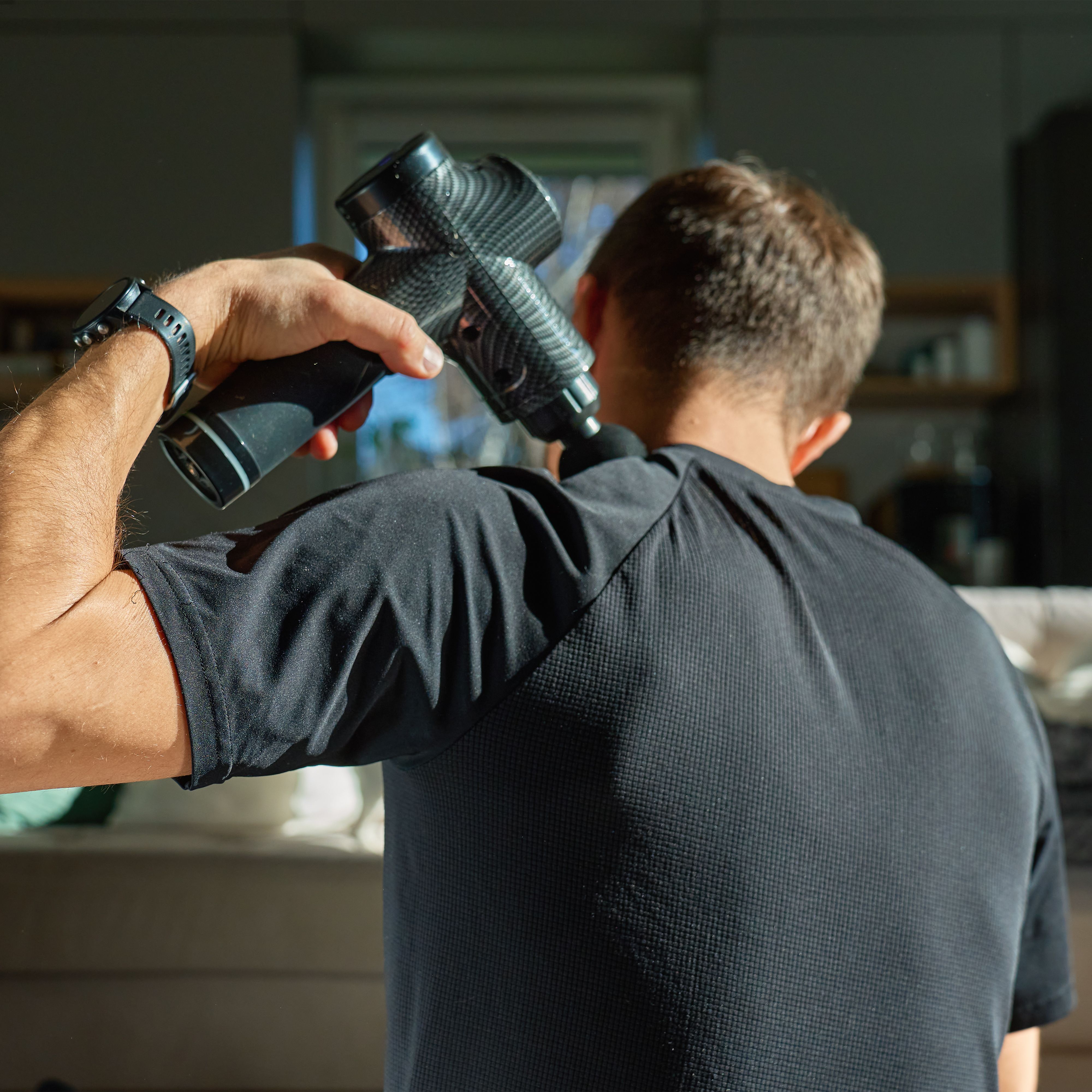
Lengthened training can leave you pretty sore, especially with unfamiliar exercises. That doesn’t mean the workout was better. It just means your muscles felt something new.
Start conservatively. If soreness is still affecting your training several days later, scale back the load, volume, or frequency until you adapt.
FitnessAI’s recovery-aware adjustments factor in your fatigue, recovery, and past performance when shaping your recommendations. The goal isn’t to make every workout harder. It’s to make each one productive enough that you keep progressing.
Can It Help You Break a Plateau?
Maybe, but only if exercise selection or range of motion is actually what’s holding you back.
Plenty of plateaus come from other things: poor recovery, volume that needs adjusting, or simply not increasing the challenge anymore. Before changing everything, ask yourself:
- Have my weights or reps gone up in the last few weeks?
- Am I training each muscle group consistently?
- Am I recovering well between sessions?
- Am I using controlled ranges of motion?
This is why tracking matters. Without a record, it’s hard to tell whether a new technique is helping or you’re just doing something different.
FitnessAI tracks your training history and adjusts your recommendations based on performance, so you can see whether you’re moving forward. BodyScan adds a way to track visual changes over time alongside your strength data. Neither can isolate the effect of lengthened training on its own, but together they give you a clearer picture of your overall progress.
What If You Only Have 30 Minutes?
You can still benefit. You just don’t need to add a pile of new exercises.
A 30-minute lower-body session might look like this:
- Squats: 3 sets of 6 to 10 reps
- Romanian deadlifts: 3 sets of 8 to 10 reps
- Seated leg curls: 2 sets of 10 to 12 reps
- Standing calf raises: 2 sets of 10 to 15 reps
Several of these already train muscles at long lengths. No separate stretch workout required. (Your actual time will depend on warm-ups, rest, and experience.)
FitnessAI can build workouts around the time you have, from 5 to 30 minutes, adjusting exercises, sets, and reps to fit your schedule. A 20-minute workout you actually do beats a 90-minute plan that rarely happens.
Common Mistakes to Avoid
Chasing the stretch. A stronger stretching feeling doesn’t mean better growth. Tension and control matter more.
Going too heavy. If you’re bouncing out of the bottom or losing control, lighten the load.
Ditching full reps entirely. Full-range reps still work. You don’t have to pick one approach.
Changing your program every week. Muscle takes time. Constant swapping makes progress impossible to measure.
Skipping recovery. Ease into new exercises and avoid big jumps in volume. Recovery is part of progress, not a break from it.
Frequently Asked Questions
Does stretching a muscle make it grow?
Not on its own. The research focuses on muscles producing force while lengthened. Loaded training has much stronger evidence for building muscle than regular flexibility stretching.
Are lengthened partials better than full reps?
Not consistently. Some studies favor them, others show similar results. Full reps remain a reliable foundation.
Do I need to feel a deep stretch to build muscle?
No. Good technique, the right resistance, progressive overload, and consistency are better signs of effective training.
Can beginners benefit?
Yes. Beginners can benefit from exercises that work muscles through a comfortable range. Just focus on technique and consistency before trying advanced partial-rep techniques.
How often should I use lengthened partials?
There’s no established ideal frequency. Experienced lifters can try them occasionally while watching fatigue and performance. They’re not necessary for growth.
The Bottom Line
Stretch-mediated hypertrophy is a promising area of research, and training muscles at longer lengths may give you an edge with certain exercises.
But it’s not a shortcut, and it doesn’t make proven training methods obsolete. Exercise selection, controlled reps, progressive overload, recovery, and consistency still matter most.
Look at your current exercises and the range you’re using. Make small changes when they serve a purpose. Then track whether those changes actually move you forward.
That’s where FitnessAI comes in. Your workouts are built around your goals, equipment, schedule, and past performance, with weights, reps, and sets adjusting as you progress.
You show up. FitnessAI handles the plan.
Download FitnessAI NOW!
Alyssa Gonzalez
