


If You're Not Sore, You Didn't Work Hard Enough, Or So People Think
Walk into any gym and someone will say it sooner or later.
"If you're not sore the next day, you didn't train hard enough."
On the surface, it sounds reasonable. A person works hard, their muscles ache, so something must be happening, right? The problem is that this belief is one of the biggest reasons people stall out, overtrain, and eventually quit altogether. Fitness coaches and exercise scientists have been pushing back on this myth for years, and the evidence is hard to argue with.
What Muscle Soreness Actually Tells Us
Muscle soreness, formally known as DOMS, or delayed onset muscle soreness, is not a direct indicator of how effective a workout was. It tends to show up when someone tries a new exercise, jumps up in volume or intensity too quickly, puts extra emphasis on the lowering phase of a lift, or comes back to training after time away.
In other words, soreness is largely the body's reaction to something unfamiliar, not something optimal.
The uncomfortable truth is that a person can be extremely sore and make zero progress. Equally, someone can make consistent, meaningful gains and barely feel sore at all. The two things simply aren't as connected as gym culture has long suggested.

Why Chasing Soreness Can Actually Slow Results
When someone uses soreness as a measure of success, they tend to fall into a few traps.
The first is randomness. In an effort to always feel something new, they keep rotating exercises and switching programs. That kind of inconsistency kills progress, because consistency is genuinely what drives long-term results.
The second trap is poor recovery. Pushing too hard, too often, without giving the body enough time to repair, can reduce strength gains and raise the risk of injury. It's a pattern that feels productive but quietly works against the person doing it.
The third issue is that chasing soreness tends to crowd out progressive overload, which is the actual engine behind muscle growth. Most people work hard, but not in a structured, trackable way, and that's where results dry up.

What Actually Drives Muscle Growth
If soreness isn't the goal, what is?
Progressive overload is the foundation. That means gradually increasing weight, reps, sets, or training efficiency over time. The body adapts to whatever is asked of it, and that adaptation is how muscle gets built.
Consistency comes next. The best program isn't the most intense one, it's the one a person can stick to week after week without burning out.
Recovery completes the picture. Muscles grow during rest, not during the workout itself. Neglecting recovery is like planting seeds and never watering them.
When Not Feeling Sore Is Actually a Good Sign
There's a mindset shift that tends to surprise people when they first hear it: not being sore often means things are going well.
When a person's body isn't screaming at them the next morning, it can mean their recovery is dialed in, their training is consistent, their body is adapting efficiently, and their nervous system is becoming more capable. Advanced lifters rarely experience intense soreness, yet they continue to get stronger. That's not a coincidence, it's the result of a well-structured approach.
The Real Problem: Not Knowing What to Do Next
For a lot of people, especially those juggling busy lives, the real stumbling block isn't effort, it's uncertainty.
After a workout, the questions start piling up. Should the weight go up next time? Was the volume enough? Is this progress or just maintenance? Why hasn't anything changed in weeks?
That kind of uncertainty leads to decision fatigue, and decision fatigue leads to inconsistent training. It's a cycle that's hard to escape without some kind of system to rely on.
.png)
How FitnessAI Fits Into This
Most people don't fail in the gym because they don't work hard enough. They fail because they don't know how to structure that effort over time.
FitnessAI was designed to close exactly that gap. Rather than leaving someone to guess whether they did enough or pushed too far, the app analyzes their actual performance history and adjusts each workout automatically. Instead of asking "Was that enough?", the user simply follows a plan that evolves with them.
Progressive overload, while simple in theory, is genuinely difficult to apply consistently in practice. FitnessAI handles it by tracking lifts over time, suggesting optimal weight and reps for each set, and recalibrating when someone is improving or struggling. The result is training that stays in the right zone, not too easy, not excessive, but just enough to keep driving progress.
Progress Without the Pain
One of the more meaningful shifts users tend to notice is that they stop using soreness as their primary feedback. Instead, they start measuring progress in concrete terms: strength going up, reps being completed, consistency holding steady week to week.
FitnessAI reinforces this by surfacing performance trends clearly. A person can actually see that they're getting stronger, even on weeks where they feel perfectly fine the next morning.
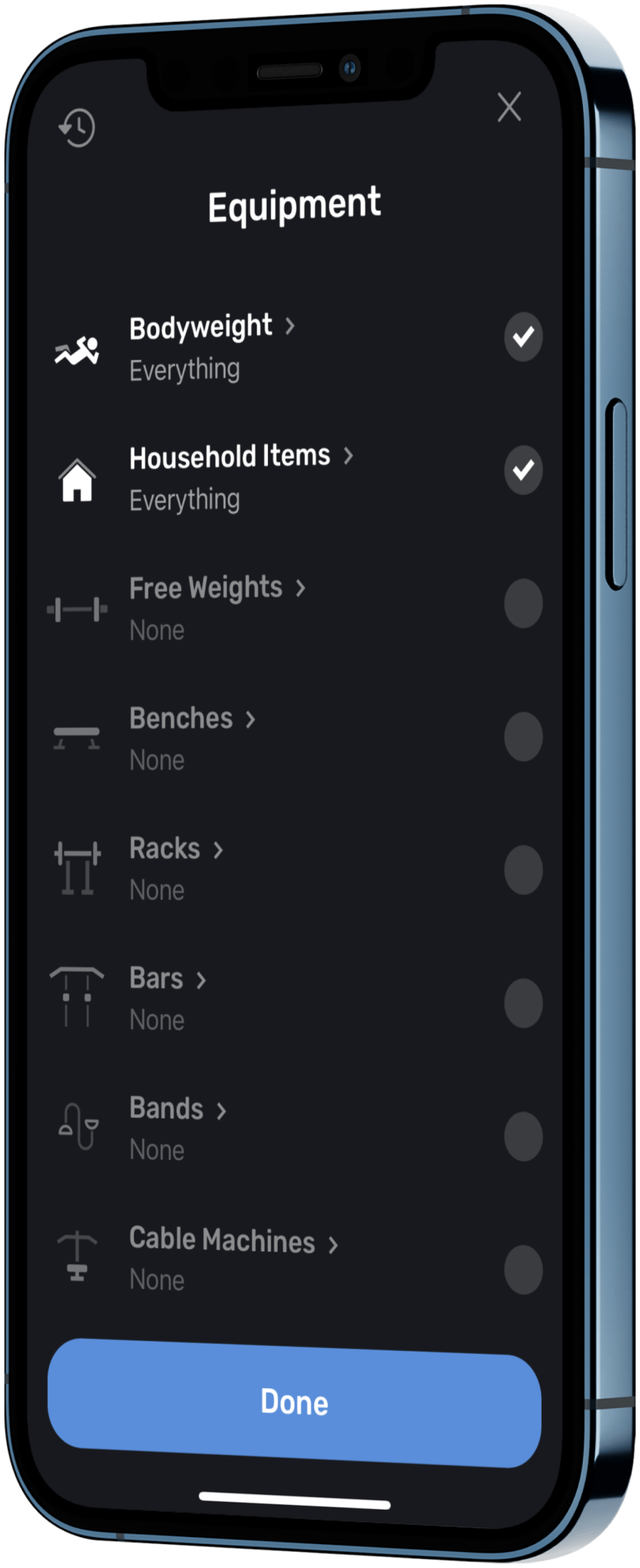
For people with demanding schedules, the app also adapts to real-life constraints. Short on time? It prioritizes the most effective work. Limited equipment? It adjusts the exercise selection. Feeling fatigued? It scales back accordingly. Instead of overcompensating with punishing sessions after time away, the approach is built around staying smart and staying consistent.
Breaking Through Plateaus Without Just Doing More
Plateaus are usually the result of repeating the same weights, failing to track properly, or pushing harder without making intelligent adjustments. FitnessAI helps sidestep all three by continuously recalibrating workouts based on what's actually happening, not what someone guesses should happen next.
What's Worth Paying Attention To Instead
For anyone serious about results, the questions worth asking after a workout aren't about how sore they feel. They're things like: Did I lift more or do more reps than last time? Am I showing up consistently without burning out? Is my body recovering well enough to train again? Is my program actually evolving, or am I just repeating the same sessions on a loop?
If the answer to all four is yes, real progress is happening, whether or not anyone's walking stiffly the next day.
The Bottom Line
Soreness is a signal. Sometimes it's useful, and sometimes it's just noise. Treating it as a badge of honor or a measure of effort is one of the most persistent myths in fitness, and one of the most quietly damaging ones.
Real, lasting progress comes from structured training, genuine consistency, and proper recovery. The sooner someone stops chasing the ache and starts chasing the numbers, the sooner they actually start seeing results.
For those who are tired of guessing, second-guessing, and spinning their wheels, a tool like FitnessAI offers something refreshingly simple: a plan that adapts to the person following it, removes the uncertainty, and lets the data do the talking. No soreness required.
Download FitnessAI TODAY!
Alyssa Gonzalez
