


Your First Personal Record: How to Safely Break Strength Plateaus
Hitting a first personal record is one of the most satisfying moments a lifter can experience. It's proof, in the most concrete way possible, that the work is actually paying off.
But getting there is rarely a straight line.
Most people run into a plateau well before they reach their next PR. Progress slows. Workouts start to feel stale. That creeping doubt sets in, the feeling that something must be going wrong. More often than not, nothing is. The body is simply doing what bodies do: adapting.
This guide covers how a lifter can break through strength plateaus safely, without overtraining, without second-guessing a perfectly good program, and without burning unnecessary hours in the gym.
Why Strength Plateaus Happen
A plateau isn't failure. It's adaptation.
When someone stops progressing, it usually comes down to a handful of familiar culprits, staying at the same weights and reps for too long, not recovering adequately between sessions, jumping weight too aggressively, or simply lacking a structured plan for progression. Mental fatigue plays a role too. Decision fatigue in the gym is real, and it quietly chips away at consistency.
The instinct is usually to push harder. In most cases, training smarter is what actually moves the needle.
What Actually Drives Strength Gains
Strip away the noise and strength progress comes down to one principle: progressive overload.
That means gradually increasing the demand placed on the muscles over time, adding weight, increasing reps, improving form and control, or adjusting rest periods. The challenge is knowing when to increase and by how much.
That's where most people get stuck. Increase too fast and progress stalls, or worse, something gets hurt. Stay too comfortable and the body never has a reason to grow.
Tools like FitnessAI solve this by analyzing past workouts and guiding progressive overload automatically. Instead of guessing, the lifter follows a plan that's actually built around their own performance data.
Signs Someone Is Ready to Break a Plateau
The window of opportunity is closer than most people think. A few reliable signals:
- The current working weight feels noticeably easier than it did a few weeks ago
- Target reps are being hit consistently
- Form is stable and controlled under load
- Recovery between sessions feels solid
When those boxes are checked, a new PR is within reach. The key is timing it right.

Step 1: Stop Guessing the Next Weight
One of the most common mistakes lifters make is randomly jumping to a heavier number.
"I did 185 last week… maybe I'll try 205 today?"
That jump might be too aggressive, even when the lifter feels ready. A smarter approach is micro-progression, small, manageable increases guided by actual performance, not gut feeling.
FitnessAI handles this well because it adjusts the next working weight based on how previous sets actually went, not a fixed program that doesn't account for a rough week or an exceptional one. It removes the guesswork and keeps progress consistent.
.png)
Step 2: Train Close to Failure, Not Into It
Sets need to be genuinely challenging to build strength. But grinding to failure every session isn't the answer, it's a fast track to burnout.
The sweet spot is leaving one to three reps in the tank. Reps that are controlled and repeatable. Effort that's consistent across sets without being reckless.
This is where a lot of people plateau without realizing why. They either coast through workouts that never push them hard enough, or they go so hard they can't sustain the training week to week. An adaptive system like FitnessAI can help strike that balance by adjusting weights and reps based on real performance rather than perceived effort.

Step 3: Treat Recovery Like Part of the Training Plan
Strength doesn't actually happen during a workout, it happens after. If recovery is off, progress will follow.
That means sleep (six to eight hours, at minimum), enough protein and total calories to support the training load, and actual rest days. Not optional. Not negotiable.
Recovery-aware training is something FitnessAI accounts for directly. If performance drops across sessions, it adjusts future workouts to reflect the fatigue rather than forcing continued progression. That's how burnout gets avoided while forward momentum is maintained.

Step 4: Track Everything
Without tracking, training becomes guesswork. Tracking reveals when progress last happened, what weights were used, and exactly where things started to slow down. Without it, it's remarkably easy to repeat the same workouts and expect different results.
FitnessAI simplifies this by automatically logging workouts and surfacing progress visually over time. When a PR attempt is on the horizon, that data makes it clear when the moment is actually right, not just when it feels right.
.png)
Step 5: Use Variation Without Losing Structure
Doing the exact same workout indefinitely leads to stagnation. But constantly rotating exercises is just as counterproductive.
The answer is controlled variation, occasionally changing rep ranges, rotating accessory movements, adjusting volume, while keeping the core lifts consistent. The main movements stay, the supporting work evolves.
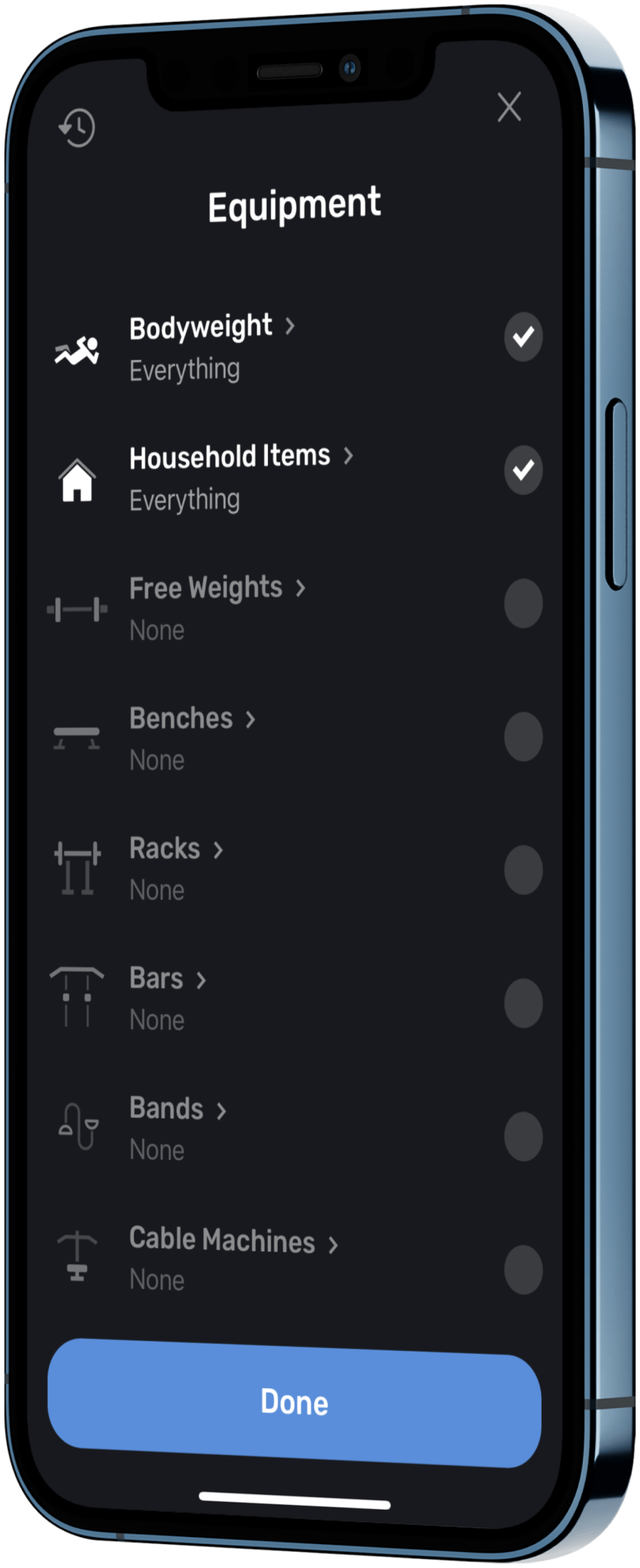
FitnessAI manages this quietly by adjusting workouts based on available equipment and past performance. Whether someone is traveling, short on time, or working around soreness, it adapts without disrupting the progression that's been built.

Step 6: Time the PR Attempt Right
Not every training session is a PR attempt, and treating it like one is a mistake.
The right conditions look like this: the lifter feels physically fresh, recent sessions show a clear upward trend, and warm-up sets feel strong without being labored. When everything lines up, it's time to go for it, but with a proper warm-up, small weight jumps, and strict form throughout.
One thing FitnessAI users often notice is that PRs happen without them fully planning for them. The system gradually builds working weights to the point where a new record becomes the natural next step. The progression builds, and the PR shows up almost on its own.
Common Mistakes That Keep Lifters Stuck
A few patterns consistently hold people back:
- Switching programs too often before giving any of them a real chance
- Treating recovery as optional
- Letting form break down in pursuit of heavier weight
- Measuring progress against other people instead of against their own past performance
- Overthinking every single workout
Most people don't actually need a better program. They need consistency and cleaner execution of the one they already have.
What About Limited Time?
For anyone in their late 20s through 40s balancing work, family, and everything else, time is usually the biggest barrier. Longer workouts aren't the answer, more efficient ones are.
That means prioritizing compound movements, cutting wasted time between exercises, and following a structured progression that doesn't require a half-hour of planning before every session. FitnessAI is built for exactly this: open the app, follow the workout, get out. The planning is already done.
The Moment a PR Actually Lands
When it happens, the lifter knows.
The weight moves. Maybe not easily but cleanly. Controlled. Real.
That moment isn't luck. It's the result of consistent training, smart progression, proper recovery, and decisions backed by data rather than guesswork. And once that first PR lands, something shifts. The lifter understands, in a way they couldn't before, that they can do it again.
Final Thoughts: Progress Without Overthinking
Breaking a plateau isn't about pushing harder every day. It's about removing friction, less guessing, better timing, smarter progression, and consistent tracking.
When training is simplified without sacrificing structure, progress becomes far less mysterious. That's where tools like FitnessAI make a quiet but meaningful difference, not through hype, but through a system that adapts to the individual so they can focus on lifting instead of planning.
For anyone who's been stuck, that shift might be exactly what's needed.
Download FitnessAI NOW!
Alyssa Gonzalez
